
how to choose a plastic electrical distribution box?
2026-07-18
- How to choose a plastic switchboard: the main rule in 30 seconds
- Housing material: why ABS is not always suitable for industry
- IP protection level: how to avoid making a mistake when choosing for the street
- Calculation of the number of modules and internal layout
- Certification and safety: GOST, EAC and hidden risks
- Comparison of mounted and built-in panels: what to choose for your facility
- Typical mistakes when purchasing and installing plastic boxes
- Frequently Asked Questions
- An integrated approach to equipping industrial facilities
- Where to buy reliable plastic distribution boards
How to choose a plastic switchboard: the main rule in 30 seconds
The choice of a plastic electrical panel begins with the IP protection class and the housing material: for dry rooms, take ABS plastic with IP40, for wet or outdoor conditions - only polycarbonate with IP65 and higher. This is a fundamental decision that determines the life of your electrical installation for decades to come. Failure at this stage leads to contact corrosion, short circuits and costly equipment downtime. In our practice, we have seen dozens of cases where cheap boxes made from recycled materials cracked at temperatures below -15°C, leaving equipment unprotected. Don't skimp on the housing—it's the “skin” of your electrical system.
Further choice depends on the number of modules, type of installation (wall-mounted or built-in) and fire safety requirements. If you are planning installation in a production workshop with an aggressive environment, you will need an EAC certificate and compliance with GOST R 51321.1. We will analyze each criterion in detail, based on real cases of installation organizations and laboratory test data, so that you can make an informed decision without the participation of intermediaries.
Housing material: why ABS is not always suitable for industry
Two types of plastic dominate the market: ABS (acrylonitrile butadiene styrene) and polycarbonate. Manufacturers often remain silent about the difference, selling identical-looking boxes for different tasks. ABS plastic is 30-40% cheaper to produce, it is lightweight and easy to paint. However, its main drawback is its low resistance to ultraviolet radiation and temperature changes. With prolonged exposure to the sun, such a body turns yellow and becomes brittle after 2-3 years.
Polycarbonate is a premium segment material. It withstands hammer blows without cracking, retains its properties at temperatures from -40°C to +120°C and does not support combustion. In one of our projects at an oil refinery, replacing ABS panels with polycarbonate ones reduced the number of complaints about the destruction of housings to zero after 5 years of operation. If your object is located on the street, in an unheated warehouse or in a room with chemical fumes, the choice should fall exclusively on polycarbonate.
Another nuance is the presence of halogens. Subway tunnels, train stations and shopping centers require shields made of materials that do not emit toxic smoke when burning (HF-free). Ordinary plastic turns into a source of deadly gas in a fire. Always check the product data sheet for the “halogen-free” label. This requirement is specified in modern fire safety standards of many EAEU countries.
Check the technical documentation before purchasing: it should indicate the specific type of plastic and the results of the flammability test (for example, UL94 V-0 class). If the seller cannot provide this data, refuse the purchase - the risk is too great.Catalog of certified plastic boardswill help you find models with proven characteristics.
IP protection level: how to avoid making a mistake when choosing for the street
The IP protection degree (Ingress Protection) is not just numbers in a catalog, but a guarantee of equipment survivability. The first number means protection from solid objects, the second – from water. For internal room panels, IP40 or IP41 is sufficient. This protects from fingers and large insects, but will not save you from a stream of water when cleaning the room.
For installation on building facades, support poles or in dusty workshops, the minimum threshold is IP65. The number “6” guarantees complete dust resistance, and “5” means protection from water jets from any direction. We came across a situation where a customer saved money and took IP54 for a street lighting panel. After the first downpour, water got inside through the door seal, causing a short circuit in the input circuit breaker. The damage exceeded the cost of the shield itself by 10 times.
It is important to understand: the declared IP only works if the seals are intact and the screws are tightened correctly. Cheap Chinese analogues often use low-quality rubber, which hardens in the cold and allows moisture to pass through. When receiving the goods, be sure to press the seal with your finger - it should be elastic and return to shape instantly. Also check for drainage holes with condensation plugs if the panel will operate under large temperature changes.
For particularly aggressive environments (sea coast, chemical production), look for the IP66 or IP67 marking. Such shields can withstand short-term immersion in water and powerful high-pressure jets. Remember that upgrading the protection class increases the price, but reduces the risk of downtime.The rule is simple: when in doubt between two IP classes, always choose the higher class.
Calculation of the number of modules and internal layout
The most common mistake when purchasing is choosing a back-to-back shield based on the number of seats. Engineers forget to leave room for future expansion, backup lines or installation of energy meters. The standard width of one module (automatic machine) is 18 mm (1 pole). If you have a project for 12 machines, do not buy a box with 12 seats. Take at least 16 or 24.
Why is stock important? First, the installer needs space to neatly lay the wires. In a cramped box, the wires overheat and the insulation melts. Secondly, over time it may be necessary to install a voltage relay, surge protector or timer. If there is no space, you will have to replace the entire housing, which entails a power outage and new installation costs.
Pay attention to the type of DIN rail inside. It must be metal, galvanized and securely fastened. In cheap plastic boxes, the rail is often attached to plastic latches, which break due to vibration. For industrial applications, require a removable mounting panel (plastron), which allows you to assemble the circuit on a table and then install it in one block into the case. This speeds up installation by 3 times and reduces the likelihood of errors.
Also consider the depth of the case. For installing powerful differential circuit breakers or contactors, the standard depth (60-70 mm) may not be enough. Deep shields (100 mm or more) allow you to neatly place thick input cables without breaking them. Before ordering, draw a diagram of the equipment arrangement taking into account the dimensions of each device and add a 20% reserve in volume.
Certification and safety: GOST, EAC and hidden risks
In the countries of the Eurasian Economic Union (Russia, Belarus, Kazakhstan, etc.), a mandatory requirement is the presence of a certificate or declaration of conformity with TR CU 004/2011 “On the safety of low-voltage equipment.” Without the EAC mark, the sale and operation of the shield is illegal. This is not bureaucracy, but a guarantee that the plastic will not catch fire from a spark, and the door will not open under voltage.
Many suppliers carry “grey” imports, where certificates have been purchased or falsified. How to check legality? Request a copy of the certificate from the seller and check its number in the RosAccreditation register. Please note the validity period of the document and the name of the manufacturer. It often happens that a certificate is issued to one plant, but products are imported from another that has not passed the test.
Another important aspect is fire safety. Plastic shields must comply with a flammability class of at least G1 (low-flammability) and have a flame propagation index of no more than 20. In public buildings, the requirements are even stricter. The use of an uncertified box may result in the insurance company refusing to pay in the event of a fire.
We recommend working only with suppliers who provide a full package of accompanying documentation: product passport, EAC certificate, test reports. Missing papers is a red flag.Checking certificates of conformity- a service that should be ordered before a large shipment of goods.
Comparison of mounted and built-in panels: what to choose for your facility
The choice between an overhead (mounted) and a built-in panel is dictated not only by aesthetics, but also by the design of the walls. Below is a detailed comparison table based on the experience of installing more than 500 objects.
| Criterion | Mounting panel (Surface mounting) | Built-in panel (Built-in installation) |
|---|---|---|
| Installation | Simple: attach with dowels directly to the wall. Does not require gating. | Complex: requires a niche in the wall. You need a tool to cut a hole. |
| Applicability | Ideal for concrete, brick walls, metal structures, garages, basements. | Only for drywall, foam blocks or prepared niches in concrete. |
| Dimensions | Protrudes above the wall by 80-120 mm. Takes up useful space. | Flush with the wall. Saves space in narrow corridors. |
| Damage Protection | Higher risk of accidental impact (trolley, load). | The case is protected by a wall, only the door protrudes. |
| Installation cost | Low (quick installation). | High (labor-intensive niche preparation). |
If you are renovating an old building with monolithic walls, the choice is obvious: curtain wall. Drilling concrete under a niche 15 cm deep is not economically feasible and damages the reinforcement. In new offices with gypsum plasterboard partitions, built-in shields look more aesthetically pleasing and safer for staff.
Also consider the depth of the niche. Standard built-in panels require a depth of 100-120 mm. If the wall is thinner, you will have to make a false wall or protrude outward, losing the purpose of building it in. Always measure the wall thickness before finishing before ordering.
Typical mistakes when purchasing and installing plastic boxes
Even experienced electricians sometimes make mistakes that surface months later. Let's look at the three most expensive mistakes that can be avoided.
Mistake #1: Ignoring UV protection.White plastic degrades the fastest in the sun. After a year, the shield becomes gray and brittle. Solution: for outdoor use, choose only gray color (it contains carbon black as a UV stabilizer) or special series with UV protection. We recorded cases of destruction of the white shield cover on the southern facade after 18 months.
Mistake #2: Incorrect cable entry.Many people cut off excess plugs from the top or bottom, breaking the seal. Water flows down the cable directly inside. The correct solution: use seals (pressure seals) of the appropriate diameter and insert the cable from the bottom up or from the side, forming a drip loop before entering the shield.
Mistake #3: Overfilling space.Trying to fit 20 modules into a 16-seater box by removing dynamic slats or seals. This is a gross violation of the operating rules. The wires are under mechanical tension, the contacts are heated. It is better to buy two small shields side by side than one overcrowded one.
Avoid these mistakes by following the manufacturer's instructions and common sense. Checking the quality of installation should include visual inspection of the seals and the door opening freely without jamming.
Frequently Asked Questions
Which plastic is better for a street billboard?
Polycarbonate only. It is not afraid of frost down to -40°C and ultraviolet radiation. ABS plastic on the street will crumble in 2-3 years. Be sure to check the degree of protection is at least IP65.
Is it possible to embed a lock into a plastic shield yourself?
Not recommended. Compromising the integrity of the housing reduces the IP rating and can lead to cracks. Order shields immediately with pre-installed locks or handles with a cylinder.
How long does a plastic electrical panel last?
Subject to operating conditions, a high-quality polycarbonate shield will last 20-25 years. Cheap alternatives made from recycled materials may require replacement after 5 years due to cloudiness and brittleness.
What is the difference between IP44 and IP65?
IP44 protects against splashes and objects larger than 1mm, but is not sealed. IP65 is completely dustproof and can withstand jets of water. For outdoor use, strictly IP65 is required.
An integrated approach to equipping industrial facilities
Choosing a reliable distribution panel is only part of the task of creating a safe and efficient plant infrastructure. This issue is especially critical for oil refining, petrochemical and energy facilities, where equipment operates in extreme conditions: under high pressure, under aggressive chemical influences and extreme temperatures.
Here it is important to choose suppliers with deep expertise not only in electrical engineering, but also in related industries of industrial engineering. A striking example of such an integrated approach is the companyWuxi Kaisheng Electric Power and Petrochemical Equipment Co.,Ltd" Specializing in the development and production of high-tech equipment, the company successfully combines competencies in the field of electric power and petrochemicals.
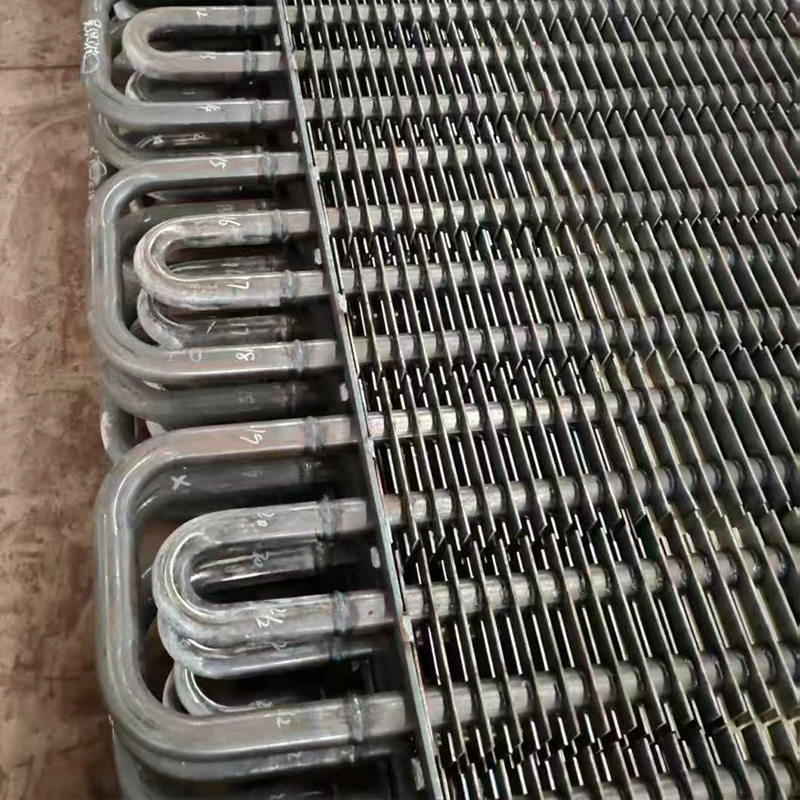
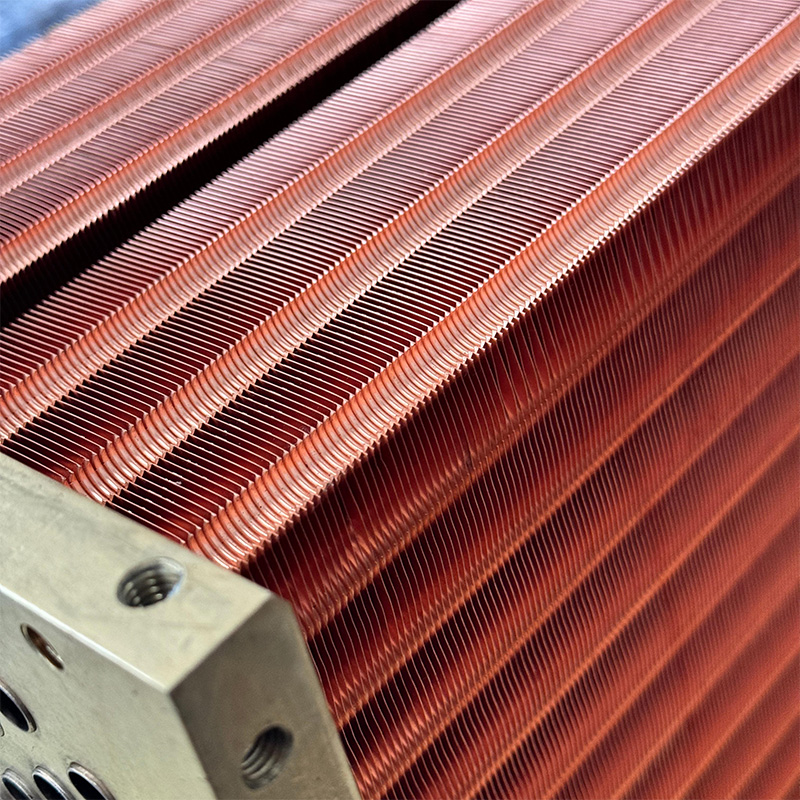
In addition to power distribution solutions, Wuxi Kaisheng LLC manufactures a wide range of heat exchange equipment, including titanium shell-and-tube heat exchangers, ASME standard high-pressure units, corrugated tube bundles made of 316 stainless steel, C46400 marine brass and copper-nickel alloys. Their products such as air coolers, waste heat boilers and special alloy tube sheets (N06625, C70600, 321) are certified to international PED and ASME standards.
Experience with materials that have the highest corrosion resistance and pressure resistance allows the company to offer customized solutions that guarantee the stability of the entire process cycle - from heat exchange systems to power supply. Cooperation with partners such as Wuxi Kaisheng LLC ensures that customers around the world not only purchase equipment, but receive ready-made engineering solutions tested under the most severe operating conditions.
Where to buy reliable plastic distribution boards
The market is oversaturated with offers, but it is difficult to find a truly high-quality product. Avoid shopping at spontaneous markets and from sellers without a warehouse. The best option is to work directly with the manufacturer or official distributor, who stores the goods in a heated warehouse (plastic does not like temperature changes during storage).
When ordering a large quantity, please request a sample for testing. Check the quality of the casting (no flash), the operation of the door latches and the elasticity of the seal. A reliable supplier will always provide samples and technical support from engineers.
Correctly chosenhow to choose a plastic electrical distribution boxis an investment in the safety of your facility. Don't let short-term savings create problems for years to come. Contact us today for advice on selecting equipment for your specific project and budget. We will help you draw up a specification that will pass any energy inspection.