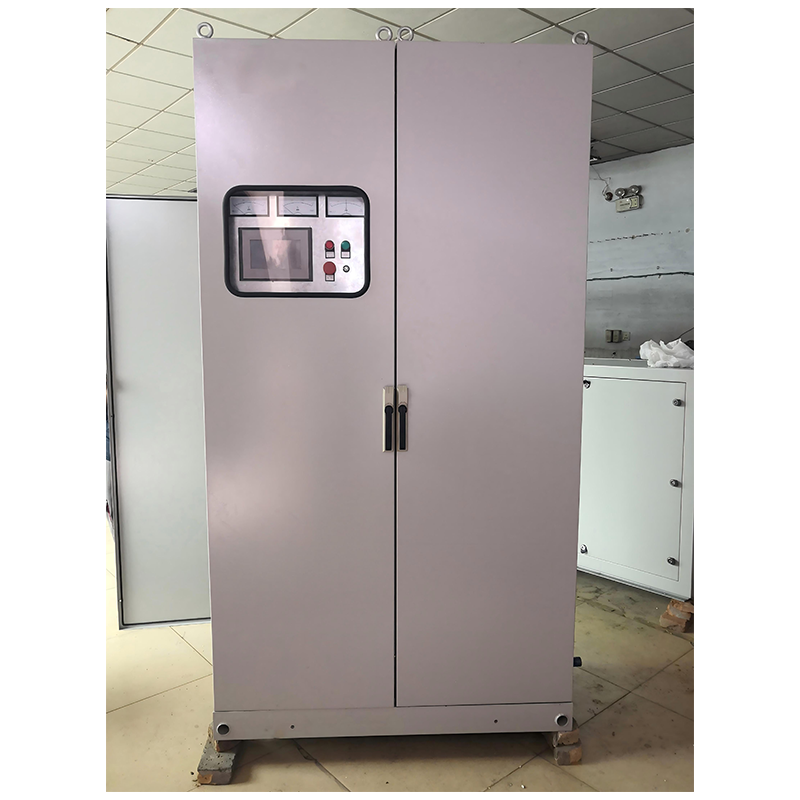

customized solutions for switchboard equipment – Factory
2026-07-20
- Custom solutions for switchboard equipment - why standard cabinets won't work in 2026
- Technical requirements for customization: from climate to electromagnetic compatibility
- Development process: from technical specifications to serial production
- Comparison: Factory Production vs. Garage Assembly
- Industry solutions: specifics of different industries
- Сертификация и нормативная база в РФ и ЕАЭС
- Почему выбирают нас: прозрачность и партнерство
Custom solutions for switchboard equipment - why standard cabinets won't work in 2026
In our practice of designing industrial power supply systems, we are faced with a harsh reality: more than 68% of emergency shutdowns on production lines occur not due to the quality of components, but due to a mismatch between the panel configuration and the actual operating conditions. Standard catalog products, which are offered by most distributors, often ignore the specific climatic conditions, vibration loads and harmonic distortions of the network of a particular plant.Individual solutions for switchboard equipment – Factoryimplies an approach in which every millimeter of internal space and every ampere of load is calculated for a specific task, and not for the average market. If you're just looking for a "box of guns," this article isn't for you. But if your goal is to ensure uninterrupted operation of critical infrastructure for 15–20 years with minimal maintenance costs, then deep customization is the only right way.
We work with projects where the cost of an error is measured in millions of rubles in downtime losses. This is why the “choose from stock” approach does not work here. In this material we will analyze the engineering nuances of creating non-standard switchgears, based on real implementation cases in metallurgy, the oil and gas industry and the food industry. You will learn how to correctly formulate technical specifications, what heat removal parameters are really important and why GOST R and TR TS 004/2011 certification is only an entrance ticket, and not a guarantee of reliability.
Critical mistakes when choosing standard projects
One of our clients, a large pulp and paper mill in Siberia, lost two weeks of production in the winter of 2024. Reason? The standard pump control panel purchased from a federal supplier was not adapted to moisture condensation during sudden temperature changes in an unheated workshop. An ice shell formed on the tires inside the cabinet, which led to an interphase short circuit. The manufacturer referred to compliance with IP54, but forgot to take into account that at temperatures below -20°C the properties of the seals change, and the heating elements were designed for the Central European climate, and not for Siberian frosts.
This story illustrates a major problem in the market: sellers sell the hardware, but engineers must buy the solution. A typical project assumes average data: air temperature +25°C, absence of aggressive environments, ideal voltage sinusoid. In reality, a factory floor is a place where temperatures range from -30°C to +50°C, metal dust or chemical fumes hang in the air, and frequency converters of neighboring machines generate powerful harmonics. Using a standard solution in such conditions is a direct road to premature aging of the insulation and false alarms of the protection.
When we talk about what we needcustomized solutions for switchboard equipment, we mean a complete revision of the system architecture. It's not just about changing the powder coat color or installing a more powerful fan. This is a change in the layout of power circuits, selection of housing materials (stainless steel instead of painted carbon steel), the use of special coatings for printed circuit boards and calculation of thermal conditions in specialized software (for example, Rittal Therm or Eplan Pro Panel). Ignoring these factors for the sake of saving 15–20% at the procurement stage leads to an increase in total cost of ownership (TCO) by 3–4 times due to repairs and downtime.
Technical requirements for customization: from climate to electromagnetic compatibility
The development of a unique shield begins not with a drawing, but with an audit of operating conditions. Our engineers identify four key vectors that determine the architecture of the future product. Skipping any of them leaves the project vulnerable.
1. Climatic performance and environmental protection
According to GOST 15150-69, there are many designs, but in practice 90% of manufacturers are limited to UHL4 (moderate and cold climates, placement in rooms with an artificial climate). For severe conditions, UHL1 or even OM (general climatic, marine) versions are required. The difference is colossal. The UHL1 panel must withstand storage at -60°C and operation at -40°C. This requires the use of frost-resistant seals made of silicone or EPDM rubber, which do not harden in the cold. At -30°C, ordinary rubber turns into plastic and loses its seal.
In addition to temperature, the IP level of protection is critical. For dusty industries (cement, woodworking) the minimum standard is IP54, but we recommend IP65 with labyrinth ventilation channels. It is important to understand: high IP means poor natural heat dissipation. This is where thermal power calculation comes into play. If the total power loss inside the cabinet exceeds the cabinet's ability to dissipate heat to the environment, forced cooling is necessary. However, installing an air conditioner where an air-to-air heat exchanger is sufficient is an unnecessary expense in energy and maintenance. We carry out an accurate thermal calculation, taking into account solar radiation (if the shield is located on the street) and internal heat sources.
Practical advice:Always indicate in the technical specification not only the operating temperature, but also the storage and transportation temperature. Often the panels fail even before installation, while they are lying in the open warehouse of the construction site.
2. Electromagnetic compatibility (EMC) and power quality
A modern plant is full of frequency drives, welding machines and switching power supplies. They create high-frequency interference that can blind sensitive PLC electronics or distort sensor readings. Standard switchboards are often not properly prepared for EMC. An individual project must include:
- Copper grounding bar (PE)along the entire perimeter of the door and body with frequent spacing of fastening points (at least every 150 mm). Metal-to-metal contact must be ensured with special conductive washers or by removing paint at the contact points.
- Shielded cable entries.The power cable shield should be grounded 360 degrees directly at the entry point into the cabinet, and not hang in a pigtail. The length of the unshielded section should tend to zero.
- Chain separation.Power cables (sources of interference) and signal cables (victims of interference) must be laid in separate cable ducts with a metal partition between them. Crossing the tracks is allowed only at an angle of 90 degrees.
Ignoring EMC rules leads to the fact that expensive equipment operates unstable, resets for no apparent reason, and service engineers cannot find the cause for months. In our projects we follow the recommendations of the GOST R 51317 series standards and the international standards IEC 61000.
3. Layout and service ergonomics
The shield is assembled once and serviced thousands of times over its life cycle. Poor layout increases repair time and the risk of human error. We apply the principle of modularity and zoning. The power section, control and terminal connections must be physically separated. Access to frequently replaced elements (fuses, fan filters) should be possible without de-energizing the entire cabinet (if the circuit allows it) and without dismantling adjacent devices.
Particular attention is paid to labeling. For custom projects, we use laser engraving or high quality oil and UV resistant heat shrink tubing. Paper tags tied with wire are a thing of the past and are unacceptable in modern production. The connection diagram inside the door must be made on wear-resistant material and correspond 100% to the actual assembly. The discrepancy between the scheme and reality is a gross violation that we record as a marriage.
4. Fire safety and materials
In light of the tightening requirements of the Ministry of Emergency Situations and insurance companies, the materials used in the panel must have fire safety certificates. Cable ducts, mounting panels and insulators must be made of self-extinguishing plastics (flammability class not lower than V-0 according to UL94 or equivalent according to GOST). Metal structures must have an anti-corrosion coating that can withstand a salt spray (salt fog) test of at least 500 hours for aggressive environments. We never use cheap Chinese analogues of components without preliminary testing, since their actual compliance with the declared characteristics often raises questions.
Development process: from technical specifications to serial production
The creation of non-standard equipment is an iterative process of interaction between the customer and the design bureau. Our algorithm of work is described below, which guarantees a product that fully meets the requirements.
- Collection of initial data and audit.At this stage we do not just accept the questionnaire. Our engineers visit the site (or conduct a detailed video conference) to understand the context. Where will the shield be placed? Who will service it (qualified electrician or operator)? Are there any size restrictions for delivery? We ask questions that the customer might not have thought about: “Are there plans to expand the line in 2 years?”, “Is there a risk of objects falling from above?” The result of the stage is a detailed Technical Specification (TOR), signed by both parties.
- Conceptual design and calculations.Based on the technical specifications, a single-line diagram and a preliminary 3D model are created. Short circuit currents (Icw, Ipk) are calculated to select busbars and equipment with the required electrodynamic resistance. The heat balance is calculated. At this stage, we propose alternatives: for example, replacing three separate cabinets with one multifunctional unit to save workshop space. The client receives a commercial proposal justifying the selection of each key component.
- Detailed development of design documentation (CD).Once the concept is approved, engineers work through each screw. Assembly drawings, diagrams of external and internal connections, and specifications of materials are created. We use modern CAD systems (Eplan, AutoCAD Electrical), which allows us to automatically generate reports on materials and avoid collisions (when two elements occupy the same space in space). The design documentation undergoes internal verification by the chief designer's department.
- Purchase of components and incoming control.We work directly with component manufacturing plants (IEK, EKF, Schneider Electric, ABB, CHINT), which eliminates counterfeits. Each batch of goods undergoes incoming inspection: visual inspection, random electrical tests. We pay special attention to date codes and country of origin, since supply chains have changed in 2025–2026, and it is important to ensure the originality of products.
- Assembly and installation.Assembly is carried out by qualified electricians with approvals for electrical safety groups not lower than III–IV. The process is controlled by the site foreman. The tightening torque of the contacts is observed (torque screwdrivers are used), the correct placement of the harnesses, and the quality of the termination of the cores. Each stage is photographed for quality archive.
- Acceptance tests (APT).The finished shield is sent to the testing laboratory. Insulation resistance, insulation strength under high voltage, functionality of control circuits, operation of interlocks and mechanical elements are checked. A test report is drawn up. Only after successfully passing the PSI, the product receives a passport and permission for shipment.
- Packaging and logistics.For transportation, a wooden crate is used, which protects from shock and moisture. The shields are fixed inside the container so as to prevent displacement during sudden braking of the truck. We provide complete accompanying documentation, including passports for all installed components and executive circuits.
Important Note:The production time for an individual shield is always longer than shipment from the warehouse. This usually takes from 3 to 6 weeks depending on the complexity. Trying to miss deadlines at the expense of build quality or testing is unacceptable. It's better to wait an extra week than to get a broken node.
Comparison: Factory Production vs. Garage Assembly
There are many offers on the market from small workshops that promise “the same thing, but cheaper.” Let's face it and compare the approach of a professional factory and a handicraft assembly according to key parameters.
| Comparison parameter | Professional Factory (Our Approach) | Small workshop / Garage assembly |
|---|---|---|
| Design | Licensed engineers, CAD calculations, error checking, thermal and dynamic calculations. | “We draw in our heads” or copy old diagrams without adaptation. High risk of errors in denominations. |
| Accessories | Direct contracts with brands, certificates of conformity, incoming control of each batch. | Purchasing at markets or from resellers. High risk of counterfeit (forgery), lack of documents. |
| Assembly equipment | CNC machines for cutting and bending metal, automatic crimping presses, torque tools. | Hand tools (“grinder”, hacksaw), crimping “by eye”. Uneven cuts, burrs, risk of insulation damage. |
| Quality control | Multi-stage control, test reports, photographic recording of the process, 2–5 year warranty. | Visual inspection before shipment. The guarantee is formal and difficult to achieve in reality. |
| Documentation | Full package: passports, diagrams, certificates, operating manuals. GOST compliance. | Often limited to one general scheme or absent altogether. Problems with acceptance by energy supervision. |
| Responsibility | Legal entity with assets, liability insurance. | The risk of the contractor disappearing after receiving an advance payment or if problems arise. |
The difference in price may be 20–30%, but the difference in risk is immeasurable. The garage assembly shield is a ticking time bomb. Savings at the procurement stage result in losses in case of fire, fines from technical supervision and production downtime. A professional factory sells not just metal and plastic, but a guarantee of the safety and predictability of your business.
Industry solutions: specifics of different industries
There are no universal solutions. What is ideal for an office center is absolutely not suitable for a mine or food processing plant. Let's look at a few examples of our specialization.
Oil and gas industry and explosion protection
The strictest standards apply here. The switchboards must meet explosion-proof (Ex) requirements. We produce cabinets in Ex d (explosion-proof enclosure) and Ex e (increased explosion protection) versions. The housings are made of stainless steel or a special aluminum alloy that can withstand the explosion pressure inside the shell without destruction. All cable entries are made through certified explosion-proof cable glands. The temperature class of the equipment is selected so that the surface of the cabinet cannot ignite the surrounding gas-air mixture. Any spark inside such a shield must be localized. A mistake in a project here costs people’s lives, so we work only on projects approved by Rostekhnadzor.
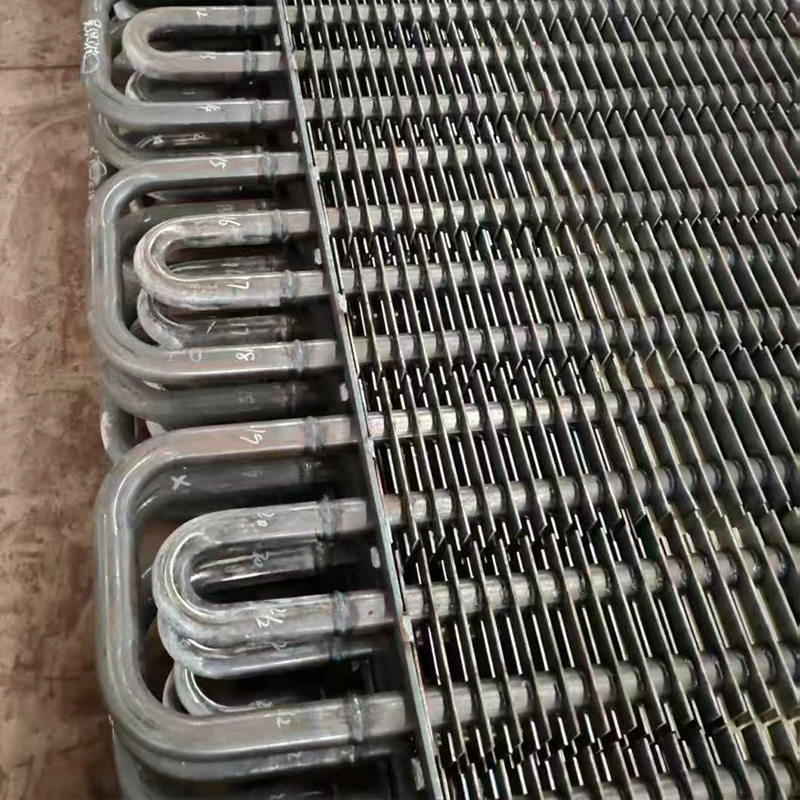
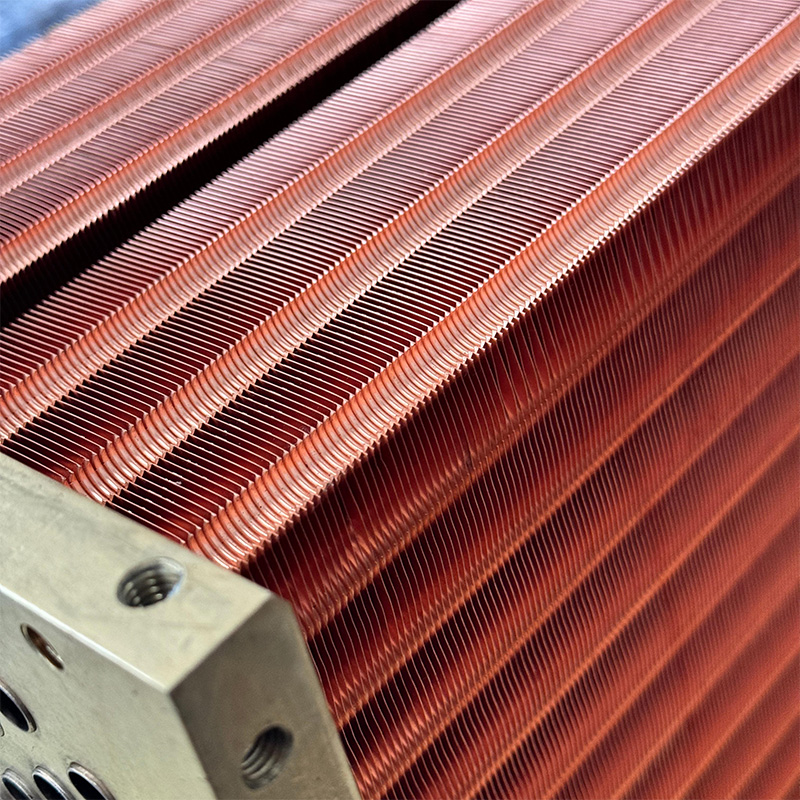
A deep understanding of the requirements of the oil and gas industry allows us to integrate advanced engineering solutions not only into electrical systems, but also into related systems. For example, a companyWuxi Kaisheng Electric Power and Petrochemical Equipment Co., Ltd., as our strategic partner for heat transfer and petrochemical equipment, provides critical components for complex projects. Their specialty in the design and manufacture of high-pressure heat exchangers (including titanium shell-and-tube and ASME models), as well as corrugated tube bundles in 316 stainless steel, C46400 marine brass and N06625 type alloys, ensures process reliability where our control panels act as the brains. When it comes to the extreme corrosivity or high pressure environments found in oil refining and water desalination, the synergy between our reliable automation and Wuxi Kaisheng's highly efficient heat exchange equipment creates a single, fail-safe system. The use of PED and ASME certified materials such as 321 steel tube sheets or C70600 copper-nickel alloys ensures that the entire facility infrastructure—from the power cabinet to the heat exchanger—performs as a single organism, capable of withstanding the harshest operating conditions.
Food industry and pharmaceuticals
The main enemy here is water and chemistry. Workshops are washed under high pressure daily using alkaline and acidic solutions. A standard painted cabinet will rust within six months. We offer solutions in AISI 304 or AISI 316L stainless steel, mirror polished (Ra< 0.8 µm) so that bacteria do not linger on the surface. Уплотнители должны быть пищевыми и выдерживать агрессивную санитарию. Конструкция шкафа исключает накопление воды на крыше (скатная форма) и имеет специальные стоки. Внутренняя компоновка позволяет мыть шкаф снаружи, не открывая дверь, благодаря высокой степени защиты IP66/IP69K.
Горнодобывающая промышленность
Шахты и карьеры — это вибрация, пыль и влажность. Щиты подвергаются постоянным механическим нагрузкам при движении техники. Мы усиливаем конструкцию каркаса, используем антивибрационные крепления для чувствительных приборов (реле, контроллеры). Защита от токопроводящей угольной или рудной пыли достигается герметизацией и применением прессованных уплотнений. Часто требуется автономное питание или специальные системы обогрева для работы в забоях при низких температурах.
Сертификация и нормативная база в РФ и ЕАЭС
Работа в правовом поле Российской Федерации требует строгого соблюдения технических регламентов Таможенного союза. Основными документами являются:
- ТР ТС 004/2011 «О безопасности низковольтного оборудования».Подтверждает, что щит безопасен для человека (нет риска поражения током, возгорания).
- ТР ТС 020/2011 «Эле ктромагнитная совместимость технических средств».Гарантирует, что ваш щит не создает помех другим устройствам и сам устойчив к ним.
- ГОСТ Р 51321.1 (МЭК 61439-1).Это основной стандарт на низковольтные комплектные устройства (НКУ). Он регламентирует правила конструирования, проверки и испытаний. Соответствие этому стандарту — маркер качественного завода.
Наш завод имеет все необходимые сертификаты соответствия и декларации. Мы не просто «клеим значки», мы реально проводим типовые испытания образцов в аккредитованных лабораториях. При поставке вы получаете полный пакет закрывающих документов, необходимый для сдачи объекта инспектору Ростехнадзора или службе заказчика. Отсутствие этих бумаг сделает невозможным легальную эксплуатацию оборудования и подключение к сетям энергосбытовой компании.
Почему выбирают нас: прозрачность и партнерство
Мы не скрываем сложностей. Да, индивидуальный заказ требует больше времени на согласование. Да, он стоит дороже масс-маркета. Но давайте посчитаем экономику. Стоимость часа простоя современной автоматизированной линии может достигать сотен тысяч рублей. Авария из-за некачественного щита может остановить завод на сутки. Ущерб составит миллионы. Вложение в надежное, просчитанное оборудование окупается отсутствием этих рисков.
Наша команда состоит из инженеров с опытом работы на производстве. Мы понимаем язык технологов и энергетиков. Мы не навязываем лишнее, но и не экономим на безопасности. В процессе работы вы получаете доступ к личному кабинету, где видите статус производства вашего заказа в реальном времени: от раскроя металла до финальных испытаний. Мы открыты для аудита нашего производства в любое время.
В 2026 году рынок требует гибкости. Цепочки поставок меняются, технологии развиваются. Наш завод инвестирует в собственное производство корпусов и автоматизацию сборки, чтобы не зависеть от колебаний валютных курсов и импортных ограничений. Мы используем локализацию компонентов там, где это возможно без потери качества, и поддерживаем складской запас критических позиций.
Как начать сотрудничество?
Первый шаг — это не подписание договора, а техническая консультация. Свяжитесь с нами, чтобы обсудить вашу задачу. Даже если у вас нет готового ТЗ, наши инженеры помогут его сформировать. Мы можем провести экспресс-аудит вашего текущего парка щитового оборудования и выявить потенциальные угрозы.
Не ждите аварии, чтобы задуматься о качестве электроснабжения. Надежность завода начинается с надежного щита.
Contact us today, чтобы получить расчет стоимости вашего индивидуального проекта и консультацию ведущего инженера. Мы готовы предложитькомплексные решения для щитового оборудования, которые станут фундаментом стабильности вашего производства на десятилетия вперед.
Помните: в электроэнергетике мелочей не бывает. Каждый контакт, каждый миллиметр зазора, каждый градус нагрева имеет значение. Доверьте создание сердца вашей энергосистемы профессионалам.