
Production of finned tubes with laser welding of increased strength
2026-07-03
- Technology for the production of finned tubes with laser welding of increased strength
- Advantages of laser welding over traditional methods of fastening ribs
- Technical characteristics and product quality standards
- Applications and solutions for specific industries
- Production process and delivery time control
- Frequently Asked Questions
- Экономическая эффективность и долгосрочная выгода
- Conclusion and call to action
Technology for the production of finned tubes with laser welding of increased strength
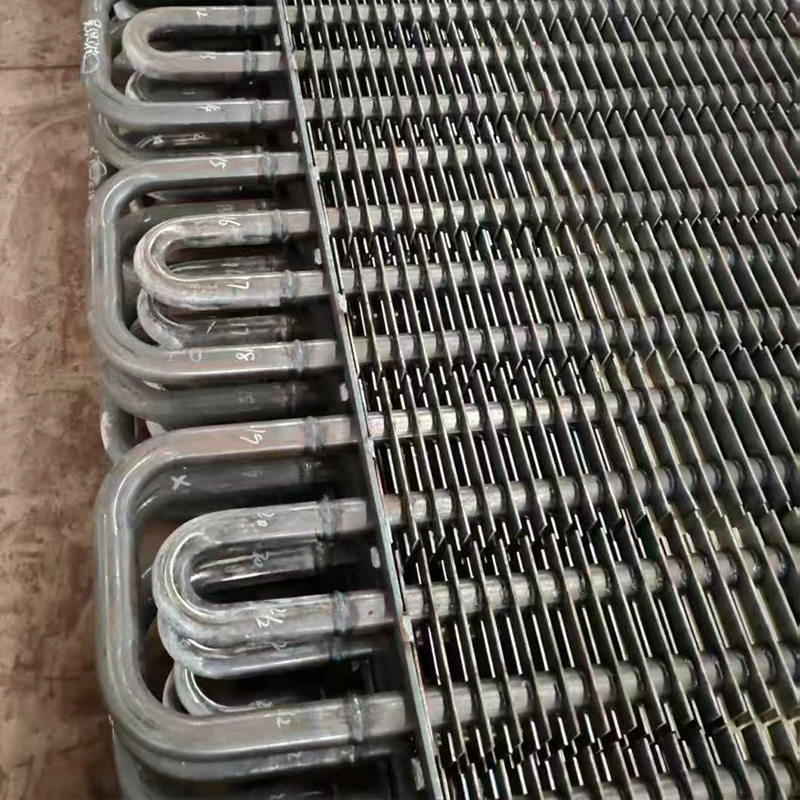
Producing high-strength laser welded finned tubes is more than just joining metal, it is creating a critical element for heat exchange equipment that operates in extreme conditions. In our practice, we have repeatedly encountered a situation where traditional methods of knurling or high-frequency welding did not withstand cyclic thermal loads, leading to peeling of the fins and a drop in the efficiency of the entire system by 30-40%. Laser welding solves this problem radically: it provides a minimum heat-affected zone and a penetration depth sufficient to create a monolithic structure capable of withstanding pressures of up to 15 MPa and temperatures of up to 600°C without deformation of the contact zone.
The key difference of our approach is the control of each stage of seam formation. We do not use average laser power parameters. For pipes with diameters from 19 mm to 57 mm, we use fiber optic sources with a power of 4-6 kW with dynamic beam focusing. This allows the welding speed to vary from 1.5 to 3.5 meters per minute depending on the pipe wall thickness and fin material (aluminium, carbon steel or stainless steel). The result is a seam no more than 0.8 mm wide, which practically does not increase the aerodynamic flow resistance, while maintaining a joint strength higher than that of the base metal of the pipe.
When choosing a supplier for these products, it is important to understand the difference between decorative fins and functional reinforcement. Many manufacturers claim “high strength” but do not provide rib shear test reports. In our production, each batch is tested for shear force, which must be at least 85% of the yield strength of the rib material. If this indicator is lower, the batch is rejected. Such strict control is necessary because vibration in industrial boilers or gas pumping units can destroy a weak seam within a few months of operation, which will lead to an emergency shutdown of the enterprise.
Advantages of laser welding over traditional methods of fastening ribs
The transition to laser technology is dictated not by fashion, but by strict economic feasibility and reliability requirements. Traditional methods such as mechanical knurling (L-fin) or high-frequency induction (HFI) welding have their niches, but in the rugged equipment segment they are often inferior to laser. Knurling creates contact due to plastic deformation, which is good for low temperatures, but when heated above 250°C, the effect of metal creep occurs and thermal contact deteriorates. High frequency welding is faster, but it creates a wide weld and a large hot zone, which reduces the corrosion resistance of the stainless steel in the joint area.
Laser welding eliminates these disadvantages due to the targeted effect of energy. We have observed cases where replacing HFI pipes with laser ones in gas turbine regenerators made it possible to increase the overhaul interval from 18 months to 4 years. The secret lies in the microstructure of the seam. During laser welding, cooling occurs almost instantly, which prevents grain growth in the metal and preserves its mechanical properties. In addition, the absence of filler materials (most welding is butt or lap welding without wire) eliminates the risk of galvanic corrosion between different alloys.
Another important aspect is the geometry of the fins. The laser allows you to weld ribs with complex profiles, including spiral fins with variable pitch or perforated strips that cannot be properly secured by knurling. This gives engineers the ability to fine-tune heat transfer and hydraulic resistance for a specific application. For example, for viscous media, we increase the height of the fin and reduce the pitch, using a laser to securely fix the base of each turn to eliminate resonant vibrations.
However, technology also has limitations that need to be discussed honestly. Laser welding requires perfect edge preparation and a gap between the pipe and the rib of no more than 0.1 mm. Any deviation in alignment leads to fusion defects. That is why our production is equipped with machine vision systems that correct the position of the welding head in real time. This increases the cost of the equipment, but guarantees quality stability that semi-automatic lines cannot provide.
Comparative analysis of fin fastening methods
| Comparison parameter | Laser welding | High Frequency Welding (HFI) | Mechanical knurling |
|---|---|---|---|
| Connection strength | Monolithic, tensile strength > 90% of base metal | High, but the heat affected zone is wide | Average, depends on residual stresses |
| Thermal contact | Perfect, no air gaps | Good, possible micro gap when cooling | Worsens with cyclic loads |
| Maximum operating temperature | Up to 600°C and above (depending on material) | Up to 450°C | Up to 250°C |
| Effect on corrosion resistance | Minimal, narrow heating zone | Reduced resistance in the weld area due to tempering | No effect, but crevice corrosion is possible |
| Fin Design Flexibility | High, any profiles and materials | Limited by roller shape and frequency | Low, only plastic materials |
| Equipment cost | High | Average | Low |
The choice of method should be based on actual operating conditions, and not just on the initial purchase price. If your equipment operates under constant thermal cycles or under high pressure, savings at the pipe production stage will result in multiple repair costs. We recommend using laser welding for all critical components of energy and oil and gas equipment, where simple installation costs more than the cost of the pipes themselves.
Technical characteristics and product quality standards
When ordering high-strength laser-welded finned tubes, it is critical to use specific numbers rather than general phrases about “quality.” Our products are manufactured in strict accordance with international standards ISO 9001, ASME and European PED directives, adapted to modern industrial requirements. The basic standard for such pipes is GOST R 55863-2013 (analogous to ASTM A498), however, for projects of increased responsibility we use internal specifications that tighten tolerances by 20-30% compared to standard values.
The main parameters that determine the strength class of a pipe include base and fin material, fin geometry and weld characteristics. As a companyWuxi Kaisheng Electric Power and Petrochemical Equipment Co., Ltd., specializing in the design and production of complex heat transfer equipment, we work with the widest range of materials. In addition to standard carbon steels (grades 20, 10, St3sp) and low-alloy steels (09G2S, 12Kh1MF), we have unique expertise in working with corrosion-resistant and heat-resistant alloys. Our portfolio includes pipes made from stainless steels (AISI 304, 316L, 321), marine brass C46400, copper-nickel alloys C70600, as well as exotic materials such as titanium and nickel alloys N06625. The choice of material is dictated by the working environment: for aggressive chemical environments and seawater desalination, the use of austenitic stainless steels containing molyblene or titanium is required, and for high-temperature combined cycle gas plants - heat-resistant alloys.
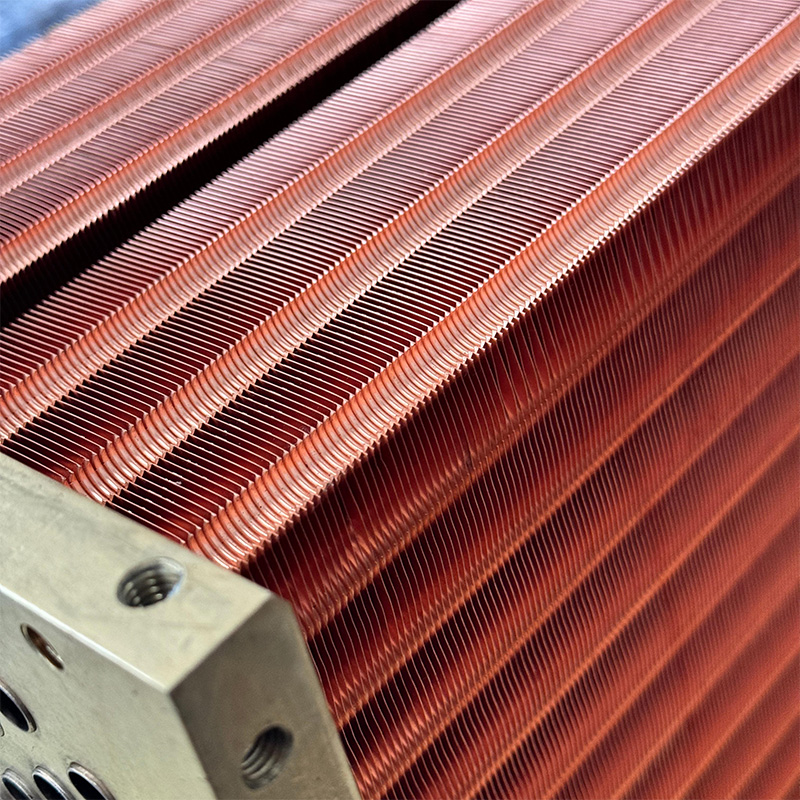
The geometric parameters of the fins vary widely depending on the task. The fin height can be from 8 mm to 25 mm, the fin pitch can be from 2.5 mm to 6 mm. The thickness of the rib tape is usually in the range of 0.3-0.9 mm. It is important to understand that increasing the height of the fin does not always lead to an increase in efficiency: if the fin is too high, its tip does not work efficiently due to a drop in temperature, and aerodynamic drag increases exponentially. Our engineers carry out hydraulic calculations for each project to find a balance between heat transfer and energy costs for pumping coolant.
Weld quality control is carried out in three stages. First, a visual inspection and measurement of the seam geometry using optical-mechanical instruments. Then non-destructive testing (eddy current or ultrasonic) to identify internal defects such as lack of fusion or pores. And finally, selective destructive testing of samples using a tensile testing machine. The protocol of these tests is included in the batch passport. Without such a document, the pipe cannot be considered a high-strength product, regardless of the seller’s assurances.
Product certification also includes testing for compliance with industrial safety requirements. To work at hazardous production facilities in the Russian Federation, it is necessary to have a permit from Rostechnadzor, and for export to the countries of the EAEU and the global market - certificates of compliance with the technical regulations of the Customs Union (TR CU 032/2013) and ASME/PED standards. The presence of the EAC marking, the ASME stamp and a quality certificate signed by the chief technologist is a mandatory condition for acceptance of the goods by the customer.
Applications and solutions for specific industries
Laser welded finned tubes are used where maximum compactness of heat exchange equipment is required while maintaining high efficiency. One of the most demanding sectors is the oil and gas industry, in particular gas treatment and compression plants. Here the pipes operate under high pressure (up to 12 MPa) and the presence of hydrogen sulfide. Conventional soldered or rolled fins in such an environment quickly corrode along the joint, causing leaks. The laser seam, being homogeneous with the base metal, ensures tightness for the entire service life of the installation.
In the energy sector, especially in modernization projects of thermal power plants and state district power plants, such pipes are used in economizers and air heaters. A client of one of the large energy companies was faced with the problem of frequent boiler shutdowns due to vibration destruction of tubular bundles. After replacing standard pipes with our products with laser welding and modified fin spacing, the vibration level decreased by 45%, which made it possible to reach the design capacity without the risk of accidents. Heat transfer efficiency increased by 18%, resulting in fuel savings of about 2.5% year on year.
The chemical industry places special demands on materials. In the production of fertilizers or polymers, heat exchangers are often in contact with corrosive gases and acidic condensates. Here we use pipes made of duplex stainless steel or titanium. Laser welding of titanium requires special protection with an inert gas (high-purity argon), since the metal actively absorbs oxygen and nitrogen when heated, becoming brittle. Our technology includes local protection chambers, which allows us to obtain silver-colored welds without an oxide film, guaranteeing complete corrosion resistance. This experience is directly related to our production of titanium shell-and-tube heat exchangers and seawater desalination equipment, where weld cleanliness is a critical factor in durability.
Another promising area is cryogenic technology and gas liquefaction. At temperatures below -100°C, conventional welded joints become a stress concentration zone and may crack. The laser weld with a fine-grained structure retains its viscosity even when deeply cooled. We have supplied such pipes to LNG plants, where the reliability of every meter of pipeline is critical to the safety of the entire production. In these projects, each pipe undergoes additional testing for impact strength at operating temperature.
It is important to note that there is no universal solution. What works perfectly in a gas heater may be redundant and expensive for a conventional heating system. Therefore, before starting production, we always request a technical and commercial proposal from the customer indicating all environmental parameters: inlet and outlet temperatures, pressure, gas composition, permissible pressure drop. Only on the basis of this data we select the optimal pipe configuration, avoiding both insufficient efficiency and unreasonable increase in cost.
Production process and delivery time control
The production cycle for manufacturing finned tubes with laser welding consists of several successive stages, each of which is automated to eliminate the human factor. The process begins with incoming inspection of raw materials. The base tubes and fin tape are tested for chemical composition using a spectrometer and for mechanical properties by tensile testing. A deviation in pipe wall thickness of more than 5% from the nominal value is grounds for return to the supplier, as this directly affects the welding conditions.
Surface preparation is the next critical step. The metal must be absolutely clean from oils, oxides and contaminants. We use multi-stage cleaning: degreasing with solvents, pickling in acid baths (for stainless steel) and finishing with air. Any remaining oil stain during laser welding turns into a carbon inclusion, which becomes a source of corrosion or causes pores in the weld. After cleaning, the pipes are fed into a finning machine, where the spiral is formed and the fin is pre-fixed.
The welding itself is performed on high-speed CNC lines. The operator sets the program depending on the pipe diameter and the required pitch. The system automatically adjusts the laser focal length and pipe feed speed. During the welding process, the pyrometer monitors the temperature in the melting zone, and if it goes beyond the specified range (for example, +/- 20°C), the system stops the process and signals the operator. This approach avoids overheating and warping of the pipe, which is especially important for long products.
After welding, the pipes undergo straightening and calibration to eliminate possible longitudinal distortions. This is followed by final inspection and packaging. Pipes are packed in wooden boxes or on pallets with protection from moisture and mechanical damage during transportation. Marking is applied with indelible paint or stainless steel tags containing the batch number, steel grade, dimensions and date of manufacture.
As for the timing, the standard production cycle is from 15 to 25 working days, depending on the order volume and the complexity of the profile. The minimum quantity (MOQ) for launching a line is usually 500 linear meters of one standard size. For large projects from 10 tons, we can reduce the period to 10 days by working in two shifts. Urgent orders are possible, but require approval of production load in advance. We understand that downtime at a construction site or plant is expensive, so we prioritize urgent projects without sacrificing the quality of control.
Frequently Asked Questions
What is the maximum length of finned tube that you can produce?
Technologically, our line allows us to produce pipes up to 18 meters in length in a single form without joints. However, logistical constraints often dictate lengths of up to 12 meters for ease of transport by standard vehicles. If a project requires longer lengths of pipe, we provide butt weld joints with the same level of quality control as the main product. It is important to consider that the longer the pipe, the stricter the requirements for straightness, so for lengths over 10 meters we carry out additional straightening on roller machines.
Can laser welding be used for bimetallic pipes (steel base + aluminum fin)?
Yes, this is possible, but it requires the use of special technologies, since direct welding of steel and aluminum is impossible due to the formation of brittle intermetallic compounds. We use a laser brazing method with an intermediate layer or pre-coating on the steel pipe. It is also common to use a bimetallic strip, where aluminum is already joined to steel by cold rolling, and only the outer layer is laser welded. This solution combines the corrosion resistance and thermal conductivity of aluminum with the strength of a steel base, but the cost of such pipes will be higher than their mono-material counterparts.
Как вы гарантируете отсутствие свищей и непроваров в шве?
Гарантия обеспечивается комплексом мер: автоматической системой мониторинга процесса сварки в реальном времени, которая фиксирует любые отклонения мощности лазера или скорости, и обязательным выборочным разрушающим контролем. Каждая смена производит контрольные образцы, которые подвергаются металлографическому анализу под микроскопом. Кроме того, мы предоставляем заказчику возможность присутствовать при отгрузке и проведении гидроиспытаний труб повышенным давлением (обычно в 1.5 раза от рабочего). Если в партии обнаруживается более 2% брака, вся партия подлежит 100% проверке или бракуется полностью.
Влияет ли направление навивки ребра (левое/правое) на эффективность теплообмена?
Для одиночных труб или пучков с хаотичным обтеканием направление навивки не имеет существенного значения. Однако в некоторых специфических приложениях, где важно создание закрученного потока для интенсификации теплообмена или самоочистки поверхности от накипи, направление может играть роль. Обычно мы используем правую навивку как стандарт, но по запросу заказчика возможно изготовление труб с левой навивкой или с чередованием направления в разных рядах теплообменника для оптимизации аэродинамики всего аппарата.
Какие документы сопровождают партию труб?
Вместе с продукцией вы получаете полный комплект сопроводительной документации: товарную накладную, счет-фактуру, сертификат соответствия (ГОСТ, ASME, PED или ТР ТС), паспорт качества с результатами химических и механических испытаний, акт визуального и измерительного контроля, а также руководство по монтажу и эксплуатации. Для экспортных поставок пакет документов дополняется таможенной декларацией и сертификатами происхождения формы СТ-1 ил и общего вида. Все документы формируются в электронном виде и передаются клиенту еще до отгрузки, чтобы ускорить процесс приемки на объекте.
Экономическая эффективность и долгосрочная выгода
При оценке стоимости оребренных труб многие закупщики совершают ошибку, сравнивая только цену за погонный метр. Такой подход игнорирует совокупную стоимость владения (TCO). Труба с лазерной сваркой может стоить на 15-20% дороже аналога с накатным ребром, но ее ресурс в 2-3 раза выше. Это означает, что вам не придется останавливать производство для замены теплообменника каждые два года. Стоимость простоя промышленной линии часто исчисляется миллионами рублей в сутки, поэтому надежность оборудования становится главным фактором экономии.
Кроме того, высокая эффективность теплопередачи позволяет уменьшить габариты самого теплообменного аппарата. Вместо громоздкой конструкции можно установить более компактный блок, что экономит пространство в цеху, снижает расход металла на корпусные детали и уменьшает затраты на монтаж и фундамент. В проектах с ограниченными площадями, например, на морских платформах или в модульных зданиях, это преимущество становится решающим.
Энергоэффективность — еще один пункт выгоды. Улучшенный тепловой контакт между ребром и трубой снижает термическое сопротивление, позволяя либо снизить температуру греющей среды (экономия топлива), либо увеличить мощность установки без увеличения расхода энергоносителей. В масштабах года экономия на энергозатратах может многократно перекрыть первоначальную переплату за качественную трубу. Наши расчеты показывают, что срок окупаемости разницы в цене составляет от 6 до 14 месяцев в зависимости от режима работы оборудования.
Мы готовы предоставить технико-экономическое обоснование для вашего конкретного случая. Инженеры компании проанализируют ваши текущие показатели и предложат решение, которое оптимизирует баланс между капитальными затратами и операционными расходами. Не стесняйтесь запрашивать детальный расчет — это бесплатно и ни к чему вас не обязывает, но может открыть резервы для повышения рентабельности вашего бизнеса.
Conclusion and call to action
Изготовление оребренных труб с лазерной сваркой повышенной прочности — это инвестиция в надежность и бесперебойность вашего производства. В мире, где требования к энергоэффективности и экологической безопасности постоянно растут, использование передовых технологий соединения металлов перестает быть опцией и становится необходимостью. CompanyWuxi Kaisheng Electric Power and Petrochemical Equipment Co., Ltd.предлагает не просто металлическую продукцию, а полноценное инженерное партнерство. Наш опыт в создании высоконапорных теплообменников ASME, котлов-утилизаторов и воздушных охладителей позволяет нам глубоко понимать физику процессов и реальные потребности нефтеперерабатывающей, химической и энергетической отраслей.
Наш опыт показывает, что правильный выбор типа оребрения и метода его крепления способен решить проблемы, которые казались нерешаемыми годами. Будь то борьба с вибрацией, коррозией в морской воде или необходимость уплотнения габаритов установки — лазерная сварка предоставляет инструменты для достижения этих целей. Мы открыты к диалогу и готовы адаптировать наши производственные мощности под самые сложные технические задания, предоставляя индивидуальные решения заказчикам по всему миру.
Если вы планируете модернизацию существующих мощностей или строительство нового объекта, не откладывайте вопрос выбора теплообменных элементов на последний момент. Свяжитесь с нами сегодня для получения консультации и расчета стоимости. Наши специалисты помогут подобрать оптимальную конфигурацию труб из необходимых сплавов (от углеродистой стали до титана и никелевых сплавов), подготовят коммерческое предложение с учетом всех логистических нюансов и обеспечат сопровождение проекта от чертежа до монтажа.Contact us today, чтобы обсудить детали вашего проекта и получить образец продукции для испытаний.
Для получения дополнительной информации о наших возможностях, полного каталога продукции включая трубные решетки и гофрированные пучки, посетите разделпродукция и услугиon our website. Мы гарантируем прозрачность сделок, соблюдение сроков и качество, подтвержденное десятилетиями успешной работы на рынке B2B и соответствием международным стандартам.