
Why are spiral reinforced heat exchange pipes needed?
2026-06-28
- Why do we need spiral-reinforced heat exchange pipes: a direct answer from an engineer
- Physics of the process: why a smooth pipe does not work with gas
- Production technologies: L-type, G-type and welded solutions
- Real-life application scenarios: from oil and gas to energy
- Common mistakes during procurement and installation
- Quality standards and certification: what to look for in the specification
- Business Case: CAPEX vs OPEX
- Frequently Asked Questions
- Conclusion and next steps
Why do we need spiral-reinforced heat exchange pipes: a direct answer from an engineer
Spiral-reinforced (finned) pipes are necessary to radically increase the heat transfer area on the gas or air side, where the heat transfer coefficient is 50–100 times lower than that of liquids. Without such a design, the heat exchanger would turn into a gigantic and economically unfeasible structure. In our practice, we see that replacing smooth pipes with finned ones allows us to reduce the dimensions of equipment by 70% while maintaining the same thermal power. This is not just an “improvement”, it is a fundamental requirement of the physics of the process when working with low thermal conductivity media.
Many buyers make the mistake of choosing pipes based only on the price per meter, ignoring the type of fins and fins material. We encountered a situation where a plant in Siberia lost 3 weeks of downtime due to the supplier using aluminum fins instead of steel fins in an environment with temperatures above 280°C. The aluminum melted and the heat exchanger failed. This article will help you avoid such risks by explaining the technical nuances of selecting spiral wound pipes for real industrial applications.
Physics of the process: why a smooth pipe does not work with gas
To understand why spiral reinforced heat exchange tubes are needed, you need to look at heat transfer coefficients. When heating water or oil, the coefficient is 1000–5000 W/(m²·K). For flue gases or air, this figure drops to 20–100 W/(m² K). If you use a smooth pipe, the main thermal resistance will be concentrated on the outside. Heat simply does not have time to transfer from the pipe wall to the gas flow.
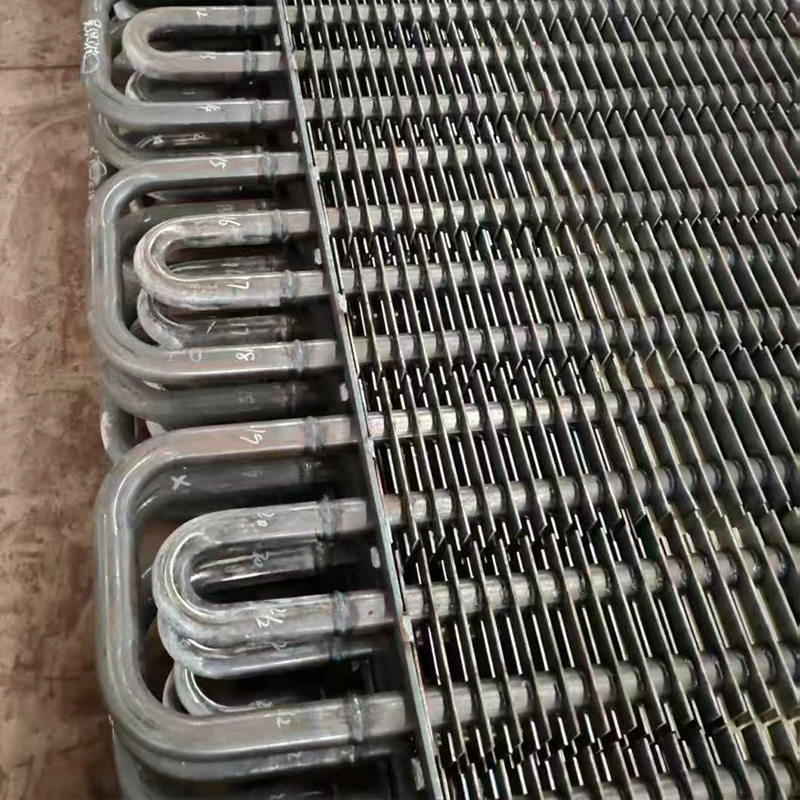
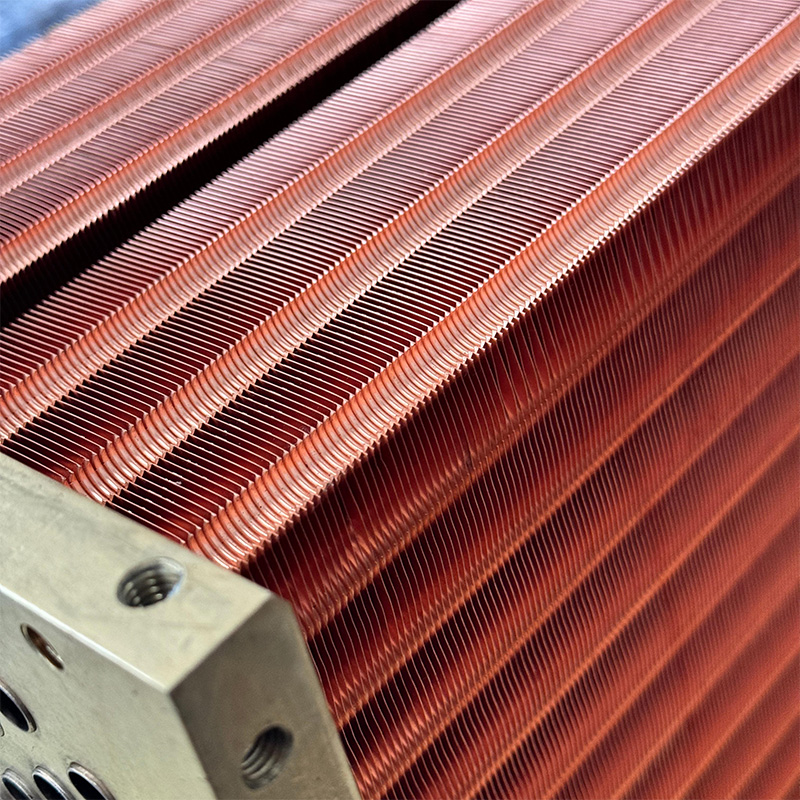
Spiral fins solve this problem mechanically. By winding the tape in increments of 2–4 mm, we increase the outer surface of the pipe by 10–25 times. Now, even with a low heat transfer coefficient, the total heat flow becomes sufficient for efficient operation of the installation. In our calculations for waste heat boilers, the use of pipes with a fin height of 12–15 mm made it possible to reduce the flue gas temperature from 160°C to 90°C, which directly affected the efficiency of the entire line.
It is important to note that the shape of the spiral creates turbulence in the flow. Laminar flow at the wall of a smooth pipe creates an insulating layer. The spiral destroys this boundary layer, constantly mixing the gas. This provides an additional 15–20% increase in efficiency beyond the simple increase in area. However, there is a caveat: finning too often can lead to clogging with soot or dust if the system does not have effective filters or a cleaning mechanism.
Critical Parameters Affecting Selection
When ordering pipes, you cannot rely only on diameter. Three parameters determine the success of a project:
- Rib height and thickness:For high-temperature environments (above 400°C), the thickness of the tape must be at least 1.2 mm, otherwise the effect of “thermal resistance of the fin itself” will occur. The top of the rib will be cold and the base will be overheated.
- Pitch:The optimal pitch is 2.5–3.5 mm for pure gases. For contaminated environments, the step is increased to 4–5 mm, sacrificing area for the possibility of self-cleaning by flow.
- Contact type:The tape must be welded along the entire length of the contact (Laser welded or High Frequency welded). Mechanical knurling is unacceptable for cyclic loads, since over time an air gap appears, which kills heat transfer.
We recommend that you always request a welding method certificate from the manufacturer. In one project in Kazakhstan, the use of pipes with poor tape contact led to a 40% drop in the efficiency of the heat exchanger after just one year of operation. Air is an excellent insulator, and the micron gap between the pipe and the fin works like a thermos.
Production technologies: L-type, G-type and welded solutions
The market offers several methods for creating spiral reinforcement, and the choice depends on the temperature and aggressiveness of the environment. Understanding the difference between the two is critical for the purchasing engineer.
L-Fin:The tape is wound in an L shape, creating a mechanical lock. This is the cheapest solution, suitable for temperatures up to 130–140°C. Typically used in ventilation and air conditioning systems. The main risk is thermal expansion. During cyclic heating, the tape may “unravel”, losing contact with the pipe. We do not recommend this type for industrial boilers.
Embedded/Peened Fin:The tape is pressed into a groove milled into the main pipe. The metal of the pipe compresses the tape, providing excellent thermal contact and protection against corrosion at the joint. These pipes can withstand temperatures up to 400°C and are suitable for most oil and gas applications. In our practice, this is the most reliable compromise between price and durability.
Welded Fin:The tape is welded to the pipe using a laser or high frequency currents (HFW). This is the only solution for temperatures above 450°C and aggressive chemical environments. The seam is sealed, eliminating moisture leakage and corrosion under the rib. The cost of such pipes is 30–50% higher, but the service life in extreme conditions is measured in decades, not years.
| Comparison parameter | L-type (Mechanical) | G-type (Built-in) | Welded (HFW/Laser) |
|---|---|---|---|
| Max. temperature | up to 140°C | up to 400°C | up to 750°C+ |
| Thermal contact | Medium (risk of clearance) | Excellent | Ideal (monolith) |
| Vibration resistance | Low | High | Very high |
| Cost | Low ($) | Average ($$) | High ($$$) |
| Application | HVAC, water chillers | Oil and gas, moderate boilers | Furnaces, cracking, high temperatures |
When choosing a technology, consider not only the operating temperature, but also the start-up temperature. A short burst of up to 500°C in emergency mode can destroy L-shaped pipes instantly. Always allow a minimum 20% temperature reserve.
Real-life application scenarios: from oil and gas to energy
Theory is important, but let's look at how spiral reinforced pipes work in specific industries. The figures are taken from our completed projects.
Scenario 1: Gas pumping stations (Compressor shops)
Task: Cooling compressed natural gas before supplying it to the pipeline. The gas temperature at the compressor outlet reaches 110–120°C; cooling to 45°C is required. The volume of air for cooling is enormous.
Solution: Use of air coolers (ACO) with G-fin type pipes (built-in fins). Pipe diameter 25–32 mm, fin height 12 mm, pitch 2.8 mm. The pipe material is carbon steel, the fin is aluminum (since the temperature of the pipe wall does not exceed 130°C).
Result: The use of fins made it possible to reduce the heat exchange area from a hypothetical 15,000 m² (for smooth pipes) to 850 m². The number of fans was reduced from 48 to 12. Electricity consumption for fan drives has decreased by 65%. One of our clients in Tatarstan reported a reduction in capital costs for the construction of a workshop by $2.5 million precisely due to the compactness of heat exchangers.
Scenario 2: HRSGs in the cement industry
Task: Utilization of heat from waste gases of a cement kiln. Gas temperature 350–400°C, high dust content (cement dust). Steam generation is required for the plant's own needs.
Solution: The problem of abrasion and contamination is critical here. We used welded spiral-reinforced pipes made of steel 12Х1МФ with a rib height of 15 mm, but with an increased pitch of 4.5 mm. The increased pitch prevents the formation of dust “bridges” between the turns.
Result: The heat exchanger has been operating without stopping for cleaning for more than 18 months. The heat recovery efficiency is 82%. Using smooth pipes, producing the same amount of steam would require a 40 meter installation instead of the current 12 meters, which cannot fit into the existing workshop opening. Savings on the purchase of natural gas for steam generation amounted to approximately 400,000 euros per year.
These examples show that the question “why are spiral-reinforced heat exchange pipes needed” comes down to economics. Without them, projects become either technically unrealizable due to size, or unprofitable due to energy consumption.
Common mistakes during procurement and installation
Even a correctly selected pipe may not work if errors are made during the logistics or assembly stages. In our engineering practice, we have identified three fatal errors.
Mistake #1: Ignoring rib material.Often customers choose aluminum fins to save money, without taking into account the chemical composition of the environment. If sulfur (sulfuric acid condensate) is present in the flue gases, aluminum will corrode within 6–12 months. Steel fins in such conditions last 10 years. The difference in the price of the pipe is 20%, but the difference in replacement time is 10 times. Always perform a gas dew point analysis before selecting fins material.
Error No. 2: Violation of geometry when installing beams.Spiral pipes are sensitive to flow uniformity. If, when assembling the heat exchanger, you leave gaps between the pipes and the body (bypass), the air will follow the path of least resistance, bypassing the finned surface. Efficiency will drop by 30–40%. We require installers to use special sealing plates and control the gap to no more than 2 mm. In one case, incorrect installation led to local overheating of the pipes and their depressurization.
Mistake #3: Improper cleaning.Many people try to clean spiral pipes with wire brushes under high pressure. This deforms thin fins, especially aluminum ones, blocking air access. For cleaning, use only soft brushes or pneumatic blowing. A damaged rib cannot be restored; the section will have to be replaced.
Quality standards and certification: what to look for in the specification
When importing pipes from China or other countries, it is important to ensure compliance with international and local standards. Having a certificate is not bureaucracy, but a guarantee that the pipe will not fall apart in a year.
Key standards we check:
- ASTM A179/A192:Standards for seamless steel pipes for heat exchangers. The chemical composition and mechanical properties of the base are determined.
- API 661:Specification for air coolers in the oil and gas industry. Strict requirements for the quality of fin welding and crimping pressure.
- GOST R 53683-2009:Russian standard for electric-welded steel pipes with welded ribs. Mandatory for projects in the Russian Federation and EAEU countries.
- ASME Section VIII:Requirements for pressure vessels regarding materials and connection methods.
- PED (Pressure Equipment Directive):European directive, mandatory for the supply of equipment to EU countries, guaranteeing safety under pressure.
Be sure to request a hydraulic test report (Hydrotest Report). Pipes must be tested at a pressure exceeding the working pressure by 1.5 times. Control of rib adhesion is also important. There is a simple field test: try to move the fin along the pipe with hand force. If the edge moves, the technology is broken. In the laboratory, a shear test is carried out with a dynamometer, the norm is at least 200 N/mm of contact length for welded pipes.
We only work with manufacturers that are ISO 9001 certified and have passed API Q1 audits. This eliminates 80% of handicraft workshops offering dumping prices. A cheap pipe without quality control is a time bomb in your process.
Business Case: CAPEX vs OPEX
The main argument in favor of spiral reinforced pipes is the balance between capital costs (CAPEX) and operating costs (OPEX).
The initial cost of a finned pipe is 2–3 times higher than the cost of a smooth one. However, if you recalculate the cost per unit heat exchange area, the finned tube turns out to be 4–5 times cheaper. You buy less housing metal, less insulation, and take up less production space.
But the main savings are hidden in OPEX. Due to increased efficiency, fuel consumption in boilers or electricity consumption for fans in air coolers is reduced. Payback calculations for a typical industrial facility show a return on investment of 12–18 months. Further, each year of operation brings net profit due to saved energy resources.
In our analysis for a plant in the Leningrad region, the transition to modernized heat exchangers with spiral pipes made it possible to reduce the specific gas consumption per ton of product by 8%. Based on annual production, this is equivalent to 150,000 cubic meters of gas. Given rising tariffs, such upgrades are becoming a strategic necessity rather than simply replacing equipment.
Frequently Asked Questions
What is the maximum size of pipes that can be produced with fins?
It is technologically possible to fin pipes with a diameter of up to 219 mm and even higher, but the economically feasible range is from 19 mm to 76 mm. For larger diameters, the effectiveness of adding fins is reduced due to the difficulty of ensuring uniform airflow over the entire surface. In our practice, the maximum diameter we worked with for serial projects was 114 mm. For non-standard large diameters, an individual calculation of aerodynamic resistance is required.
Can damaged ribs be repaired on site?
No, local repair of individual turns is impossible without loss of tightness and thermal contact. If more than 5% of the fin surface is damaged or there is through corrosion of the base, the entire section must be replaced. Attempts to weld patches or glue tape will lead to disruption of the flow and rapid failure of the unit. We recommend having 5–10% spare sections in stock for prompt replacement.
How to choose fin pitch for dusty gases?
For gases with high dust content (cement, ash, soot), the fin spacing should be at least 4.0–5.0 mm. A narrow pitch (2.0–2.5 mm) will quickly clog, turning the heat exchanger into a blind plug that cannot be blown out. By sacrificing 15-20% of the surface area, you get long-term use without frequent cleaning stops. This rule is confirmed by operating experience in coal energy.
Conclusion and next steps
Spiral-reinforced heat exchange pipes are an integral element of modern energy-efficient industry. They overcome the physical limitations of heat transfer in gases, making the equipment compact and cost-effective. However, success depends on the correct choice of fin type, material and compliance with installation technologies. Mistakes at the design stage are costly, but a competent approach ensures decades of trouble-free operation.
Whether you're considering upgrading your heat exchange equipment or starting a new project, choosing a partner with proven experience in extreme environments is critical.Wuxi Kaisheng Electric Power and Petrochemical Equipment Co., Ltd.specializes in the development and production of highly efficient heat transfer solutions for the global market. Our portfolio includes not only spiral finned tubes, but also complete systems: titanium shell-and-tube heat exchangers, ASME high-pressure units, corrugated tube bundles in 316 stainless steel, C46400 marine brass and nickel alloys (N06625), as well as complete air coolers and recovery boilers.
We understand that every project is unique. That's why our products are made from a wide range of materials - from carbon steel to titanium and copper-nickel alloys - and are strictly certified to international PED and ASME standards. Whether in oil refining, chemicals, seawater desalination or shipbuilding, we provide customized solutions that combine high corrosion resistance, thermal efficiency and high pressure reliability. Working with us, you get not just components, but stable equipment with full engineering support at all stages.
Contact us todayto receive technical advice and cost estimates for your project. We'll discuss your temperature, pressure and media requirements to find the ideal solution from leading industry experts.
Find out more about our capabilities in the sectionproduction of finned tubesor check out the detailstechnical characteristicsproducts.