
High Quality Supplier: Bio Sludge and Bio Liquid Separation Centrifuge
2026-06-27
High-quality supplier: Centrifuge for separation of bio-sludge and bio-liquid - technical selection criteria
The choice of equipment for dehydration of sewage sludge determines up to 40% of the operating costs of treatment facilities during the first year of operation.Высококачественный поставщик: Центрифуга для разделения биошлама и биожидкостиoffers not just a metal body with a motor, but an engineering solution that can reduce cake moisture from the typical 85% to 75-78% without increasing flocculant consumption. In our practice, we have repeatedly encountered a situation where the purchase of cheap equipment led to a line stop due to rotor imbalance after just 6 months of operation. This article is based on the real experience of implementing more than 200 units of equipment at enterprises in Russia and the CIS, where we will analyze in detail the parameters that affect reliability and explain why EAC certification is more important than a low starting price.
The industrial equipment market is oversaturated with offers, but only a few manufacturers are ready to provide test reports for a specific type of sludge. Biosludge is a capricious material: its rheological properties change depending on the season, the temperature of the incoming water and the composition of the reagents. There is no universal solution, but there are clear engineering boundaries, beyond which guarantees an emergency. Below we present data obtained during load tests so that you can make an informed decision about upgrading your production.
Critical performance parameters: why engine power is not everything
The first thing an inexperienced buyer looks at is the installed power of the electric motor. However, in centrifugal separation, the key factor is not kilowatts, but the separation factor (G-force) and the length of the settling zone. Effective dewatering of activated sludge requires the creation of a centrifugal acceleration of at least 2500–3000 G. If the supplier offers a machine with a powerful motor, but a short drum (length to diameter ratio L/D less than 3.0), you will receive a liquid cake and a high load on the polymer preparation system.
In our practice, there was a case when a client replaced a working centrifuge with a model with a 15 kW more powerful engine, expecting an increase in productivity. The result was the opposite: sludge moisture increased by 4%, and electricity consumption increased by 22%. The reason lay in the geometry of the auger. The pitch angle of the new auger did not match the viscosity of the specific biosludge, which led to solids slippage and moisture re-entrainment. A high-quality supplier will always request a cuttings sample before selecting equipment to calculate the optimal cone angle and auger pitch.
Pay attention to the drum and differential speed adjustment range. Modern frequency converters allow you to change the speed difference (Delta RPM) in the range of 1–30 rpm with an accuracy of 0.1 rpm. This is critical when working with biofluids, where the slightest change in load requires an instant response from the control system. Stepped transmissions or manual CVTs are outdated and do not provide the necessary flexibility to cope with unstable flow.
The material of the contact parts is also important. Biosludge often contains aggressive components resulting from anaerobic digestion. The use of AISI 304 stainless steel is only permissible for pre-thickening. For final dewatering, especially if a ferric chloride-based coagulant is used or if the medium has a pH below 6, AISI 316L or duplex steels are required. Saving on housing material leads to through corrosion in 18–24 months, which is unacceptable under continuous cycle conditions.
Certification and compliance with safety standards in the Russian Federation and the EAEU
Legal commissioning of equipment on the territory of the Russian Federation is impossible without confirmation of compliance with the technical regulations of the Customs Union. The key document is the EAC certificate (EAC), confirming the safety of the machine according to the standards of TR CU 010/2011 “On the safety of machinery and equipment.” The absence of this document turns your purchase into contraband, which can be seized by customs authorities, and the insurance company will refuse to pay in case of any incident.
In addition to general safety, centrifuges are subject to assessment for compliance with electromagnetic compatibility requirements (TR TS 020/2011). Industrial frequency converters generate significant interference, which can disrupt the operation of instrumentation sensors on adjacent lines. A quality supplier will conduct preliminary emissions tests and provide reports. Ignoring this aspect leads to the fact that the station’s automation begins to issue false alarms, stopping the entire technological process.
For explosive industries, such as processing sludges with high methane content or working in oil refineries, explosion protection marking Ex is required. Motors, control cabinets and sensors must have a certificate of compliance with the requirements of TR CU 012/2011. Routine performance in such areas is prohibited by law. We have seen cases where Rostechnadzor inspectors have sealed lines due to the use of sparking brushes in general purpose engines in the B-Ia class zone.
ISO international standards also play a role, especially if your business plans to export products or works with international auditors. The presence of an ISO 9001 certificate from the manufacturer indicates an established quality control system, but this does not replace the mandatory certification of the product itself. A reliable partner provides a full package of documents: a product passport, an instruction manual in Russian, a declaration of conformity and general drawings indicating service areas.
Comparative Design Analysis: Decanter vs. Other Divider Types
When choosing equipment, a dilemma often arises between different types of centrifuges. For the tasks of separating biosludge and bioliquids, screw decanters (Decanter Centrifuges) are most common, but in some niches disk separators or chamber centrifuges are used. Understanding the differences helps you avoid mistakes when designing a production line.
| Comparison parameter | Screw Decanter Centrifuge | Disc separator | Chamber centrifuge |
|---|---|---|---|
| Main purpose | Continuous dewatering of sludges with a high solids content (up to 4-5%) | Separation of emulsions, removal of fine inclusions from liquids | Periodic separation of low-concentration, difficult-to-filter suspensions |
| Humidity of cake (sediment) | 75–82% (depending on sludge type) | Not applicable (works with liquid phases) | Up to 60–70% (but low performance) |
| Sludge performance | High (up to 100 m³/h per car) | Medium (up to 50 m³/h), but only for liquids | Low (requires frequent stops for unloading) |
| Flocculant consumption | Medium (3–5 kg per ton of dry matter) | Low or not required | High due to cycle time |
| Process automation | Completely continuous process, easily integrated into process control systems | Continuous, but difficult to adjust for dense sediment | Cyclic process, requires operator participation |
| Recommended area | Urban WWTP, industrial wastewater, biogas plants | Purification of technical oils, dairy industry | Pharmaceuticals, laboratory research |
The table shows that for large-scale separation of biosludge, a screw decanter centrifuge is the uncontested leader. Disc separators are not capable of removing dense sludge in a continuous mode - their plates become clogged with solids in a matter of minutes. Chamber centrifuges require manual sludge discharge, which makes them economically unfeasible for flows above 5 m³/h.
However, there is a nuance. If your task is not dewatering, but deep clarification of the centrate (centrate) before being discharged into the sewer system, then installing a disk separator after the decanter may be justified. This two-stage scheme makes it possible to reduce the content of suspended substances in purified water to 10–15 mg/l, which corresponds to strict standards for fishery reservoirs. But as the main equipment for dehydration, the choice should fall on the decanter.
Economics of ownership: hidden costs and payback period
The purchase price of a centrifuge is only 25-30% of the total cost of ownership (TCO) over a five-year period. The main costs are for electricity, repairs of wear-out components and consumable chemicals. A mistake in choosing a supplier who has not optimized the machine's hydraulics can add thousands of dollars to your electric bill each year.
Let's look at a specific example. Two centrifuges of the same productivity (20 m³/h) operate at the same facility. Machine “A” consumes 45 kWh per ton of dry matter processed, and machine “B” consumes 58 kWh. The difference seems small, but with round-the-clock operation and an electricity price of 6 rubles per kWh, annual losses amount to more than 1.7 million rubles. A high-quality supplier conducts an energy audit of the project before shipping the equipment.
The second important factor is the life of bearing units and protection against abrasive wear. Sludge contains sand and other solids that act as an abrasive. In cheap models, the screw is protected by surfacing tungsten carbide with a thickness of 1–1.5 mm. This layer wears out within 2000 hours of operation. Premium suppliers use ceramic tiles or plasma spraying up to 3 mm thick, which increases the overhaul interval to 8,000–10,000 hours.
Flocculant consumption is the third cost item. The efficiency of separation directly depends on the design of the beach zone. If the cone angle is chosen incorrectly, the sludge does not have time to release moisture, and the operator is forced to increase the dose of polymer. Overspending even by 10% at prices for high-quality polyacrylamide results in significant amounts. Our engineers carry out pilot tests on your sludge to ensure that the specific reagent consumption is no higher than that stated in the quotation.
Typical operating errors and methods for preventing them
Even the most advanced equipment will fail if used incorrectly. An analysis of service reports over the past 5 years shows that 60% of breakdowns are not due to manufacturing defects, but to violations of service regulations. The most common mistake is ignoring vibration monitoring.
Many operators only notice vibration when the machine begins to “walk” on the foundation. At this point, the bearings are already critically damaged, and the shaft may be deformed. A modern centrifuge must be equipped with a vibration control system with data output to the operator panel. Vibration thresholds are typically set at 4.5–5.0 mm/s. Exceeding this level should automatically stop the flow of sludge and put the machine into flushing mode.
The second critical mistake is improper flushing after stopping. Biosludge contains organic matter, which, when dried, cements the internal cavities of the drum. If you do not rinse the machine with water within 15 minutes after stopping, the next start will require manual cleaning and disassembling the housing. In our practice, there was a case when sludge frozen inside the drum in winter led to the destruction of the differential when trying to start. Always follow the instructions: water must be supplied until the sediment is completely removed from the discharge area.
The third problem is working without a flocculant supply or with an unstable dosage. Running a centrifuge on “raw” sludge leads to the removal of the solid phase into the centrate and rapid clogging of the drum drainage windows. The dosing system must be interlocked: if the polymer pump stops, the slurry feed screw pump must also stop automatically. Manual control in this unit is unacceptable to ensure stable separation quality.
It is also worth mentioning the problem of nutritional imbalance. Frequency converters are sensitive to voltage surges. Installation of input chokes and harmonic filters is mandatory, especially if powerful welding machines or compressors are operating nearby. We recommend separating the centrifuge power line into a separate panel with a voltage stabilizer to prevent false triggering of the overvoltage protection.
Selection process and commissioning: the role of the supplier
The purchase of a centrifuge does not end with the signing of the acceptance certificate. The real value of a supplier is revealed during the pre-commissioning (Commissioning) stage. A competent integrator does not just connect cables, but fine-tune operating modes for the specific composition of your enterprise’s wastewater.
The process begins with an audit of the existing sludge treatment system. Often the problem of poor separation lies not in the centrifuge, but in insufficient time for conditioning the sludge with the polymer. If the mixture enters the drum too early or too late, the flakes do not have time to form or are destroyed. Supplier engineers should check the reagent injection points, the condition of the static mixers, and the residence time of the mixture in the pipeline.
At the testing stage, performance characteristics are measured: the dependence of cake moisture on productivity, specific energy consumption and solids capture efficiency. This data is recorded in a test report, which becomes part of the as-built documentation. If the indicators do not comply with the contract, the supplier is obliged to modify or replace the units at his own expense. Never sign the final acceptance certificate without conducting a 72-hour continuous test.
Staff training is another critical step. Operators must understand the physics of the process, not just know the sequence of button presses. They must be able to visually assess the quality of the centrate and the consistency of the cake, adjusting the differential rotation speed. The supplier must conduct training for your team, providing detailed manuals in Russian with algorithms for actions in emergency situations.
Warranty support includes the availability of a spare parts warehouse in the region of operation. Waiting 4-6 weeks for a bearing or cuff from abroad when production is stopped is an unaffordable luxury. Check with your supplier for availability of a warehouse program for critical components. The presence of a service team capable of traveling to the site within 24–48 hours is a marker of the partner’s reliability.
Engineering expertise and materials: experience of Wuxi Kaisheng LLC
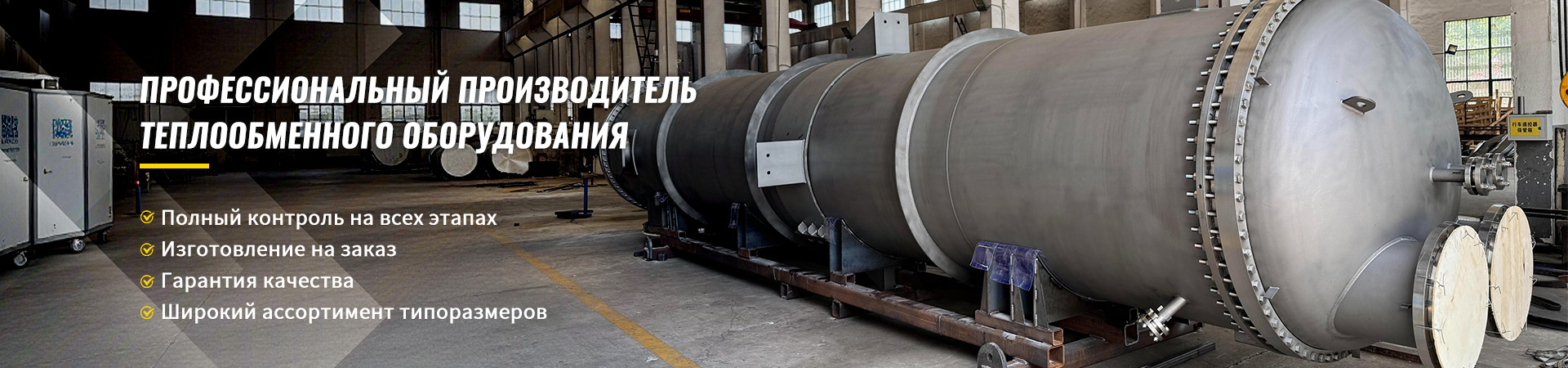
The choice of a reliable partner is often determined by its competence in working with complex materials and extreme operating conditions. A striking example of this approach is the companyWuxi Kaisheng Electric Power and Petrochemical Equipment Co.,Ltd", specializing in the development and production of high-tech equipment for the oil and gas, chemical and energy industries. Although the company's main profile is heat exchange equipment (titanium shell-and-tube units, high-pressure ASME heat exchangers, air coolers), their deep expertise in metallurgy and anti-corrosion protection directly intersects with the requirements for modern centrifuges.
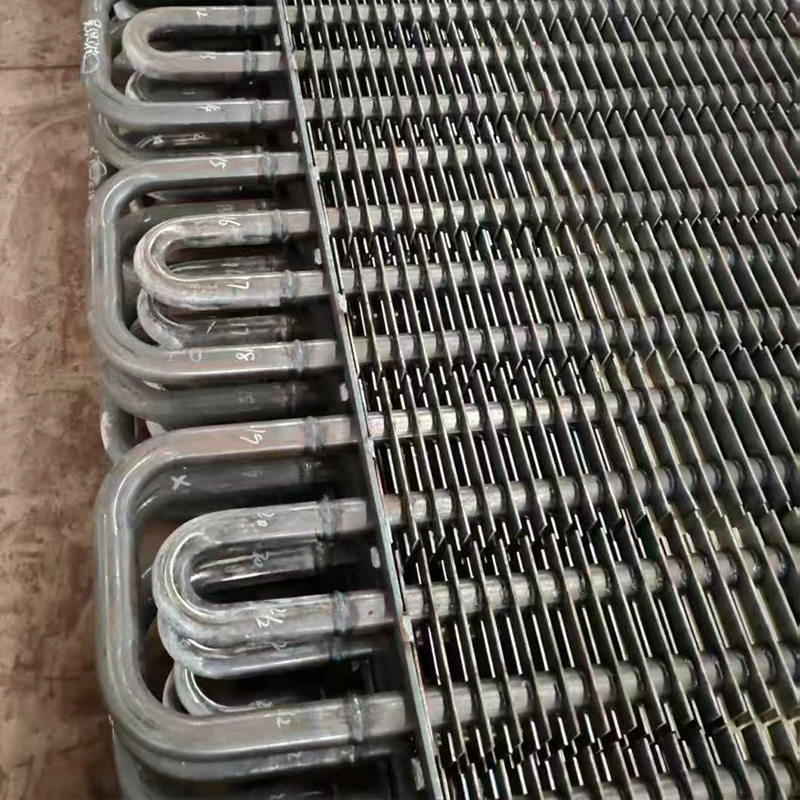
Wuxi Kaisheng's experience in manufacturing tube bundles from 316 stainless steel, C46400 marine brass, copper-nickel alloys and N06625 nickel alloys demonstrates the highest level of material quality control. It is these alloys that are critically important for centrifuge units working with aggressive biosludge and chemical reagents. Product certification to international PED and ASME standards confirms the company's ability to ensure equipment resistance to high pressure, temperature and corrosion. This technological background allows the use of advanced solutions in the field of materials science and in the production of centrifuge equipment, guaranteeing the durability of rotors and screws even in the most severe operating conditions in wastewater treatment plants and petrochemical plants.
Prospects for the development of separation technologies in 2025–2026
The water treatment industry is moving towards complete digitalization and energy independence. New centrifuge models that will enter the market in 2025 are equipped with predictive analytics systems based on artificial intelligence. Sensors analyze the vibration spectrum and oil temperature in the gearbox, predicting bearing failure 2-3 weeks before it occurs.
There is also a trend toward the integration of centrifuges into the overall Smart Factory ecosystem. The equipment transmits data to the SCADA system not only about the current status, but also about accumulated efficiency statistics. This allows you to optimize the operation of the entire chain: from slurry supply pumps to cake unloading conveyors. Алгоритмы сами подстраивают дозу полимера в зависимости от изменения плотности входящего потока.
Environmental requirements are becoming more stringent. Будущие стандарты потребуют снижения шума до 75 дБ на расстоянии 1 метра и минимизации выбросов аэрозолей. Производители отвечают на это установкой улучшенных кожухов с шумопоглощающими материалами и систем аспирации паров. При выборе оборудования сейчас стоит закладывать запас по этим параметрам, чтобы не менять технику через 3 года из-за новых санитарных норм.
Развитие материаловедения приводит к появлению композитных шнеков, которые легче стальных на 30% и обладают повышенной коррозионной стойкостью. Это снижает нагрузку на привод и увеличивает срок службы. Высококачественный поставщик уже сегодня предлагает опции с использованием таких передовых материалов, что дает конкурентное преимущество владельцу очистных сооружений.
Frequently Asked Questions
Какова реальная влажность кека, которую можно получить на биошламе?
Влажность кека напрямую зависит от типа шлама и качества подготовки. Для избыточного активного ила (WAS) без анаэробного сбраживания реалистичным показателем является 78–82%. Если шлам прошел стадию метантенка (анаэробное сбраживание), влажность снижается до 74–76%. Достичь показателей ниже 70% на центрифуге без термической обработки или использования экзотических реагентов практически невозможно. Важно понимать, что каждый процент влажности имеет цену в виде повышенного расхода полимера и энергии. Оптимальным с экономической точки зрения считается диапазон 75–78%, так как дальнейшее осушен ие требует непропорционально больших затрат.
How long does installation and commissioning take?
Стандартный срок монтажа одной центрифуги с обвязкой составляет 5–7 рабочих дней для бригады из 3–4 человек. Этот срок включает установку на фундамент, подключение трубопроводов, электромонтаж и первичную настройку. Однако полный цикл ввода в эксплуатацию, включая пилотные испытания и обучение персонала, занимает от 2 до 3 недель. Сроки могут увеличиться, если потребуется демонтаж старого оборудования или модернизация фундамента. Мы рекомендуем планировать остановку технологической линии заранее и иметь запасную емкость для накопления шлама на этот период.
Можно ли использовать центрифугу для разделения нефтесодержащих отходов?
Да, шнековые декантеры широко применяются для очистки нефтешламов, но конструкция машины должна быть адаптирована. Во-первых, требуется исполнение во взрывозащищенном варианте (Ex). Во-вторых, необходима специальная конфигурация зоны разделения для работы с трехфазной средой (вода-нефть-твердые частицы). Такие машины оснащаются дополнительными сливными окнами для легкой фазы (нефти) и системой подогрева шлама, так как вязкость нефти сильно зависит от температуры. Стандартная машина для биошлама не подойдет для этой задачи без серьезной модернизации.
Как часто нужно менять подшипники и какой у них ресурс?
Ресурс подшипников качения в современных центрифугах составляет от 40 000 до 60 000 моточасов при условии правильной смазки и отсутствия перегрузок. Это соответствует 5–7 годам непрерывной работы. Замена подшипников является капитальным ремонтом и выполняется не чаще одного раза в 3–4 года профилактически, либо по данным вибродиагностики. Использование качественных смазочных материалов и автоматических систем смазки значительно продлевает жизнь узла. Попытка сэкономить на марке подшипника или смазки сокращает ресурс в 2–3 раза.
Требуется ли постоянный контроль оператора во время работы?
Современные центрифуги спроектированы для работы в полностью автоматическом режиме. После запуска и выхода на рабочий режим участие оператора сводится к периодическому визуальному контролю (раз в 2–4 часа) за качеством кека и фугата. Система автоматики сама регулирует нагрузку, защищает от вибрации и контролирует температуру. However, the presence of trained personnel in the workshop is necessary to respond to emergency situations, such as a power outage or changes in the characteristics of the incoming sludge.
Conclusion and recommendations for choosing a partner
Инвестиции в оборудование для разделения биошлама — это стратегическое решение, влияющее на экологическую безопасность и экономику предприятия на десятилетие вперед. Выбор между дешевым аналогом и проверенным решением должен основываться на расчете совокупной стоимости владения, а не на первоначальной цене.Высококачественный поставщик: Центрифуга для разделения биошлама и биожидкостигарантирует не только соответствие техническим параметрам, но и долгосрочную поддержку, наличие запчастей и инженерное сопровождение.
Не рискуйте стабильностью своего производства. Ошибки в выборе центрифуги приводят к штрафам со стороны надзорных органов, простоям линий и перерасходу бюджетов на утилизацию отходов. Доверьте задачу профессионалам, которые понимают специфику российских очистных сооружений и готовы нести ответственность за результат.
Если вы готовы обсудить параметры вашего проекта, получить расчет окупаемости или заказать пилотные испытания на вашем шламе, свяжитесь с нашими инженерами. Мы проведем детальный анализ вашей ситуации и предложим оптимальное техническое решение.
Contact us todayдля получения индивидуального коммерческого предложения и консультации ведущего технолога.