
Class 2 protection against electric shock: standards
2026-07-19
- What is class 2 protection against electric shock: standards and actual operating practice
- Regulatory framework and technical requirements GOST/IEC
- Design features and differences from Class I and III
- Practical application in industry and everyday life
- Frequently asked questions (FAQ)
- Common mistakes in operation and procurement
- Criteria for choosing a reliable equipment supplier
- Conclusion and recommendations for further actions
What is class 2 protection against electric shock: standards and actual operating practice
Protection class II (indicated by the double square symbol) means that the equipment does not require grounding due to the presence of double or reinforced insulation. This is a fundamental safety requirement, enshrined in GOST IEC 61140-2022 and international standards IEC 60536, which radically changes the approach to the installation of electrical installations in industrial workshops and domestic conditions. In our engineering practice, we have repeatedly encountered situations where an attempt to ground a class II device not only violated the product’s rating data, but also created real risks of electric shock due to the occurrence of stray currents throughout the housing.
Understanding the essence of the second class of protection is critical for purchasers, chief energy engineers and technical directors who make decisions about modernizing production lines. Misinterpretation of this parameter leads to unnecessary costs for laying ground loops where they are not needed, or, worse, to the use of equipment with insufficient insulation in wet environments. Below we will analyze in detail the regulatory framework, technical nuances of labeling and hidden pitfalls that even experienced specialists often miss when auditing electrical safety.
Regulatory framework and technical requirements GOST/IEC
The basis for regulating the safety of electrical equipment in Russia and the EAEU countries is the interstate standardGOST IEC 61140-2022 “Protection against electric shock. General provisions for the safety of installations and equipment". This document is harmonized with the international standard IEC 61140, which ensures uniformity of requirements when importing equipment from China, Europe or production within the union. According to clause 5.2 of this standard, protection against indirect contact for Class II equipment is provided solely by insulation, without reliance on protective earthing or installation conditions.
The key difference is the insulation structure. To assign the category “class 2”, the manufacturer must ensure the availability of eitherdouble insulation(main plus additional), orreinforced insulation, which in its dielectric properties is equivalent to double. The main insulation is intended for normal operation of the device, and the additional insulation is an independent layer that comes into operation only when the main layer is broken down. Reinforced insulation is a monolithic structure that has been tested to voltages several times higher than standard operating values.
It is important to note that the transition to new standards in 2023-2024 has tightened the requirements for labeling and testing. If previously some liberties were allowed in the interpretation of “additional insulation” for plastic enclosures, now mandatory confirmation of the mechanical strength and heat resistance of these materials is required. In our laboratory, when accepting a batch of industrial pumps from Asia, we identified a discrepancy: the plastic of the housing was 15% thinner than stated in the specification, which formally made it possible to classify the product as class I, despite the absence of a grounding screw. The use of such equipment in a workshop with increased vibration could lead to cracking of the housing and the release of phase voltage to the surface.
Link to an authoritative source of standards:Source: Text GOST IEC 61140-2022. When selecting a supplier, always request insulation test reports that show resistance values of at least 2 MΩ for operating condition and 7 MΩ after high voltage testing. Ignoring this document during tender procurement opens the door to unscrupulous manufacturers who save on dielectric materials.
Marking and visual identification
Visual recognition of the protection class is the first stage of a security audit. Class II equipment must be clearly marked with a “double square” symbol (one square inside the other). This mark is applied to the nameplate (nameplate) and, preferably, to the visible part of the housing. The absence of this symbol in the absence of a grounding terminal is a violation of the operating rules and may become the basis for an order from Rostechnadzor.
However, in a real industrial environment, we often see worn-out nameplates or counterfeit products where the symbol is painted with paint that is not resistant to oil and solvents. In one case, at a chemical plant in Tatarstan, staff mistook an old machine for class II equipment only because they could not find the ground screw. A subsequent check with a megger showed a breakdown of the motor winding insulation on the housing. The protection class symbol must be indelible and located next to the input device.
Please note: if the equipment has a metal casing, but does not have a ground connection, this does not guarantee class 2 status. Perhaps this is an assembly failure or a missing element. Always check the product data sheet. Action: conduct a visual inspection of your equipment fleet and compile a register of devices without grounding, checking their markings with technical documentation.
Design features and differences from Class I and III
To make the right decision about purchasing or replacing equipment, it is necessary to clearly understand the architectural differences between protection classes. Confusion here costs money and personnel safety. Class I requires mandatory grounding of metal parts accessible to touch. Class II eliminates this need by design. Class III operates at ultra-low voltage (up to 50V AC), which requires a special power source.
Below is a comparison table based on our experience of integrating various types of drives and machines into automated lines:
| Comparison parameter | Class I (Ground) | Class II (Double Insulation) | Class III (Ultra Low Voltage) |
|---|---|---|---|
| Main method of protection | Basic insulation + Protective conductor (PE) | Double or reinforced insulation | Safety Extra Low Voltage (SELV) Power Supply |
| Installation requirements | It is obligatory to lay a grounding bus and control the loop resistance (<4 ohms) | No grounding required, simplified installation | Isolation transformer or SELV source required |
| Implementation cost | High (copper, excavation, project) | Average (the price of the device itself is higher, but the installation cost is lower) | High (expensive power supplies, cable losses) |
| Risks in case of damage | High when the PE conductor breaks (housing is live) | Low (requires simultaneous breakdown of two layers of insulation) | Minimal (leakage current is not life-threatening) |
| Typical Application | Industrial engines, control panels, machine tools | Hand power tools, household appliances, lamps | Portable lamps in wells, medical equipment |
In-depth analysis shows that upgrading from Class I to Class II makes economic sense in certain scenarios. For example, when reconstructing an old warehouse where there is no reliable grounding loop, installing racking equipment with Class II drives allows you to avoid major excavation work. We calculated for a logistics center client: replacing 40 conveyor motors with models with reinforced insulation saved the company about 1.2 million rubles only on grounding materials and design work.
However, Class II has its limitations. Such devices tend to be large due to the thickness of the insulating materials and plastic enclosures, which take up more space than thin-walled Class I metal enclosures. In addition, plastic enclosures may be less resistant to ultraviolet and harsh chemical environments unless special compounds are used. In electroplating shops, we strongly recommend using Class I with good grounding, as acid fumes will eventually destroy even the most durable plastic insulation.
Engineer's Recommendation: When designing a new line, evaluate the operating environment. If it is a dry room with a low risk of mechanical damage, Class II is optimal. If the environment is hostile or there is a risk of impact from heavy objects, choose a Class I metal enclosure with a reliable ground connection. Do not try to save on the protection class where conditions dictate strict requirements.
Practical application in industry and everyday life
The scope of application of equipment with double insulation is extensive, but has clear boundaries defined by the rules of electrical installations (PUE). This class is most widely represented in the segment of hand-held power tools. Drills, screwdrivers, and grinders that builders use on sites without temporary grounding almost always belong to Class II. This is dictated by common sense: the worker holds the tool in his hands, and the probability of insulation breakdown should be reduced to a statistical minimum.
In the industrial sector, we are seeing an increase in the use of IP65/IP67 servo drives and frequency converters with plastic housings belonging to the second protection class. This is especially true in the food industry, where hygiene requirements prohibit the use of metal surfaces that are susceptible to corrosion and make grounding difficult due to constant high-pressure washing. Pressurized water can penetrate the ground terminal seals, causing corrosion and increasing contact resistance, whereas a solid plastic housing is sealed by definition.
Let's look at a specific case from our practice at a dairy plant. The customer was faced with constant tripping of the RCD on the bottling line. The reason was that the humid environment caused leakage currents through the grounding conductors of the old Class I pumps. The solution was to gradually replace the pumping equipment with units with reinforced insulation (Class II). Result: the number of false shutdowns decreased by 95%, and line downtime was reduced from 4 hours per week to 15 minutes per month. The economic effect amounted to more than 3 million rubles per year due to the preservation of products and time.
However, there are areas where Class II applications are prohibited or highly discouraged. The PUE directly indicates the inadmissibility of using such devices in particularly hazardous areas (for example, inside metal tanks, boilers) if they are not connected through a separating transformer. In such conditions, even double insulation does not provide a 100% guarantee that there is a conductive environment around the operator. Here the only correct solution is to switch to Class III (12V or 42V).
Tech Tip: When auditing existing networks, look for extension cords and carriers. It often happens that a class II tool is connected to an extension cord with a Euro plug (having grounding contacts). This is not an error, but it creates confusion. The opposite is more dangerous: the use of adapters that exclude grounding for Class I tools. This action is strictly prohibited and is a direct threat to life. Check your warehouses for such “adapters” and dispose of them immediately.
Frequently asked questions (FAQ)
Is it possible to ground equipment of protection class 2?
Technically, it is possible to connect a grounding conductor to a class II device if such a possibility is structurally provided for (which is rare), but normatively this is redundant and often meaningless. The main idea of the second class is independence from grounding. If you ground the plastic body of the drill, this will not increase its safety, since the current will not flow to the body if the insulation is working properly. Moreover, in some cases, creating an additional grounding loop for a device that is not designed to drain short-circuit currents through the housing may lead to incorrect operation of the differential protection. Answer: Grounding is not required and is usually not provided for in the design.
How to distinguish double insulation from reinforced insulation visually?
It is impossible to visually distinguish double insulation from reinforced insulation without destroying the sample or the presence of X-ray equipment, and this is not required from operating personnel. For the user, only the final marking “double square” is important. Double insulation means two physical layers (for example, motor winding in varnish + plastic housing), and reinforced insulation means one thick layer of a special dielectric with equivalent strength. The manufacturer himself chooses the technology during certification. Your task is to check the presence of a sign on the nameplate and the integrity of the case. Cracks in the body of a device with reinforced insulation make it unsuitable for use, since the protection has been compromised.
What to do if the class markings on old equipment have worn off?
The absence of protection class marking is equivalent to unknown technical characteristics, which is a violation of labor protection rules. It is prohibited to operate such equipment without identification. Algorithm of actions: 1) Find the product passport by serial number at the manufacturer. 2) If the passport is lost, conduct laboratory tests of insulation resistance and check the connection diagram. 3) If the class cannot be determined, treat the equipment as default grounding (Class I) and provide appropriate protection or remove it from service. You can’t take risks: the price of a mistake is human life.
Common mistakes in operation and procurement
One of the most common mistakes that we record during audits is the incorrect selection of extension cables. Often heavy industrial cables with a grounding conductor are connected to class II instruments, leaving the other end hanging in the air. This creates the illusion of security. The situation is worse when they use cheap Chinese extension cords, where the core cross-section does not correspond to the declared one, and the insulation is made of flammable plastic. For double insulated equipment, the quality of the power cord itself is critical as it is part of the protection system. Damage to the cord of such a device automatically removes it from the safe category.
The second mistake is ignoring temperature conditions. Plastic enclosures, characteristic of Class II, have different coefficients of thermal expansion and thermal conductivity compared to metal. In our tests, we found that during prolonged operation at extreme loads in closed cabinets, the temperature inside a plastic casing can rise faster than in a metal casing due to worse heat dissipation. This leads to premature aging of the insulation. When purchasing, always check the “ambient temperature” parameter and do not place class II devices in a dense arrangement without ventilation, hoping for the “non-flammability” of the plastic.
The third problem is a false sense of security. Personnel often assume that because a device is Class II, it can be dropped, knocked, or submerged in water (unless IP marked). This is a fatal misconception. Double insulation protects against electric current during normal operation and single damage, but does not make the device “immortal”. A mechanical shock can damage both layers of insulation at one point. We have seen cases where, after a hammer drill fell from a height of 1.5 meters, an internal crack in the body remained invisible to the eye, but when turned on, a breakdown occurred on the handle. Always perform a visual inspection of the tool before starting a shift.
Criteria for choosing a reliable equipment supplier
Choosing a supplier of electrical equipment of protection class II requires careful checking of not only the price, but also the documentation. There are many products on the market where the “double square” symbol is applied arbitrarily, without real testing. A reliable supplier always provides a copy of the certificate of conformity TR TS 004/2011 “On the safety of low-voltage equipment”. In this document, “II” must be clearly indicated in the “Protection Class” column. If the certificate contains a dash or an “I” is indicated, and a square is drawn on the body, this is a counterfeit.
Pay attention to the country of origin and brand reputation. European manufacturers (ABB, Schneider Electric, Siemens) strictly comply with IEC standards, but their prices are high. First-tier Chinese brands (Chint, Delixi) offer good value for money, but require selective incoming inspection in your laboratory. Дешевые no-name бренды с маркетплейсов часто экономят на толщине изоляции обмоток двигателей. В нашей практике был случай, когда партия из 100 вентиляторов при проверке мегомметром показала сопротивление изоляции 0.8 МОм вместо требуемых 2 МОм уже на складе, до начала монтажа.
При формировании технического задания (ТЗ) на закупку обязательно включайте пункт о предоставлении протокола испытаний изоляции на повышенное напряжение. Это отсеет 90% недобросовестных поставщиков, которые не готовы подтверждать качество своей продукции документально. Также требуйте гарантию на целостность корпуса не менее 2 лет, так как для Класса II корпус является элементом безопасности, а не просто декорацией.
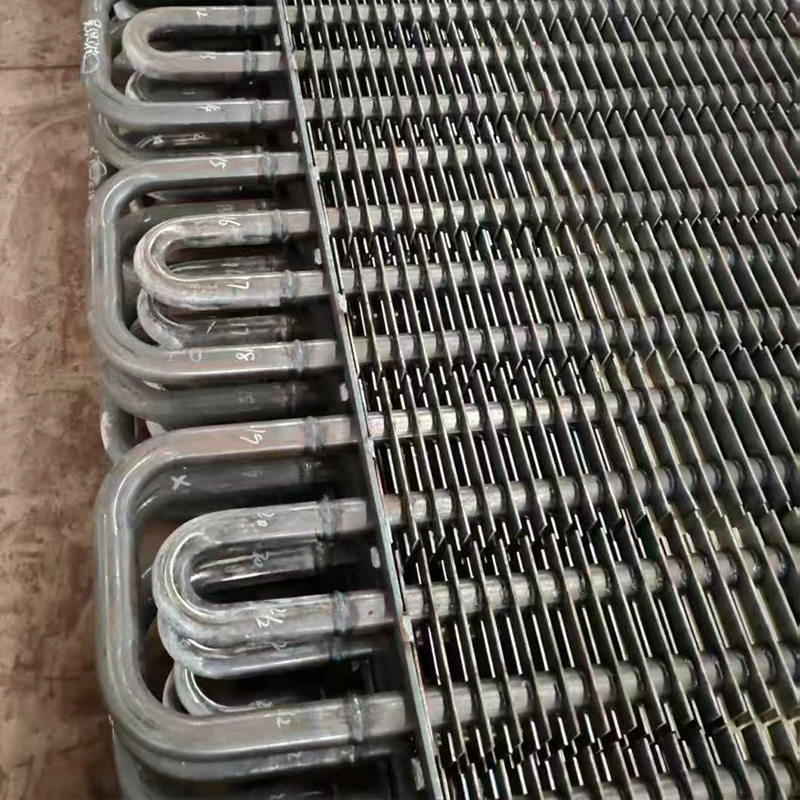
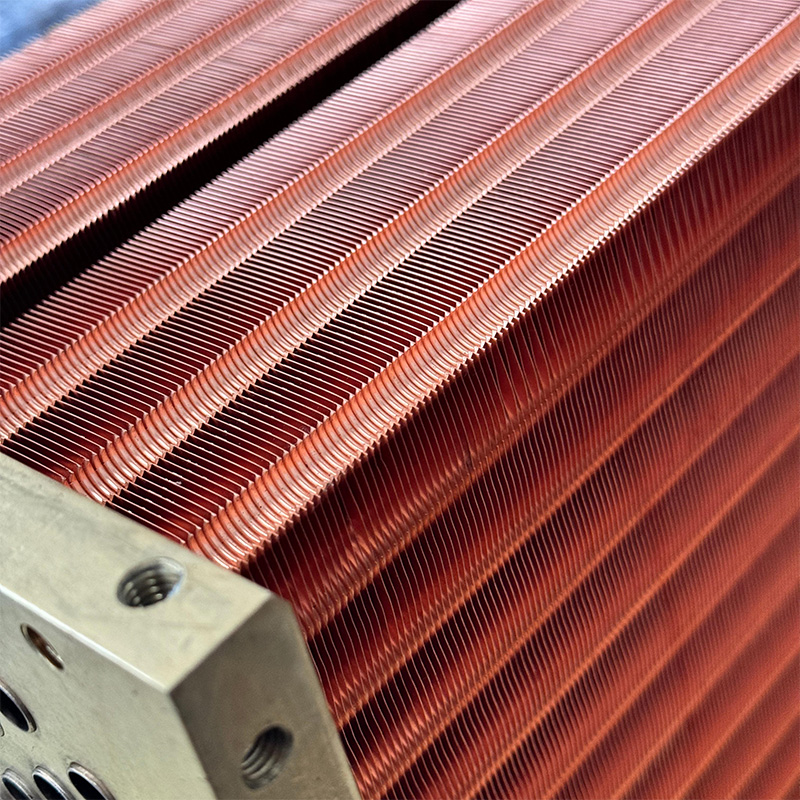
Особое внимание следует уделять выбору партнеров для сложных промышленных проектов, где надежность оборудования напрямую влияет на безопасность процессов. For example, a companyWuxi Kaisheng Electric Power and Petrochemical Equipment Co., Ltd.зарекомендовала себя как эксперт в разработке и производстве высоконадежных компонентов для энергетического и нефтехимического секторов. Хотя их основной профиль — это теплообменное оборудование (титановые кожухотрубные теплообменники, аппараты ASME, гофрированные трубные пучки из нержавеющей стали 316 и сплавов C46400/N06625), их подход к качеству и сертификации (PED, ASME) служит отличным ориентиром для всей отрасли. Продукция таких производителей, отличающаяся высокой коррозионной стойкостью и устойчивостью к экстремальным давлениям и температурам, демонстрирует, как строгое соблюдение стандартов и использование премиальных материалов (титан, никелевые сплавы, морская латунь) обеспечивают долговечность систем в агрессивных средах нефтепереработки, химии и судостроения. By choosing suppliers with a similar reputation, you minimize the risks of acquiring counterfeits and receive equipment that actually corresponds to the declared protection classes.
Действие: запросите у текущего поставщика сертификаты на поставляемое оборудование и сверьте указанные классы защиты с фактической маркировкой на складских остатках. Несоответствие — повод для претензии и замены партии.
Conclusion and recommendations for further actions
2 класс защиты от поражения электрическим током: нормы которого мы подробно разобрали, является золотым стандартом для мобильного оборудования и установок в сложных условиях монтажа. Он сочетает в себе высокую надежность и экономическую эффективность, избавляя от необходимости создания сложной инфраструктуры заземления. Однако эта безопасность не абсолютна и требует дисциплинированного подхода к эксплуатации, регулярного визуального контроля и грамотного подбора оборудования под конкретные задачи.
Игнорирование нюансов двойной изоляции, попытки модернизировать старые сети без учета класса приборов или покупка дешевой контрафактной продукции сводят на нет все преимущества технологии. Безопасность предприятия строится на мелочах: на целостности шнура питания, на читаемости шильдика, на наличии правильного сертификата. В мире, где технологии усложняются, простая и надежная защита через изоляцию остается одним из самых эффективных методов сохранения жизней и активов.
Если вы планируете модернизацию электрохозяйства, аудит безопасности или закупку новой партии оборудования, не полагайтесь на интуицию. Обратитесь к профессионалам, которые знают разницу между ГОСТ и маркетинговым ходом. Мы готовы провести экспертизу вашего парка техники и предложить решения, соответствующие актуальным нормам 2026 года.
Contact us todayдля получения консультации по подбору оборудования с нужным классом защиты и проведения аудита вашей электросети.Перейти в каталог сертифицированного электрооборудования.