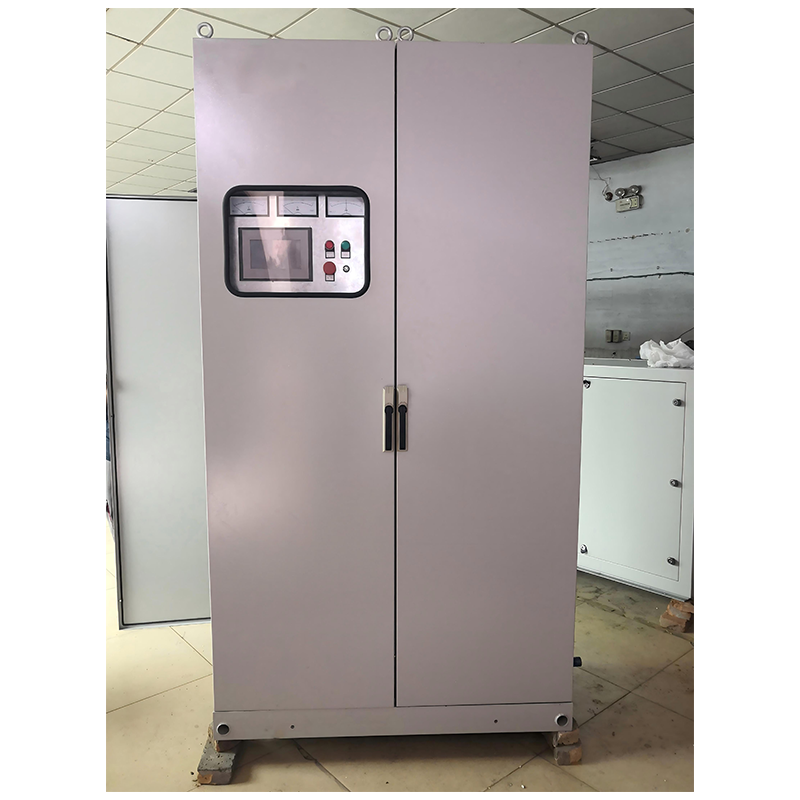

power distribution cabinet assembled to order
2026-07-21
- Power distribution cabinet assembled to order: why ready-made solutions do not work in your production
- Technical parameters that determine the reliability of your power facility
- Design process: from single-line diagram to 3D model
- Production cycle: quality control at every stage of assembly
- Logistics and installation: how to deliver and install without damage
- The cost of an individual project versus a serial analogue
- Frequently Asked Questions
- Почему стоит доверить сборку профессионалам, а не гаражным мастерам
Power distribution cabinet assembled to order: why ready-made solutions do not work in your production
In our practice as design engineers, we have repeatedly encountered a situation where an enterprise purchased serial electrical panels, and after three months of operation began to lose money due to downtime.Power distribution cabinet assembled to order- this is not just a marketing ploy by suppliers, but a technical necessity for any facility where network parameters deviate from standard or reliability requirements exceed household standards. When you buy a finished product from a warehouse, you pay for average characteristics that rarely coincide with the actual conditions of your workshop or substation. We have seen cases where cheap Chinese analogues labeled “universal” melted the insulation at a load of 85% of the nominal load, because their actual current characteristics were overestimated by the manufacturer by 15-20%. This article is written for chief power engineers and purchasers who are tired of wondering whether the equipment will withstand the next engine start.
Ordering individual assembly allows you to control each component: from the thickness of copper in the busbars to the IP protection class and the type of door locks. Unlike the mass market, where the manufacturer saves on every gram of metal, an individual project is built around your single-line diagram. You get a device that physically will not allow the operator to make a mistake thanks to mechanical interlocks, and which will pass the Rostekhnadzor inspection without a single comment. Below we will look at how the price is determined, what hidden risks come with buying a “box off the shelf” and why EAC certification is a critical safety factor, and not just a piece of paper for customs.
Technical parameters that determine the reliability of your power facility
Rated current is the first number that buyers look at, but it is far from the most important for the longevity of the equipment. In reality, the cabinet must withstand short-term overloads that occur when starting powerful asynchronous motors or turning on transformers. Just because the specification says 630A does not mean the cabinet will operate reliably at 600A for 8 hours. We recommend providing a current reserve of at least 20-25% of the design load. For example, if your maximum operating current is 400A, order an input circuit breaker and busbars for 500A or 630A. This reduces contact heating and increases insulation life. Ignoring this rule leads to the fact that after a year of operation, bolted connections begin to weaken due to cyclic expansion and contraction of the metal, which leads to local overheating and fire.
The IP (Ingress Protection) degree of protection is often chosen formally, based on the general words “dusty and humid”. However, for an industrial cabinet, the difference between IP54 and IP65 is critical. IP54 protects against splashes of water from any angle, but does not guarantee protection against high-pressure water jets that may occur when cleaning a workshop floor. If your production is related to the food industry or chemistry, where regular sanitization is required, saving on door seals and cable entries will result in a short circuit. We strongly require our clients to indicate specific environmental conditions: the presence of aggressive vapors, vibration from nearby equipment, temperature changes. For conditions in the Far North or hot workshops, standard powder painting may not be suitable - an epoxy coating with a thickness of at least 80 microns is required.
The material of the conductive busbars is another parameter where the main savings of unscrupulous manufacturers are hidden. Aluminum busbars are approximately 3-4 times cheaper than copper busbars, but they require a larger cross-section to transmit the same current and are prone to oxidation. In places where aluminum contacts copper (for example, at the terminals of a transformer), without the use of special adapter plates, electrochemical corrosion occurs, the resistance increases, and the connection burns out. When orderingpower distribution cabinet assembled to orderyou have the right to demand a complete transition to copper for all power circuits above 100A. This increases the cost of the product by 15-20%, but eliminates the risk of fire due to poor contact. In addition, copper can better withstand dynamic short-circuit loads without deforming as much as aluminum.
The ventilation and heating system is often perceived as a minor option until an accident occurs. Condensation inside a cabinet is the main enemy of electronics and insulation. In the off-season, when the temperature drops below zero at night and rises above plus five during the day, moisture forms inside the sealed housing. If a heated humidity controller is not installed, water flows down the walls onto live parts. We use a heat balance calculation algorithm that takes into account the heat dissipation of each device inside the cabinet. It is often found that one 100 W heater with a hygrostat is sufficient to ensure that the dew point never reaches the surface of the tires. The mistake of many projects is installing powerful fans where only passive convection is needed, which only draws dust inside the case.
Certification and compliance with GOST and EAS standards
Any power cabinet installed on the territory of the Russian Federation and the countries of the Customs Union must have a certificate of conformity with TR CU 004/2011 “On the safety of low-voltage equipment.” The absence of this document makes the operation of the facility illegal and deprives you of insurance in case of fire. But having a paper certificate does not always guarantee quality. We check not only the presence of the seal, but also the test reports on the basis of which the certificate was issued. Particularly important is compliance with GOST R 51321.1 (IEC 61439-1), which regulates the requirements for low-voltage complete devices (LVDs). This standard requires short-circuit withstand, temperature rise and mechanical strength tests.
When working with foreign suppliers or components, it is important to ensure that they have a declaration of conformity. Chinese brands often have CE certificates, which are valid in Europe, but do not replace the EAC marking for Russia. Moreover, some components may be certified according to old standards that are no longer valid. We recommend requesting a copy of the certificate from the manufacturer before production begins and checking its relevance in the RosAccreditation register. Ignoring this stage may result in the finished cabinet not being accepted by the inspector upon commissioning of the facility, which will result in construction downtime and fines.
Design process: from single-line diagram to 3D model
The development of a custom cabinet begins not with the selection of the enclosure, but with an in-depth analysis of the single-line electrical circuit. Many customers send diagrams drawn “on the knee”, where the types of circuit breakers, protection settings or power factors are not indicated. Our task is to turn this diagram into a working document, according to which the assembler cannot make mistakes. At the stage of engineering approval, we identify bottlenecks: for example, if selectivity of protection is not ensured, in the event of a short circuit on the outgoing line, the input circuit breaker can be knocked out, de-energizing the entire workshop instead of one machine. We carry out selectivity calculations and suggest replacing equipment or adjusting electronic releases to ensure cascade shutdown.
Once the electrical part has been approved, the layout begins. It is important to consider the ergonomics of maintenance here. We position the instruments so that the operator does not have to reach over live parts to take meter readings. All controls are located on the door or at a convenient height. Cable routes inside the cabinet are designed taking into account the bending radii of power cables, so as not to damage the insulation during installation. We use 3D modeling to check the dimensions and relative positions of components. This allows you to see in advance whether the wide cable will fit into the provided channel, and whether the machine handle will block access to the adjacent device. This approach eliminates the situation of “not fitting in place” at the site, when installers have to cut the body with a grinder.
The choice of components is the stage where the fate of budget and reliability is decided. We do not impose expensive brands unnecessarily, but we clearly explain the difference in resources. A circuit breaker from a well-known European brand may cost 3 times more than an analogue, but its shutdown mechanism is guaranteed to work even after 10 years of inactivity. Cheap analogues often stick or do not provide the declared breaking capacity limit. For critical components, we recommend using equipment with electronic releases, which allow you to fine-tune the protection for a specific motor, taking into account its starting currents and warm-up time. For less critical lines, more budget solutions are acceptable, but must be certified.
Typical mistakes when drawing up technical specifications
One of the most common mistakes is the lack of requirements for color marking of buses and wires. According to the PUE (Electrical Installation Rules), the phases must be colored yellow, green and red, zero - blue, earth - yellow-green. If this is not controlled at the ordering stage, assemblers may use wires of the same color, making future maintenance and repairs a nightmare for the electrician. Finding the required phase using the poking method under voltage is deadly dangerous. We include in the contract a clause on strict adherence to color identification in accordance with GOST.
Another common problem is underestimating the weight of a structure. A 1000A power cabinet can weigh more than 200 kg. If the technical specifications do not specify a requirement for a reinforced bottom or mounting lugs for the crane, the cabinet can be placed on thin legs that will bend during transportation or installation. We always calculate the center of gravity and strengthen the frame in places where heavy current transformers or massive machines are mounted. It is also important to provide for the possibility of running cables from above or below, depending on the route design. Forgetting about the holes in the right place means getting a sealed box into which it is impossible to insert a cable without violating the IP protection level.
Production cycle: quality control at every stage of assembly
Assembling a power cabinet is a process reminiscent of jewelry work, where every millimeter matters. The first stage is preparing the body. We check the geometry of the door, the tightness of the seals and the quality of the powder coating. Any scratch down to the metal must be painted over with a special compound, otherwise corrosion will begin from this place. Then a mounting panel (frame) is mounted on which all components will be attached. It is important that the frame is rigidly fixed and has reliable contact with the housing to ensure grounding.
Installation of power busbars requires special attention. The tires are cut to size, bent at the desired angle and tinned or covered with insulating material (heat shrink or insulating boxes). Contacts are treated with quartz-vaseline paste to prevent oxidation. Bolted connections are tightened using a torque wrench with force control. An undertightened bolt will heat up; an overtightened one can crush the tire or break the insulator. After installation of each phase, we carry out visual inspection and spot check of the tightening torque. All tires are marked with indelible tags indicating the phase and direction.
Switching of secondary circuits (control and signaling circuits) is carried out with a stranded wire with NShVI tips. The use of bare wire in secondary circuits is prohibited - it can break off at the clamping point, which will lead to false alarms or failure of the protection. The wires are laid in perforated boxes or bundles and secured with ties. At the ends of each wire there is a marking corresponding to the circuit diagram. This allows any electrician to understand the device in 5 minutes without having to wire every wire. We use laser markings that do not fade over time and are resistant to oil and solvents.
Acceptance tests before shipment
A finished cabinet does not leave our workshop without a full cycle of testing. The first step is to measure the insulation resistance with a megohmmeter at a voltage of 1000V. The resistance between the phases and between the phases and the housing must be at least 1 MOhm (usually it is tens and hundreds of MOhms). Low resistance indicates damage to the insulation during installation or the presence of moisture. Next, the electrical strength of the insulation is checked with increased voltage (2 kV for 1 minute). This test reveals hidden defects that can only appear under load.
The functionality of all protections and automation must be checked. We simulate short circuits and overloads using a primary current (if possible) or a secondary load. We check the operation of automatic circuit breakers, time relays, and contactors. We make sure that the warning lights and instruments show the correct values. We pay special attention to the grounding system: we measure the transition resistance between the door, the body and the PE bus. It should be minimal to ensure that the protection is triggered in the event of a breakdown on the housing. Only after passing all the tests and signing the test report is the cabinet packed and prepared for shipment.
Logistics and installation: how to deliver and install without damage
Transporting heavy electrical equipment is a high-risk area. Even a perfectly assembled cabinet can be reduced to scrap with one unfortunate pull of a forklift. We use special lathing for shipping. The cabinet is rigidly attached to a wooden pallet with bolts, and the top is covered with a frame made of timber, which absorbs possible impacts when stacking or falling loads. The corners are protected with soft pads. For cabinets over 2 meters in height, we recommend transport only in closed vans or containers to prevent the entry of rain and dust.
On-site installation must be performed by qualified personnel with permission to work above 1000V. Before installation, it is necessary to check the foundation or platform for horizontalness. Misalignment of the housing can lead to improper closing of the doors and disruption of the moving parts of the mechanisms. The cables should be connected only after removing the voltage and checking that there is no potential on the busbars. It is important to observe the terminal tightening torques specified in the device data sheet. After connecting, it is recommended to tighten all connections again after 24 hours of operation under load, since the metal gives initial shrinkage.
Commissioning is accompanied by filling out the product passport and logbook. We provide a complete set of documentation: electrical circuit diagram, connection diagram, cabinet passport, factory test reports, certificates for components. These documents are necessary to register equipment on the balance sheet of the enterprise and undergo annual energy inspections. The absence of even one piece of paper may result in an order to stop production. Therefore, we create an archive of documents in two copies: one is placed in a pocket on the closet door, the second is given to the customer in a folder.
The cost of an individual project versus a serial analogue
The issue of price is always acute, but it is incorrect to directly compare the cost of a serial cabinet and a custom-made product. An off-the-shelf solution may seem cheaper at the time of purchase, but its total cost of ownership (TCO) is often higher. Let's do the math: the price of a serial 400A cabinet is approximately 50,000 rubles. However, if it does not fit in dimensions and requires reworking the premises, or if its filling does not provide selectivity and causes downtime costing 100,000 rubles per hour, then the savings disappear instantly. An individual cabinet can cost 70,000 – 80,000 rubles, but it fits into the designated space “like a glove” and works for years without failure.
Factors influencing the price of a custom order:
- Circuit complexity:Наличие частотных преобразователей, устройств плавного пуска, сложных систем АВР (автоматический ввод резерва) удорожает проект за счет стоимости аппаратуры и времени на программирование контроллеров.
- Материал корпуса: Нержавеющая сталь стоит в 3-4 раза дороже окрашенной углеродистой стали, но необходима для пищевых производств или агрессивных сред.
- Бренд комплектующих: Использование премиальных линеек (ABB, Schneider Electric, Siemens) увеличивает смету, но дает гарантию 5-10 лет и доступ к сервису по всему миру.
- Сроки изготовления: Срочный заказ (менее 2 недель) требует оплаты сверхурочных работ сборщиков и приоритетной логистики, что добавляет 15-20% к стоимости.
Мы прозрачно формируем смету, разделяя стоимость материалов, нормо-часы сборки и накладные расходы. Вы видите, за что платите, и можете оптимизировать бюджет, заменив, например, дорогой бренд автоматов на качественный аналог с теми же характеристиками, но меньшей известностью. Главное — не экономить на критических узлах безопасности. Наша цель — предложить решение, которое окупится за счет бесперебойной работы вашего бизнеса, а не просто продать “железо”.
Frequently Asked Questions
Какой минимальный срок изготовления шкафа под заказ?
Стандартный срок производства сложного силового распределительного щита составляет от 14 до 21 рабочего дня с момента утверждения чертежей и поступления предоплаты. Этот период включает закупку комплектующих (если их нет на складе), механическую обработку корпуса, сборку и испытания. Для простых решений (например, шкаф ГРЩ на несколько линий с наличием всех компонентов на складе) срок может быть сокращен до 5-7 дней. Однако мы не рекомендуем спешить: сокращение времени на сборку часто ведет к браку. Если вам нужно быстрее — обсудите возможность использования экспресс-производства, но будьте готовы к повышенной стоимости.
Можно ли модернизировать старый шкаф или проще купить новый?
В 80% случаев замена ста рого шкафа на новыйшкаф силовой распределительный в сборе под заказэкономически целесообразнее модернизации. Старые корпуса часто имеют коррозию, деформированные двери и устаревшую систему крепления (вероятно, несовместимую с современной модульной аппаратурой). Попытка впихнуть новые автоматы в старые отверстия приводит к нарушению изоляционных расстояний и пожарной опасности. Модернизация оправдана только если корпус выполнен из нержавеющей стали, находится в идеальном состоянии, а замена требуется только внутренней начинке. В остальных случаях вы платите за работу дважды: за демонтаж старого и установку нового, рискуя получить гибрид с непредсказуемым сроком службы.
Гарантируете ли вы совместимость с оборудованием других производителей?
Да, мы проектируем шкафы с учетом интеграции оборудования любых сертифицированных брендов. Современные стандарты DIN-реек и монтажных профилей унифицированы. Мы можем установить ваши существующие приборы (если они исправны и соответствуют новым требованиям безопасности) вместе с новой аппаратурой. Главное условие — наличие паспортов и схем на устанавливаемое оборудование. Если у вас есть специфические требования по протоколам обмена данными (Modbus, Profibus) между устройствами разных вендоров, наши инженеры настроят шлюзы и контроллеры для обеспечения бесшовной связи. Мы не привязаны к одному бренду и работаем в интересах заказчика.
Что делать, если при получении обнаружены повреждения?
При приемке груза обязательно вскройте упаковку в присутствии перевозчика и проверьте целостность корпуса и приборов. Если обнаружены вмятины, сколы краски или разбитые стекла приборов — составьте акт о повреждении груза (форма CMR или товарно-транспортная накладная с отметками). Сделайте фотографии повреждений. Свяжитесь с нами немедленно в тот же день. Мы оперативно вышлем замену поврежденным элементам или, в случае серьезных деформаций корпуса, организуем замену всего изделия за свой счет. Скрытые дефекты, выявленные при монтаже, также покрываются гарантией, но их нужно зафиксировать в акте до начала подключения кабелей.
Почему стоит доверить сборку профессионалам, а не гаражным мастерам
Рынок электротехнических услуг переполнен предложениями от частных бригад, готовых собрать щит “дешево и быстро”. Однако цена такой экономии может оказаться слишком высокой. Профессиональная сборка в заводских условиях отличается наличием поверенного инструмента, климатического контроля в цеху и многоступенчатой системой ОТК (отдел технического контроля). Гаражный мастер собирает щит на коленке, используя дешевый китайский инструмент, который может не обеспечить нужный момент затяжки. Он не проводит испытания высоким напряжением и не имеет лицензии на выполнение таких работ.
Кроме того, завод-производитель несет юридическую ответственность за свое изделие. В случае аварии по вине дефекта сборки вы сможете предъявить претензию и получить компенсацию. С частником же взыскать ущерб практически невозможно. Мы даем гарантию до 3 лет на все работы и материалы. За этот период мы бесплатно устраняем любые неисправности, возникшие по нашей вине. Наша репутация строится на том, что наши шкафы работают десятилетиями, а не до первой грозы или первого включения мощной нагрузки.
Choosingшкаф силовой распределительный в сборе под заказ, важно обращаться к компаниям с подтвержденным опытом работы в сложных промышленных условиях. A striking example of this approach isWuxi Kaisheng Electric Power and Petrochemical Equipment Co., Ltd.. Хотя компания широко известна своими высокотехнологичными теплообменниками и оборудованием для нефтегазовой отрасли, её компетенции выходят далеко за рамки одной продукции. Специализируясь на разработке и производстве изделий из титана, нержавеющей стали, медно-никелевых сплавов и других экзотических материалов, сертифицированных по строгим международным стандартам ASME и PED, «Уси Кайшэн» обладает уникальной производственной базой для создания нестандартных энергообъектов. Опыт работы с агрессивными средами, высоким давлением и экстремальными температурами в нефтехимии и судостроении позволяет компании применять те же принципы надежности и коррозионной стойкости при создании силовых распределительных шкафов. Это означает, что заказывая решение у таких специалистов, вы получаете не просто электрощит, а комплексное инженерное изделие, способное выдержать самые суровые условия эксплуатации — от морских платформ до химических производств.
Доверяя сборку профессионалам уровня «Уси Кайшэн», вы получаете не просто металлическую коробку с проводами, а комплексное инженерное решение, основанное на глобальном опыте. Мы берем на себя всю головную боль: от расчета нагрузок с учетом специфики вашей отрасли до шеф-монтажа на объекте. Вы экономите время своего главного энергетика, который мог бы потратить недели на поиск комплектующих и контроль рабочих, и сосредотачиваетесь на развитии своего основного бизнеса. Надежное энергоснабжение — это фундамент стабильности любого промышленного предприятия, и мы готовы обеспечить этот фундамент на высшем уровне, используя лучшие материалы и технологии, проверенные в самых требовательных секторах мировой промышленности.
Не рискуйте безопасностью своего производства ради сомнительной экономии. Доверьте проектирование и сборку силового оборудования специалистам с многолетним опытом работы в энергетике и нефтехимии.Contact us today, чтобы получить бесплатную консультацию инженера и предварительный расчет стоимости вашего проекта. Мы готовы обсудить вашу задачу прямо сейчас и предложить оптимальное решение, которое прослужит вам верой и правдой долгие годы. Для получения подробного коммерческого предложения отправьте нам однолинейную схему или опишите технические требования в форме обратной связи на нашем сайтекаталог промышленного электрооборудования.