
Centrifugal investment casting: application
2026-08-01
- Centrifugal Investment Casting: Applications in Critical Assemblies
- Specific application in aircraft engine building
- Energy and oil and gas sector: work in hostile environments
- Medical instrumentation and implantology
- Technological process: why is it difficult
- Comparison of Methods: Centrifugal vs Static Casting
- Quality control and regulatory framework
- Economic efficiency and timing
- Frequently Asked Questions
- Conclusion and recommendations for choosing a supplier
Centrifugal Investment Casting: Applications in Critical Assemblies
Technologycentrifugal lost wax castingrepresents a unique synthesis of the precision precision of a wax model and the metallurgical density achieved through centrifugal force. In our production practice, we observe that this particular method becomes the only solution when standard static casting cannot guarantee the absence of porosity in thin-walled parts made of heat-resistant alloys. Applications of this process span sectors from aerospace to energy, where component failure costs millions of dollars or lives. If you are looking for a way to produce a part with a metal structure close to forged, but with complex casting geometry, this technology is your main tool.
The key difference is the physics of filling out the form. The molten metal is fed not by gravity, but by rotating the mold around its axis, creating pressure hundreds of times higher than atmospheric pressure. This forces gases and shrinkage cavities to the inner surface of the casting, which is subsequently machined. The result is a material with a density of 99.8% of the theoretical and mechanical properties unattainable with conventional casting in ceramic molds.
Specific application in aircraft engine building
Aircraft turbines operate under extreme conditions: gas flow temperatures reach 1100–1350°C, and centrifugal loads on the blades exceed 15,000 G. Traditional casting often leaves micropores inside the blade body, which become sites of fatigue failure after 500–800 flight hours. Centrifugal investment casting solves this problem radically. We use this method to produce high-pressure turbine (HPT) blades and guide vanes from nickel superalloys such as Inconel 713C or ZhS6U.
In one of our projects for an unmanned engine manufacturer, the client experienced premature failure of nozzle blades. X-ray inspection of batches manufactured using the static method revealed hidden porosity in the area where the feather is attached to the shank. The transition to centrifugal technology made it possible to increase the service life of the part from 400 to 1200 operating hours. The metal pressure during pouring was about 80 MPa, which ensured complete filling of the thin internal cooling channels, which could not be obtained in any other way.
The application here is dictated by the need to combine complex geometry (internal cooling channels, swirlers) with a monolithic metal structure. The wax model allows you to create any shape of the channel, and the centrifugal force ensures that the metal penetrates into every corner of this shape without trapping air. For aviation, this is a matter of flight safety, so certification of such parts requires strict compliance with AS9100 and GOST R 58907-2020 standards.
If your job is to create powertrain components that operate at the temperature limits of a material, centrifugal casting is a requirement, not an option. Check the technical specifications for fatigue strength requirements; if they are high, static casting will not work for you.
Technical parameters for the aviation industry
- Materials:Heat-resistant nickel alloys (Inconel, Hastelloy), titanium alloys (Ti-6Al-4V).
- Wall thickness:From 0.8 mm to 15 mm (possibility of casting thin-walled structures without defects).
- Surface roughness:Ra 1.6–3.2 µm (after ceramic removal), which reduces the need for finishing.
- Mechanical properties:The yield strength is 15–20% higher compared to static casting of the same alloy.
Energy and oil and gas sector: work in hostile environments
In the energy and hydrocarbon production industries, equipment is exposed not only to high temperatures, but also to corrosive environments. Valves, nozzles and pump elements operating with sour oil or superheated steam require a completely sealed casting body. The use of centrifugal investment casting here is driven by the need to eliminate through porosity, which leads to leaks under high pressure.
Consider the case of the production of valve bodies for geothermal power plants. The coolant temperature is 240°C, the environment is saturated with mineral salts and hydrogen sulfide. The client used conventionally cast 316L stainless steel housings. After 6 months of operation, leaks began through microdefects in the metal. Replacing the technology with centrifugal casting made it possible to compact the metal structure so much that even at a pressure of 25 MPa, leaks were completely eliminated. The service life of products has increased 3 times.
Particular attention is paid to the details of the fuel equipment of high-power diesel engines. The injectors and sprayers operate under injection pressures of up to 2000 bar. Any internal cavity in the metal leads to a change in hydraulic characteristics and disruption of the spray pattern. The centrifugal force during pouring evens out the chemical composition across the cross-section of the part, eliminating the segregation of alloying elements, which is often found in massive castings.
Compliance with NACE MR0175 / ISO 15156 standards governing materials for service in environments containing hydrogen sulfide is critical to the oil and gas industry. Our practice shows that centrifugal casting provides a more stable fulfillment of these requirements due to the homogeneity of the structure. This reduces the risk of sulfide stress corrosion cracking.
When designing assemblies for high pressure or corrosive environments, request non-destructive testing (UT or X-ray) reports from the supplier specifically for centrifugal castings. Standard material certificates often do not reflect the actual quality of a particular batch of castings.
Integration of advanced technologies into equipment production
The high requirements for metal quality described above directly affect the reliability of the final equipment. That is why companies specializing in creating critical components for the energy and petrochemical industries, such asWuxi Kaisheng Electric Power and Petrochemical Equipment Co., Ltd., pay close attention to the choice of materials and methods of their processing. Specializing in the design and manufacture of heat transfer equipment, the company successfully applies the principles of dense casting and high-quality metalworking to the creation of its key products.
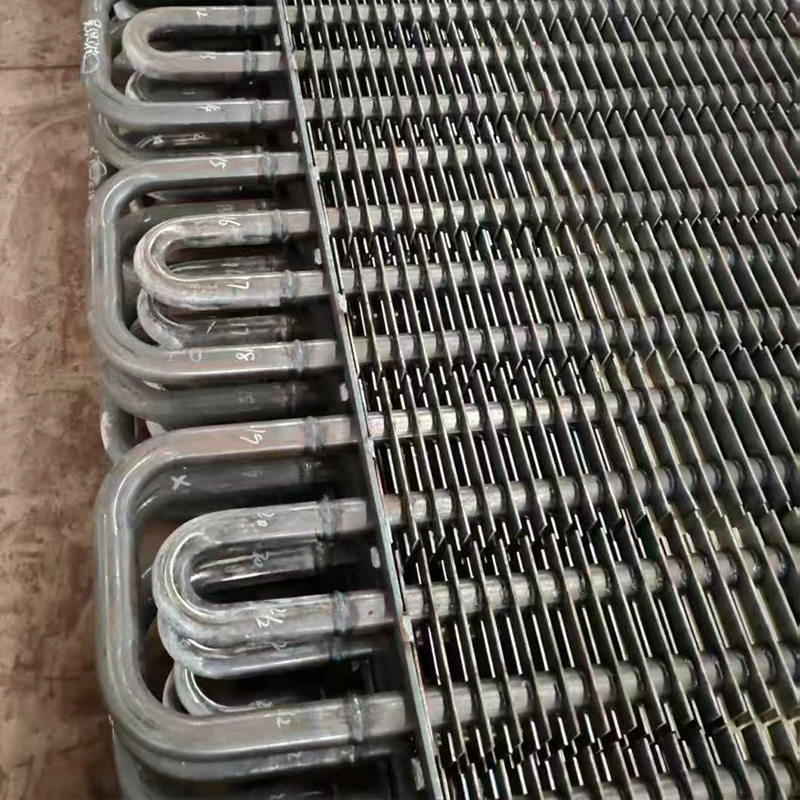
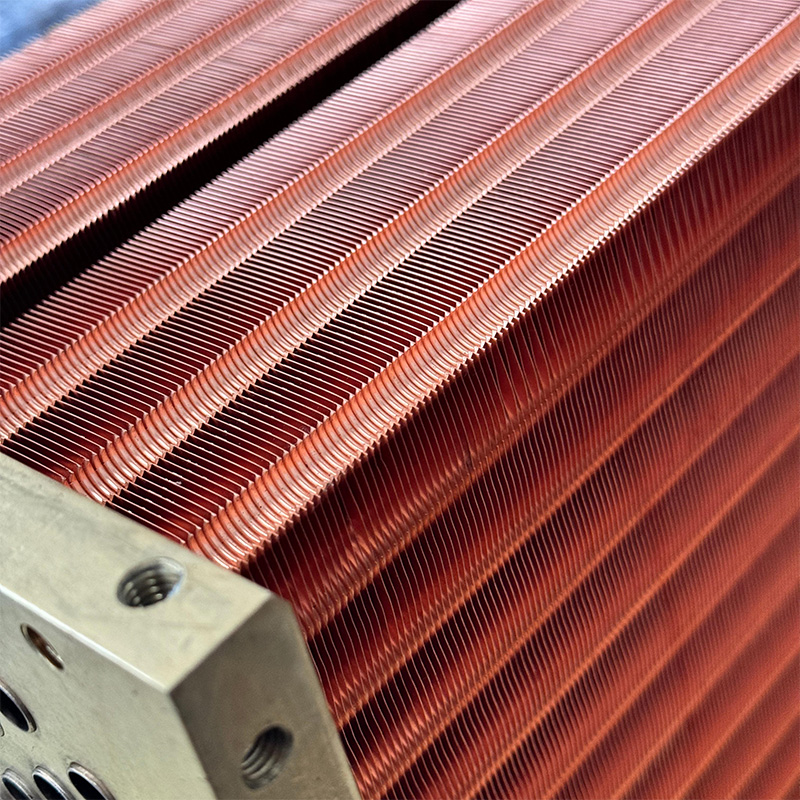
In stockWuxi Kaisheng LLCTitanium shell-and-tube heat exchangers and ASME high-pressure heat exchangers are presented, where metal integrity is a critical safety parameter. The use of 316 stainless steel, C46400 marine brass, copper-nickel and N06625 nickel alloy corrugated tube bundles requires a guaranteed freedom from internal defects similar to that achieved with centrifugal casting. Whether it's air coolers, recovery boilers, or complex tube sheets made from 321 steel and C70600 alloys, the company's products are manufactured from carbon, stainless, alloy steel, titanium, copper and nickel alloys to the strictest PED and ASME standards.
ExperienceWuxi Kaisheng LLCconfirms that the combination of advanced forming technologies and careful control of metal structure allows us to create equipment with high corrosion resistance, thermal efficiency and resistance to extreme pressures and temperatures. Such solutions are in demand in oil refining, the chemical industry, seawater desalination and shipbuilding around the world, providing customers with stable operation of installations in the most aggressive environments.
Medical instrumentation and implantology
Although the production volume in medicine is smaller than in aviation, the requirements for surface quality and biocompatibility are maximum. Centrifugal investment casting is widely used for the manufacture of surgical instruments, endoprosthetic components and dental structures from cobalt-chromium and titanium alloys.
The main concern when casting medical implants is the risk of incorporating oxide films or slag into the body of the product, which can cause a body rejection reaction or fatigue fracture inside the patient's body. Centrifugal technology minimizes this risk, since light inclusions (slag, oxides) under the action of centrifugal force are pushed to the inner surface of the casting (to the center of rotation), which is then removed during machining. The working surface of the product is formed at the outer wall of the mold, where the metal is purest and densest.
We produce components for knee and hip joints, where surface roughness and absence of defects are critical for osseointegration. The use of lost wax models makes it possible to obtain parts as close as possible to the final shape (close to the final shape), which reduces the amount of machining and maintains a favorable structure of the surface layer of the metal. For titanium alloys (Ti-6Al-4V ELI) this is especially important, since intensive mechanical processing can lead to overheating and changes in the properties of the surface layer.
In dentistry, the method is used for casting frames for crowns and bridges. High accuracy of wax model reproduction (up to 0.05 mm) allows one to avoid lengthy adjustment of the prosthesis in the patient’s oral cavity. Centrifugal pressure ensures the flow of the thinnest frame elements, preventing the appearance of “underfilling”, which is a defect.
When ordering medical products, be sure to check the cleanliness class of the melt and the availability of process validation according to ISO 13485. Not all foundries have the appropriate equipment to work with medical alloys in a vacuum or inert atmosphere, which is necessary to prevent saturation of the metal with gases.
Technological process: why is it difficult
Understanding the process helps the customer to correctly draw up technical specifications. Centrifugal investment casting is a multi-stage process where a mistake at any stage is fatal. Unlike simple casting, the stage of balancing and calculation of rotation modes is added here.
- Making a mold and wax model.The metal mold is created taking into account the shrinkage of wax and metal. The wax is injected under pressure. At this stage the geometry is laid. An error in mold size will result in the entire batch being rejected. It is important to consider the direction of crystallization.
- Assembly of clusters and application of ceramic shell.The models are assembled into wood (cluster) and repeatedly dipped into a ceramic suspension, followed by sprinkling with electrocorundum. The thickness of the shell should be uniform; unevenness will lead to imbalance of the mold during rotation and its destruction in the oven.
- Wax burning and calcination.The cluster is placed in an autoclave to remove the bulk of the wax, then into a furnace for final burning of the residues and sintering of the ceramics at temperatures up to 1000–1200°C. Ceramics must acquire high strength to withstand centrifugal loads.
- Melting and pouring under centrifugal force.The metal is melted in an induction furnace (often in a vacuum or argon). The mold is installed in a centrifugal machine. Once the pouring temperature is reached, the machine accelerates to its design speed (usually 300-1000 rpm depending on the diameter). The metal is fed into the mold already during rotation or immediately before acceleration.
- Cooling and knocking out.Cooling often occurs slowly or on a special schedule to control grain structure. After cooling, the ceramic shell is broken by hydrosandblasting or chemical etching.
A common mistake when ordering is ignoring the direction of the rotation axis when designing a part. Designers often design a part without thinking about how it will be oriented in a centrifugal machine. This leads to the fact that important surfaces are in the zone of possible accumulation of non-metallic inclusions. Always confirm the 3D model with the foundry technologist before tooling is made.
Comparison of Methods: Centrifugal vs Static Casting
To make an informed purchasing decision, it is necessary to clearly understand the differences in the characteristics of the resulting products. Below is a comparison of key parameters for critical parts.
| Comparison parameter | Static lost wax casting | Centrifugal lost wax casting |
|---|---|---|
| Metal density | 95–97% of theoretical. Possible microporosity. | 99–99.9%. The structure is almost non-porous due to pressure. |
| Mechanical properties | Standard for cast condition. The spread of properties in a batch is up to 15%. | Close to deformed (forgings). The spread of properties is minimal (3–5%). |
| Form fillability | Limited for thin-walled parts (< 1 mm). Risk of underfilling. | High. Possibility of casting walls with a thickness of 0.5–0.8 mm without defects. |
| Location of defects | Chaotic throughout the entire volume of the casting. It's difficult to predict. | They are concentrated in the central part (core), which is removed during processing. |
| Cost of equipment | Below. Simpler model tree design. | Above. It is necessary to develop a mounting system in a centrifugal machine and balancing. |
| Applicability | Body parts, decorative elements, unloaded units. | Turbine blades, nozzles, implants, highly loaded shafts. |
The choice of method depends on the function of the part. If the part carries a static load and operates at low temperatures, there is no point in overpaying for centrifugal casting. However, for dynamically loaded units operating under creep or fatigue conditions, savings on casting technology will lead to a multiple increase in costs for warranty cases and equipment replacement.
Quality control and regulatory framework
In our work we adhere to strict control standards, since the cost of error in the use of centrifugal casting is too high. Each batch of castings undergoes multi-stage control. Visual inspection is carried out on 100% of products. This is followed by selective or complete non-destructive testing (NDT).
Basic NDT methods applied to centrifugal castings:
- Radiographic control (RC):Allows you to identify internal pores, cavities and inclusions. For aviation parts, a sensitivity of at least class 2 according to GOST 7512 or ASTM E1742 is required.
- Ultrasonic testing (UT):Effective for identifying delaminations and cracks oriented parallel to the surface. Particularly important for thick-walled parts.
- Penetrant control (PVC):Detects surface cracks. Mandatory for all critical surfaces.
- Sealing:Helium leak detection or pressure testing with air/water under pressure 1.5 times higher than the working pressure.
We encountered a situation where a batch of castings was x-rayed but failed the leak test. The reason turned out to be microcracks that opened only under pressure. This highlights the importance of an integrated approach to control. You can't rely on just one method.
Production certification should include licenses to work with hazardous production facilities (if applicable) and certification of casting technologies. In Russia and the EAEU countries, an important document is a certificate of compliance with the quality management system GOST R ISO 9001. For export to Europe and the USA, PED (Pressure Equipment Directive) or ASME Stamp certificates are required.
When accepting products, require test reports of mechanical properties cut directly from castings of this batch (witness samples), and not from separately cast test bars. The properties of the actual part may differ from those of the sample due to differences in cooling rates.
Economic efficiency and timing
The introduction of centrifugal investment casting requires a thorough economic justification. The cost of one casting here is 30–50% higher compared to its static counterpart. However, the total cost of ownership (TCO) is often lower.
By increasing reliability, the frequency of equipment replacements is reduced. For example, replacing burner nozzles every 3 months instead of every year leads to production stoppages and repair costs. Switching to centrifugal injectors pays for itself in 2–3 replacement cycles. In addition, high casting precision reduces metal consumption for machining, which is critical for expensive alloys (nickel, titanium, cobalt). The metal utilization factor (MUR) can reach 0.6–0.7, while in sand casting it rarely exceeds 0.4.
The production time for a pilot batch is usually 4–6 weeks. This time includes 3D model development, wax mold making (2-3 weeks), trial melting and inspection. Serial production takes from 2 to 4 weeks depending on volume. Minimum order quantities (MOQs) typically start at 10–20 pieces for complex parts, as the cost of preparing the cluster and setting up the machine is high.
В 2025–2026 годах наблюдается тенденция к удорожанию легирующих элементов (молибден, вольфрам, никель). В этих условиях снижение веса детали за счет тонких стенок, доступных при центробежном литье, становится прямым способом экономии бюджета закупок. Оптимизация конструкции под возможности технологии позволяет снизить массу изделия на 15–20% без потери прочности.
Frequently Asked Questions
Какие максимальные размеры можно получить методом центробежного литья?
Технологические ограничения центробежных машин определяют предельный диаметр отливки. Обычно максимальный внешний диаметр составляет 400–500 мм, а длина — до 1000 мм. Превышение этих размеров требует уникального оборудования и резко увеличивает стоимость. Для крупных корпусных деталей центробежное литье применяется редко, чаще используются комбинации: центробежно отлитые втулки или кольца, вваренные в сварной корпус. If your part is larger than 500mm, consider splitting it into subassemblies or using other casting methods.
Можно ли использовать этот метод для алюминиевых сплавов?
Теоретически возможно, но на практике центробежное лить е по выплавляемым моделям для алюминия применяется крайне редко. Aluminum alloys have a low melting point and good fluidity, so pores in them can be easily eliminated using vacuum static casting or low pressure casting. Центробежная сила нужна преимущественно для тугоплавких и вязких металлов (сталь, никель, титан), где давление необходимо для заполнения формы и уплотнения. Использование центробежного метода для алюминия экономически нецелесообразно из-за высокой стоимости процесса.
Как долго длится подготовка к производству новой детали?
Полный цикл подготовки (время выхода на рынок) для новой детали занимает от 6 до 10 недель. Первые 3–4 недели уходят на проектирование и изготовление металлической пресс-формы для литья восковых моделей. Затем 1–2 недели на отработку технологии нанесения керамической оболочки и режимов термообработки. Финальные 2–3 недели — на проведение пробных плавок, разрушающий контроль и корректировку параметров. Ускорить процесс можно, используя 3D-печать восковых моделей, что исключает этап изготовления металлической пресс-формы и сокращает срок до 3–4 недель для опытных образцов.
Гарантируется ли отсутствие пор в готовой детали?
Абсолютное отсутствие пор (100%) гарантировать невозможно ни в одной технологии литья, так как это противоречит физике кристаллизации металлов. Однако центробежное литье позволяет свести объемную пористость к уровню, допускаемому стандартами высшего класса (например, уровень 1 по ASTM E2803). Поры, если они образуются, вытесняются в зону припуска, который удаляется механически. В рабочем теле детали допустимы лишь единичные изолированные поры микроскопического размера, не влияющие на прочность. Гарантируется соответствие конкретному классу рентгеновского контроля, оговоренному в чертеже.
Conclusion and recommendations for choosing a supplier
Центробежное литье по выплавляемым моделям — это технология для задач, где надежность превалирует над стоимостью. Применение этого метода оправдано в аэрокосмической отрасли, энергетике, оборонной промышленности и медицине. Оно позволяет создавать детали со свойствами, приближенными к поковкам, сохраняя при этом свободу геометрического формообразования, недоступную для методов деформации.
При выборе подрядчика обращайте внимание не только на цену килограмма отливки, но и на наличие собственного парка центробежных машин, лаборатории неразрушающего контроля и опыта работы с вашим типом сплава. Попросите предоставить референс-лист с примерами аналогичных деталей. Убедитесь, что поставщик понимает физику процесса и способен предложить оптимизацию конструкции детали под литье, а не просто выполняет чертеж.
Мы готовы обсудить технические нюансы вашего проекта и предложить оптимальное технологическое решение. Если вы планируете внедрение новых узлов или модернизацию существующих, свяжитесь с нашими инженерами для проведения аудита чертежей и расчета экономической эффективности перехода на центробежное литье.
Contact us todayдля получения консультации по вашему проекту и расчета стоимости опытной партии. Изучите также наш разделуслуги литья по выплавляемым моделямдля получения подробной информации о материалах и возможностях производства.