
Installation of stainless steel ventilation systems: nuances
2026-07-15
- Why installation of stainless steel ventilation requires a special approach
- Preparatory phase: critical requirements for materials and tools
- Technology for connecting elements: welding and flange assemblies
- Air duct installation: fastening, compensation and insulation
- Specifics of installation in various industries
- Selecting a Reliable Component Supplier for Complex Environments
- Typical mistakes and methods for preventing them
- Контроль качества и пусконаладочные работы
- Frequently Asked Questions
- Conclusion
Why installation of stainless steel ventilation requires a special approach
Installation of stainless steel ventilation systems: the nuances of this process often become the decisive factor between long-term operation of the equipment and expensive repairs after six months of operation. Unlike galvanized steel, the stainless alloy has a unique crystal lattice, which, if improperly welded or machined, instantly loses its anti-corrosion properties. We have observed cases where systems for food production failed due to intergranular corrosion, which arose solely due to faulty installation technology. This article does not just list the rules, but analyzes real engineering mistakes that are made even by experienced teams who ignore the specifics of working with AISI 304 and 316 alloy steels.
Our practice shows that 70% of problems with the tightness and strength of joints arise at the stage of preparing edges and selecting fasteners. Stainless steel “does not forgive” the use of ordinary tools that have previously been in contact with ferrous metal. Microscopic particles of iron embedded in the surface of stainless steel become foci of rust after just a few weeks of operation in a humid environment. If you plan to purchase components or hire contractors for a facility with an aggressive environment, understanding these nuances will save you up to 40% of your budget for subsequent rework.
Preparatory phase: critical requirements for materials and tools
The success of the entire project begins before the first air duct rises to a height. An error in choosing a steel grade or using a contaminated tool makes it impossible to create a sealed circuit capable of withstanding the design pressure. Many customers focus only on the thickness of the metal, losing sight of the chemical composition and surface condition.
Selecting a steel grade for a specific environment
Not all stainless steel is the same. For ventilation systems, the most common steels are AISI 304 (analogous to 08Х18Н10) and AISI 316 (03Х17Н14М2). The difference between them is not only in price, but also in resistance to chlorides. If your system will operate in a swimming pool, chemical plant or coastal area, using AISI 304 is a serious mistake. Chlorides cause pitting, which penetrates metal in a matter of months. We strongly recommend carrying out a spectral analysis of the incoming metal, since unscrupulous suppliers sometimes replace AISI 316 with cheaper analogues.
The thickness of the sheet also dictates the installation method. For air ducts with a diameter of up to 500 mm, a sheet of 0.8–1.0 mm is usually used, for highways over 1000 mm - 1.2–1.5 mm. Thin metal requires special care when straightening: excessive roll force leads to irreversible deformation of the profile, which makes assembly of the flanges impossible without gaps.
Instrumental hygiene and site preparation
The golden rule of working with stainless steel: absolute isolation from ferrous metal. Grinders, scissors, drills and even gloves used for cutting carbon steel are strictly prohibited for working with stainless steel. Iron dust settling on a shiny surface oxidizes and “eats” the protective chrome layer. In our practice, there was a case when a whole batch of shaped elements became covered with red spots a week after installation in the clean room of a pharmaceutical plant. The reason was a new cutting disc, which was previously used for cutting reinforcement.
For cutting and processing, use tools marked “INOX” or specially designated equipment. Abrasive wheels must be iron-free. The assembly area must be cleared of concrete dust and metal shavings. The floor must be level, since leveling large sections of air ducts “in weight” often leads to creases in the edges.
Recommendation:Before starting work, audit all tools and replace consumables with new ones designed exclusively for stainless steel. This is cheaper than dismantling the system later.
Technology for connecting elements: welding and flange assemblies
The tightness of the ventilation network depends on the quality of the joints. In stainless steel systems, two main connection methods are used: welding (for systems with high requirements for hygiene and tightness) and flange connection (for modular systems that must be dismantled). The choice of method is dictated by the cleanliness class of the room and the operating pressure.
Welding stainless steel: nuances of the TIG process
Manual argon arc welding (TIG) is the standard for critical areas. The main problem here is the formation of scale and changes in the structure of the metal in the heat-affected zone (HAZ). When heated above 450°C, chromium carbide begins to precipitate from the alloy, which depletes the grain boundaries and reduces corrosion resistance. To avoid this, welding must be carried out quickly, with minimal heat input, using pulsating current.
Protecting the root of the joint is critical. If you weld a pipe or box without purging it with argon from the inside, the back side of the seam will be covered with a thick layer of scale (“sugar”). This layer not only impairs aerodynamics, creating turbulence, but is also an ideal environment for bacteria in food production. Removing such scale mechanically (with brushes) often damages the base metal, so the only correct solution is high-quality internal purging with inert gas.
After welding, passivation of the seam is required. Even a perfect seam without subsequent chemical treatment is vulnerable. Special gels or acids remove oxide residues and restore the passive film. Ignoring this stage is a direct road to the appearance of rust along the welded joint.
Flange connections and sealing
For systems that require periodic cleaning or updating, flanges are used. The choice of sealing material plays a key role here. Regular EPDM rubber is suitable for general systems, but harsh environments or high temperatures require silicone or Teflon gaskets. It is important to monitor the tightening torque of the bolts. Tightening a flange made of thin stainless steel (less than 1.5 mm) leads to its deformation (“waviness”), which impairs the tightness more than a weak tightening.
Bolts and nuts should also be made of stainless steel, preferably of the same or higher grade than the main elements. The use of galvanized bolts is unacceptable due to the risk of electrochemical corrosion in the steel-zinc pair. Wide washers must be installed under the nuts to distribute pressure.
Action:When accepting welds, require the provision of a visual inspection protocol and, if necessary, penetrant inspection (color flaw detection) to identify microcracks.
Air duct installation: fastening, compensation and insulation
Assembling the sections into a single route is the stage where theory collides with the reality of the construction site. Stainless steel has a high linear expansion coefficient, which is almost one and a half times higher than that of ordinary steel. Ignoring this factor when installing long straight sections is guaranteed to lead to the destruction of fasteners or deformation of the air ducts themselves when the temperature of the working environment changes.
Thermal expansion compensation
For every 10 meters of straight section it is necessary to provide a compensator. In industrial systems, stainless steel bellows expansion joints are most often used, which take on the pipe extension. If the budget is limited and the route is short, you can use U-shaped loops, but they take up a lot of space and create additional aerodynamic drag.
The mistake is to rigidly fix a long route on both sides without intermediate sliding supports. When the air inside the channel is heated (for example, in aspiration systems in hot shops), the metal expands. If it has nowhere to move, it will bend in an arc, tearing anchors out of walls or breaking flange connections. We have seen projects where an 800mm diameter duct has bent so far that it has touched the ceiling due to the lack of compensating components.
Fastening and suspension systems
Fastening elements (studs, trapezoids, clamps) must match the material of the air duct. Contact of stainless steel with ordinary steel through wet condensation causes rapid corrosion of the contact point. Use stainless steel clamps with an internal rubber gasket. The gasket performs a double function: it prevents galvanic couples and dampens vibration from a running fan.
The pitch of the hangers is calculated based on the diameter and weight of the air duct. For rectangular channels with a large side of more than 1200 mm, the step should not exceed 3 meters, otherwise the center will sag under its own weight. It is also important to take into account dynamic loads when starting up the system. Fastenings must have a safety margin of at least 20% above the calculated static load.
Thermal insulation and noise absorption
In air conditioning systems where the air temperature is lower than the ambient temperature, condensation is inevitable. The insulation must be continuous and vapor permeable only to the outside. A mistake many installers make is tears in the insulating layer at the places where the clamps are attached. Through these “cold bridges,” condensation drips onto the equipment and products below.
For insulating stainless steel, foam rubber or mineral wool with a foil coating are best suited. When using wool, it is important to ensure that it does not contain chlorides, which can migrate into the steel and cause corrosion under insulation (CUI). A protective casing made of thin stainless steel or aluminum is often installed on top of the insulation, which must also be mounted taking into account thermal expansion.
Tip:Before closing with insulation, be sure to conduct a leak test under positive pressure. It will then be almost impossible to find a leak under the insulation layer without complete dismantling.
| Comparison parameter | Welded connection (TIG) | Flange connection | Nipple connection (on bandages) |
|---|---|---|---|
| Tightness | Maximum (class A according to EN 12237) | High (depending on the quality of the gasket) | Medium (risk of suction with negative pressure) |
| Hygiene | Ideal (when sanding a seam), no stagnant zones | There is a risk of dirt accumulating on the flange | Bandage protrusions may interfere with washing |
| Installation speed | Low (requires welder qualification) | Medium (requires lifting of heavy sections) | High (light elements, quick assembly) |
| Possibility of dismantling | None (cutting only) | Full (bolt connection) | Full (removal of the bandage) |
| Application | Food, pharma, chemistry, high pressure | Industrial ventilation, large highways | Household systems, small diameters up to 500 mm |
Specifics of installation in various industries
There is no universal recipe. The requirements for the ventilation system in a meat shop are radically different from the requirements in a laboratory for the production of microcircuits. Understanding industry specifics allows you to avoid fatal design and installation errors.
Food industry and catering
The main enemy here is bacteria and fat deposits. Air ducts must be made of AISI 304 or 316 steel with a polished surface (grinding no rougher than Ra 0.8 microns). All joints inside the channel must be welded and ground flush. Any protrusions, rivets or screws within the air flow are prohibited as they become centers for biofilm accumulation.
The system must allow for regular cleaning with aggressive detergents and hot water. Therefore, all seals must be heat-resistant and chemical-resistant. Particular attention is paid to slopes: horizontal sections must have a slope of at least 1-2% towards drainage points so that condensation and washed-off dirt do not stagnate. In our practice, there was a case when the lack of a slope led to stagnation of water in the lower part of the main, which caused the proliferation of legionella and a quarantine stop of production.
Chemical and pharmaceutical industry
In these industries, chemical resistance and air purity come to the fore. For aggressive environments (vapors of acids, alkalis), AISI 316L steel (with low carbon content) is used. Installation must be carried out in conditions of maximum cleanliness. Welding with orbital machines with purge is often required to eliminate human error and contamination.
Ventilation systems for clean rooms (Clean Rooms) require special tightness class H. Even microscopic leaks of unfiltered air from technical rooms are unacceptable here. All penetrations through walls and ceilings must be sealed with special fire-retardant sleeves and silicone sealants approved for use in sterile areas. Tests for smoke and gas tightness are carried out under pressure exceeding the working pressure by 1.5 times.
Aggressive environments and exhaust from machine tools
When removing chips and oil mist from metalworking machines, the problem of fire safety and corrosion from active coolant components (cutting fluids) arises. Air ducts must be equipped with hatches for inspection and cleaning every 3-5 meters, since oil deposits quickly clog the channels and reduce draft. The material must withstand constant exposure to emulsions. Here, thicker walls (from 1.5 mm) are often used to increase the service life before the first replacement.
Recommendation:Before starting installation in a specific industry, ask the technologists for a map of chemical influences and temperature conditions in order to adjust the choice of steel grade and type of seals.
Selecting a Reliable Component Supplier for Complex Environments
The quality of the final ventilation system directly depends on the characteristics of the source materials and components. This is especially critical for petrochemical, energy and shipbuilding facilities, where equipment is subjected to extreme loads. In such cases, it is important to work with manufacturers who have extensive experience working with specialty alloys.
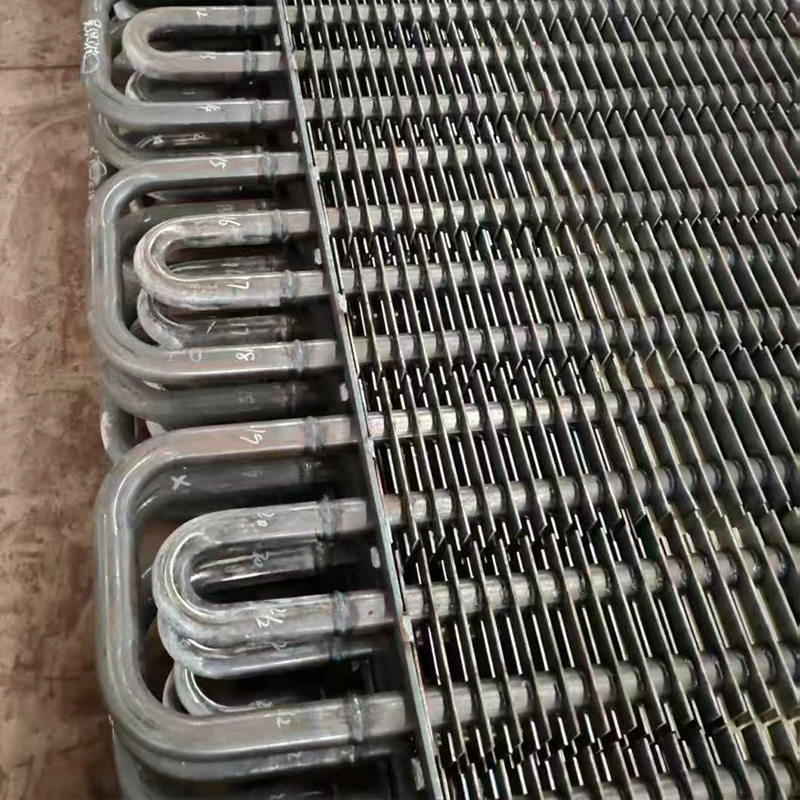
A striking example of this approach is the companyWuxi Kaisheng Electric Power and Petrochemical Equipment Co., Ltd.. Specializing in the design and manufacture of heat transfer and power equipment, the company produces high-quality 316 stainless steel components, including corrugated tube bundles and tube sheets, which offer exceptional corrosion resistance. The company's products also include titanium, C46400 marine brass, copper-nickel alloys and N06625 nickel alloys, certified to stringent international ASME and PED standards.
Wuxi Kaisheng's experience in creating equipment resistant to high pressures, temperatures and aggressive chemical environments (for example, in seawater desalination or oil refining plants) demonstrates the importance of choosing the right material. The use of such certified solutions in ventilation systems ensures that even in the harshest operating conditions, the structure will maintain its integrity and functionality for decades.
Typical mistakes and methods for preventing them
Even with a high-quality project, the human factor remains the main source of risk. Analysis of hundreds of objects allowed us to identify errors that are repeated with alarming regularity.
- Using unsuitable sealants.A common mistake is the use of conventional silicone sealants, which cannot withstand thermal expansion or dissolve under the influence of fats and chemicals. The result is peeling of the sealant and loss of tightness after a month.Solution:Use only specialized neutral sealants for the food industry or high-temperature compounds with appropriate certificates.
- Geometry violation during docking.An attempt to forcefully tighten mismatched flanges with bolts leads to distortion of the entire section. Over time, a fatigue crack appears at the point of stress.Solution:If the holes don't line up, don't drill new ones in place. Dismantle the section and correct the geometry in the workshop on the slipway. Installation tolerances are strictly regulated by SNiP and SP.
- Lack of protection during storage.Finished products lying on a construction site without packaging are covered with construction dust and cement laitance. It is extremely difficult to clean them later without damaging the surface.Solution:Request that the elements be supplied in protective polyethylene film and remove it only immediately before installation.
- Экономия на крепеже.Установка дорогих воздуховодов из AISI 316 на обычные оцинкованные шпильки. Через год шпильки ржавеют и теряют несущую способность, создавая угрозу обрушения.Solution:Комплектующие должны быть того же класса коррозионной стойкости, что и основная система.
Мы столкнулись с ситуацией, когда на крупном молокозаводе сэкономили на пассивации сварных швов. Внешне система выглядела идеально, но через 4 месяца эксплуатации в местах сварки появились потеки ржавчины, которые попали в продукцию. Пришлось останавливать линию, демонтировать 300 метров трассы и проводить повторную сварку с соблюдением всех технологий. Стоимость исправления превысила первоначальную смету на 60%.
Контроль качества и пусконаладочные работы
Монтаж считается завершенным только после успешного прохождения комплекса испытаний. A visual inspection is not enough. Для систем из нержавеющей стали разработан строгий регламент приемки.
- Visual control.Проверка целостности поверхности, отсутствия вмятин, царапин и следов коррозии. Особое внимание уделяется сварным швам: они должны быть равномерными, без пор и подрезов. Цвет побежалости на швах допускается только светло-соломенный; синий или черный цвет говорит о перегреве и нарушении структуры металла.
- Проверка герметичности.Система нагружается избыточным давлением (обычно на 10-15% выше рабочего). Все стыки обмазываются мыльным раствором или проверяются анемометром на предмет утечек. Норма утечек регламентируется классом плотности (А, B, C, D). Для пищевой промышленности требуется класс не ниже B, а часто и C.
- Аэродинамические испытания.Замер фактического расхода воздуха в каждой точке забора и выброса. Comparison with design values. Отклонение более 10% требует балансировки системы дроссель-клапанами.
- Проверка вибрации и шума.Замер уровня вибрации на корпусах вентиляторов и воздуховодах. Превышение норм указывает на дисбаланс крыльчатки или резонанс креплений.
Важным этапом является составление исполнительно-технической документации. Паспорта на материалы, сертификаты на сталь, акты скрытых работ (на изоляцию, проходки), протоколы испытаний — всё это должно быть собрано в единый пакет. Без этих документов объект не пройдет проверку надзорных органов (Роспотребнадзор, пожарная инспекция).
Final step:Проведите инструктаж персонала заказчика по правилам эксплуатации и обслуживания системы. Неправильная мойка или чистка может свести на нет все преимущества нержавеющей стали.
Frequently Asked Questions
Можно ли использовать обычную сталь для крепежа нержавейки?
Absolutely not. Контакт разнородных металлов во влажной среде запускает процесс электрохимической коррозии. Нержавеющая сталь выступает катодом, а обычный крепеж — анодом, который разрушается очень быстро. Кроме того, продукты коррозии обычного болта загрязняют поверхность нержавейки, вызывая её локальное ржавление. Всегда используйте крепеж из нержавеющей стали марки не ниже А2 (AISI 304), а для агрессивных сред — А4 (AISI 316).
Как часто нужно чистить вентиляцию из нержавейки в пищевом производстве?
График чистки зависит от интенсивности работы и типа загрязнений, но общие санитарные нормы требуют проведения полной очистки и дезинфекции не реже одного раза в 6 месяцев. Для систем вытяжки от жарочных шкафов и фритюрниц этот срок сокращается до 1 месяца из-за быстрого накопления жирового налета, который создает пожароопасную ситуацию. Регулярность фиксируется в журнале учета работ.
Что делать, если на новой системе появились пятна ржавчины?
Не паникуйте и не пытайтесь зачистить их металлической щеткой — это усугубит проблему. Скорее всего, это поверхностное загрязнение железом или нарушение пассивного слоя. Используйте специальные средства для удаления ржавчины с нержавеющей стали (pickling paste) или растворы на основе лимонной/азотной кислоты. После обработки тщательно промойте участок водой и нанесите пассивирующий гель для восстановления защитной пленки.
Влияет ли направление прокатки листа на монтаж?
Да, особенно при гибке и вальцовке. Гиб следует выполнять поперек волокон прокатки, чтобы избежать образования трещин на внешнем радиусе гиба. При монтаже длинномерных элементов ориентация волокон может влиять на жесткость конструкции. Опытные монтажники всегда учитывают этот фактор при раскрое листов, чтобы минимизировать отходы и обеспечить максимальную прочность изделий.
Conclusion
Установка вентиляционных систем из нержавейки — это инвестиция в надежность и безопасность вашего производства. Несмотря на более высокую начальную стоимость по сравнению с оцинкованными аналогами, срок службы таких систем исчисляется десятилетиями, а затраты на обслуживание минимальны. Однако этот потенциал раскрывается только при безупречном соблюдении технологии монтажа. Каждый этап, от выбора марки стали до финальной пассивации швов, требует компетентного подхода и строгого контроля.
Не позволяйте экономии на мелочах поставить под угрозу весь проект. Помните, что переделка встроенных коммуникаций обходится в разы дороже, чем правильный монтаж с первого раза. Доверяйте работу специалистам, имеющим подтвержденный опыт работы именно с нержавеющими сталями и понимающим специфику ваших производственных процессов.
Если вы планируете модернизацию вентиляции или строительство нового объекта, свяжитесь с нашими инженерами для аудита вашего проекта. Мы поможем подобрать оптимальное техническое решение, которое обеспечит соответствие всем санитарным и промышленным стандартам.
Contact us todayдля консультации по вашему проекту вентиляции.