
Stainless steel pipe 250 mm: features of installation of large diameters
2026-07-08
Stainless steel pipe 250 mm: critical nuances of installation on an industrial scale
Installation of large diameter pipelines such asтруба нержавеющая 250 мм, is fundamentally different from working with small sections not only in physical effort, but also in the requirements for the accuracy of the geometry of the joints. In our practice, we have repeatedly encountered a situation where a perfectly welded seam was destroyed after six months of operation due to the fact that when assembling sections with a diameter of 250 mm, micro-displacements of the supporting structures were ignored. The main problem is that the rigidity of a ring with a diameter of a quarter meter is not sufficient to maintain ideal roundness under its own weight in the absence of an internal spacer, and any deviation from the circle by more than 2 mm makes it impossible to perform high-quality welding without creating excess stress in the metal.
Working with such dimensions requires strict adherence to the sequence of actions: from edge preparation to final passivation of the seam. Errors at the stage of alignment or selection of filler material are much more expensive here than when installing pipes with a diameter of 50–100 mm. Below we will analyze a step-by-step algorithm based on real cases of our engineers who installed similar systems for food production and chemical processing in harsh climates.
Preparatory stage: logistics and storage before welding
Before actual installation beginsstainless steel pipes 250 mmit is necessary to resolve the issue of storage and transportation, since it is at this stage that hidden damage most often occurs, affecting the durability of the system. Pipes of this diameter have significant windage and weight, which makes them vulnerable when loaded with conventional slings. We recommend using only soft textile slings with a width of at least 100 mm, since steel cables leave microscopic notches on the surface, which in an aggressive environment become centers of pitting corrosion.
Storage should be carried out exclusively indoors or under a canopy with mandatory isolation from the ground. Contact of stainless steel with carbon steel (for example, when laying on ordinary metal beams without spacers) is not permitted due to the risk of galvanic corrosion. In one of our projects, the client saved on wood underlays by laying the pipes directly on the concrete floor of the warehouse, which led to the appearance of rust spots within two weeks due to capillary suction of moisture and salts from the concrete. For pipes with a diameter of 250 mm, the distance between support points during storage should not exceed 3 meters to avoid deflection and deformation of the section.
Before starting work, each pipe must undergo visual inspection and cleaning. The surface is cleaned of factory preservative grease, dust and metal shavings using special degreasers that do not contain chlorides. The use of chlorine-based solvents is strictly prohibited, since even trace amounts of chlorine at high welding temperatures cause intergranular corrosion. Checking the geometry of the ends is mandatory: the ovality tolerance for pipes with a diameter of 250 mm is usually no more than 1% of the nominal diameter, that is, about 2.5 mm. If the pipe has dents or severe ovality, it must be straightened with special mechanical expanders before welding.
It is also important to prepare the work area. Welding stainless steel requires protection from drafts, which can blow shielding gas out of the weld zone, causing oxidation of the weld (“sugar”). Large diameter pipes often require the construction of temporary windbreaks, especially if installation is carried out in an open area. Ambient temperature also plays a role: at temperatures below +5°C, preheating of the joint to +20...+30°C is required to avoid too rapid cooling of the seam and the formation of hardening structures that reduce corrosion resistance.
Edge cutting technology and joint alignment
The quality of the future connection is determined at the edge preparation stage. For pipes with a diameter of 250 mm, the standard V-groove is often insufficient due to the large wall thickness characteristic of such sizes (usually from 4 to 8 mm and above). We recommend using a combination U-groove or a double V-groove, which reduces the volume of deposited metal and minimizes warping of the product. The opening angle of the edges should be 60–70 degrees, and the blunting of the edges should be 1–2 mm. Lack of blunting leads to burning through the first layer, and excessive blunting leads to lack of penetration of the root of the seam.
The alignment of pipes with a diameter of 250 mm represents a separate engineering challenge. Manual adjustment “by eye” is unacceptable here. It is necessary to use internal centralizers (devices that push the pipe from the inside) or external clamps with screw adjustment. Internal centralizers are preferred because they provide perfect alignment along the inside diameter, which is critical for systems with high flow resistance or hygiene requirements. However, when using internal centralizers, it becomes difficult to gain access for welding the root of the seam if the design of the centralizer does not allow it to be quickly removed after tacking.
The gap between the edges must be strictly adjusted. For manual TIG welding, the optimal gap is 2–3 mm. A smaller gap will not allow the electrode to penetrate deep into the joint to penetrate the root, while a larger gap will require an excessive amount of filler metal, increasing the heat-affected zone and the risk of deformation. The position is fixed using point tacks (brands). The number of tacks for a 250 mm pipe should be at least 4–6, evenly distributed around the circumference. The length of each tack is 20–30 mm.
Particular attention should be paid to protecting the back side of the seam (blow). Stainless steel reacts actively with oxygen in the air at temperatures above 400°C. If the back side of the weld is not protected with inert gas, it will become covered with a blue or black oxide film, which will sharply reduce the corrosion resistance in this area. For pipes with a diameter of 250 mm, the organization of blowing requires the installation of plugs with pipes for gas supply and outlet at a distance of 150–200 mm from the joint. This creates a local chamber with an inert environment. The flow rate of argon for blowing should be sufficient to completely displace the air, but not excessive so as not to create turbulence. The purge time before starting welding is at least 2–3 minutes for each joint.
Common mistake:Many teams stop the shielding gas immediately after welding is complete. This is a fatal mistake for large diameters. The seam takes a long time to cool, and as long as the metal temperature is above 400°C, it is vulnerable. The gas supply must be continued until the color of the seam stops changing, which may take several minutes after the arc is extinguished.
Welding process: selection of mode and sequence of seams
Welding of 250 mm stainless steel pipe is most often done using TIG (WTIG) for the root and cap layers, or a combination of TIG (root) + MIG/MAG (fill and cap) to speed up the process. The choice of method depends on the requirements for surface quality and installation speed. For food production and pharmaceuticals, we use only full TIG welding in all layers. For industrial pipelines in the chemical industry, a combined technology is acceptable.
When performing a root weld, direct polarity current (DCEN) is used. The current strength is selected depending on the wall thickness: for a 5 mm wall, the optimal current is 90–110 A, for 8 mm - 130–150 A. The electrode diameter is usually 2.4 mm or 3.0 mm. It is important to maintain a constant arc length (no more than 2–3 mm) and torch angle (70–80 degrees to the surface). The filler wire must match the grade of the base metal (for example, ER304L for AISI 304L, ER316L for AISI 316L). The use of wire with a high ferrite content (for example, 308L for welding 304) is sometimes justified to prevent hot cracks, but requires agreement with the technologist.
The sequence of welds for large diameter pipes is critical to controlling thermal distortion. You cannot weld a seam in a circle continuously or sequentially in one direction. This will cause one edge of the pipe to “run away” relative to the other due to uneven heating. We use symmetrical welding: two welders work simultaneously on opposite sides of the pipe, or one welder performs the seam in short sections (50–100 mm each) in a checkerboard pattern. Each subsequent layer begins with a shift of the beginning of the seam (lock) relative to the previous layer by 90–180 degrees.
Interlayer temperature is a parameter that is often ignored by beginners, but which determines the structure of the metal. For austenitic steels, the interlayer cooling temperature should not exceed 150°C. Overheating leads to grain growth and the precipitation of chromium carbides along the grain boundaries, which causes a tendency to intergranular corrosion. Monitoring is carried out using contact thermometers or pyrometers. If the temperature is exceeded, you need to pause and let the metal cool naturally. Forced cooling with water or air is prohibited, as this creates quenching stresses.
When filling the groove (if multi-pass welding is used), it is important to thoroughly clean each previous layer of slag (when welding with coated electrodes or flux-cored wire) and oxide film. There is no slag for TIG welding, but the oxide film is removed with a stainless brush that has never been used on carbon steel. Even the smallest particle of ordinary steel caught in a seam will become a source of rust. Cleaning is done with movements along the seam, and not across, so as not to leave marks that act as stress concentrators.
Quality control and flaw detection of connections
Completion of welding does not mean the end of the job. Stainless steel pipe 250 mm, operating under pressure or in aggressive environments, is subject to mandatory control. Primary control is visual (VIC). The seam should have a scaly structure without pores, undercuts, sagging or craters. The color of the seam is an indicator of the quality of gas protection: silver or golden color indicates excellent protection; blue, purple - about insufficient protection (requires stripping down to metal and overcooking the area); black or gray - a defect requiring complete removal of the seam.
For critical pipelines, radiographic testing (RK) or ultrasonic flaw detection (USD) is carried out. RK allows you to identify internal pores, lack of penetration and inclusions. For pipes with a diameter of 250 mm, the photograph is taken along the entire circumference or selectively, depending on the category of the pipeline according to SNiP or GOST. Ultrasound is more effective for identifying planar defects (cracks, lack of fusion), but requires highly qualified operator and special adjustment of equipment to the curvature of the pipe.
Hydraulic testing is the final stage of leak testing. The test pressure is usually 1.25–1.5 times the operating pressure. It is important to conduct the test with water purified from chlorides (chloride content no more than 25–50 mg/l) so as not to provoke corrosion during the test. After testing, the water must be completely removed and the pipeline dried with compressed air. Remaining moisture in large diameter pipes can lead to biofouling or corrosion in dead zones.
In our practice, there was a case when at a facility in Siberia they skipped the stage of checking the color of the seam, citing “normal strength”. After three months of operation in an environment containing sulfur, the seams, which had a blue tint, began to become covered with pitting corrosion. The repair cost the customer three times more than the original installation due to the need to stop production and cut out entire sections. Therefore, the rule is simple: if the color of the seam is not silver or straw, redo it immediately.
Specifics of installation of supports and compensators for large diameters
The stainless steel pipeline with a diameter of 250 mm has a significant mass and a high coefficient of linear expansion. When heated, such a pipe elongates significantly more than a steel pipe of the same size. Ignoring this factor leads to destruction of supports, separation of flanges or deformation of the pipeline itself. Calculation of compensators and support arrangement must be carried out at the design stage using specialized software (for example, Start-Prof or analogues).
Supports for stainless steel pipes must prevent direct metal-to-metal contact if the supporting structure is made of carbon steel. Special gaskets made of Teflon, rubber or paronite are used, as well as clamps with a polymer coating. This prevents galvanic couple and damage to the protective layer of the pipe. Sliding supports must ensure free movement of the pipe during thermal expansion. Jamming a pipe in a support is tantamount to creating a fixed stop point, which changes the entire stress pattern in the system.
Compensation for temperature expansion is carried out using U-shaped, L-shaped expansion joints (using the natural flexibility of the route) or installing bellows expansion joints. For a 250 mm pipe, natural expansion joints require significant lengths (several meters), which is not always possible in cramped workshop conditions. Bellows expansion joints must be selected exactly for the operating pressure and temperature, as well as the amount of expected expansion. An error in selecting the rigidity of the bellows can lead to its destruction or the transfer of enormous forces to the equipment (pumps, heat exchangers).
The fastening of shut-off valves on pipes of this diameter also has its own peculiarities. Heavy valves or butterfly valves should not hang on the pipe, creating a bending moment. They must have their own supports or foundations installed underneath them. Flange connections should be torque wrenched in a crisscross pattern in several passes to ensure even pressure on the gasket. Distortion of the flanges is unacceptable: the gap between the flanges must be parallel along the entire circumference.
Finishing and passivation of welds
Even with ideal welding, the heat-affected zone (HAZ) is depleted of chromium due to its burnout and the formation of oxides. To restore corrosion resistance, passivation is necessary. This is the process of removing free iron from the surface and restoring the chromium oxide film. For pipes with a diameter of 250 mm, this process is labor-intensive due to the large surface area of the seams.
Mechanical cleaning of seams to the state of the base metal is often insufficient, since an abrasive tool can introduce iron particles into the surface of the stainless steel. Therefore, after cleaning (grinding with flap wheels with a grain size no coarser than P120-P180), chemical passivation must be applied. Special pastes or gels based on nitric and hydrofluoric acids are used. The paste is applied to the seam and HAZ, left for a certain time (according to the manufacturer's instructions, usually 20–60 minutes), then washed off with plenty of water.
Important: passivation is only effective on a clean, grease-free surface. If scale or contamination remains on the weld, the acid will not be able to interact with the metal properly. After passivation, the surface must be checked for the presence of free iron (ferroxyl solution test or special indicator papers). The appearance of blue dots indicates the presence of free iron and the need for re-treatment.
An alternative to chemical passivation is electrochemical polishing (electrolysis), which allows not only passivation, but also smooth out micro-irregularities in the seam, improving hygienic properties. For 250 mm pipes, this method is convenient because there are flexible conductive brushes and tapes that allow you to process seams in hard-to-reach places without dismantling the pipeline.
Common mistakes and how to avoid them
An analysis of hundreds of kilometers of pipelines we installed revealed a number of repeating errors, characteristic specifically for large diameters. The first and most expensive is saving on the quality of argon. The use of technical purity argon instead of the highest grade (99.98% and above) leads to porosity of the seam and loss of color. The difference in gas price is negligible compared to the cost of redoing a joint on a 250 mm pipe.
The second mistake is the wrong choice of filler material. Часто сварщики используют проволоку “что была в наличии”, не сверяясь с маркой стали. Сварка стали AISI 316L проволокой ER308L приведет к тому, что шов будет менее стойким к хлоридам, чем основной металл, и станет слабым звеном системы. Всегда проверяйте сертификат на проволоку и соответствие маркировки.
Третья ошибка — игнорирование чистоты инструмента. Щетки, шлифмашинки, струбцины, используемые для нержавейки, должны быть выделены в отдельный набор и маркированы. Использование одного болгарского диска для резки черной и нержавеющей стали убивает коррозионную стойкость последней навсегда в месте реза. Мы видели случаи, когда целые партии труб браковались из-за того, что их резали на одном столе с углеродистой сталью.
Четвертая ошибка — спешка при остывании. Попытка ускорить процесс монтажа путем полива шва водой или обдува вентилятором приводит к образованию микротрещин. Нержавеющая сталь должна остывать медленно и естественно. Терпение здесь — главный инструмент сварщика.
Frequently Asked Questions
Какой метод сварки лучше подходит для трубы диаметром 250 мм?
Для трубы нержавеющей 250 мм лучшим методом считается аргонодуговая сварка (TIG) для корневого и облицовочного слоев, особенно если требования к качеству поверхности и коррозионной стойкости высоки (пищевая, фармацевтическая промышленность). Этот метод обеспечивает максимальный контроль над процессом и минимальное тепловложение. Для промышленных трубопроводов с толстыми стенками допускается комбинация: TIG для корня (гарантия провара) и полуавтоматическая сварка в среде аргона (MIG) для заполнения и облицовки, что значительно ускоряет процесс. Однако выбор всегда должен базироваться на технологической карте проекта.
Нужно ли делать поддув аргоном внутри трубы 250 мм?
Да, поддув аргоном внутренней поверхности шва является обязательным требованием для нержавеющей стали любого диаметра, включая 250 мм. Без защиты обра тной стороны шва инертным газом металл окисляется при высоких температурах, образуя окалину и теряя легирующие элементы (хром). Это превращает зону шва в место, подверженное быстрой коррозии. Для диаметра 250 мм организация поддува требует установки заглушек на расстоянии 15–20 см от стыка и контроля содержания кислорода в камере (оно должно быть менее 0.1%).
Как рассчитать количество компенсаторов для трассы из труб 250 мм?
Расчет количества и типа компенсаторов для трубопровода диаметром 250 мм не может быть выполнен “на глаз” и требует инженерного расчета тепловых расширений. Необходимо знать длину прямых участков, рабочую температуру среды, материал трубы и схему закрепления. Обычно П-образные компенсаторы устанавливаются на прямых участках длиной более 30–40 метров (точное значение зависит от дельты температур). Для сложных трасс рекомендуется использовать программное обеспечение для расчета напряженно-деформированного состояния, чтобы избежать разрушения опор или оборудования. Самостоятельный подбор без расчета несет высокие риски аварии.
Можно ли варить нержавеющую трубу 250 мм электродом вручную (MMA)?
Технически это возможно, но крайне не рекомендуется для ответственных трубопроводов диаметром 250 мм. Ручная дуговая сварка покрытыми электродами (MMA) дает высокое тепловложение, что ведет к сильным деформациям тонкостенных труб большого диаметра и широкой зоне термического влияния. Кроме того, сложно обеспечить высокое качество корня шва и чистоту поверхности без дополнительной механической обработки. Этот метод допустим только для вспомогательных, неответственных конструкций или при монтаже толстостенных труб в полевых условиях, где нет доступа к газу, но требует высочайшей квалификации сварщика и последующей тщательной зачистки и пассивации.
Какова допустимая овальность трубы 250 мм перед сваркой?
Согласно большинству стандартов (ГОСТ, ASME), допустимая овальность концов труб под сварку не должна превышать 1% от номинального диаметра. Для трубы 250 мм это составляет максимум 2.5 мм разницы между наибольшим и наименьшим диаметром в сечении. Превышение этого значения затрудняет сборку стыка, приводит к неравномерному зазору и, как следствие, к непроварам или перегреву отдельных участков. Если овальность превышает норму, концы трубы необходимо калибровать специальными механическими устройствами (расширителями или обжимками) перед сборкой.
Опыт компании в производстве компонентов для высоконагруженных систем
Глубокое понимание свойств нержавеющих сталей и требований к их обработке, описанных выше, является фундаментом деятельности компанииWuxi Kaisheng Electric Power and Petrochemical Equipment Co., Ltd.. Мы специализируемся не только на монтаже, но и на разработке и производстве сложного теплообменного и нефтехимического оборудования, где трубы большого диаметра и высокие стандарты качества играют решающую роль.
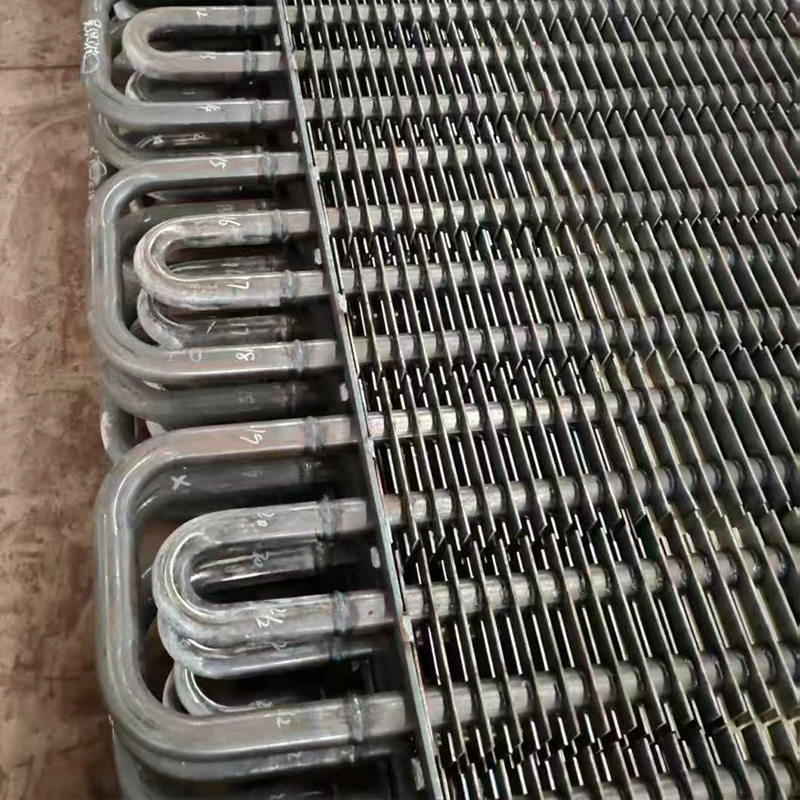
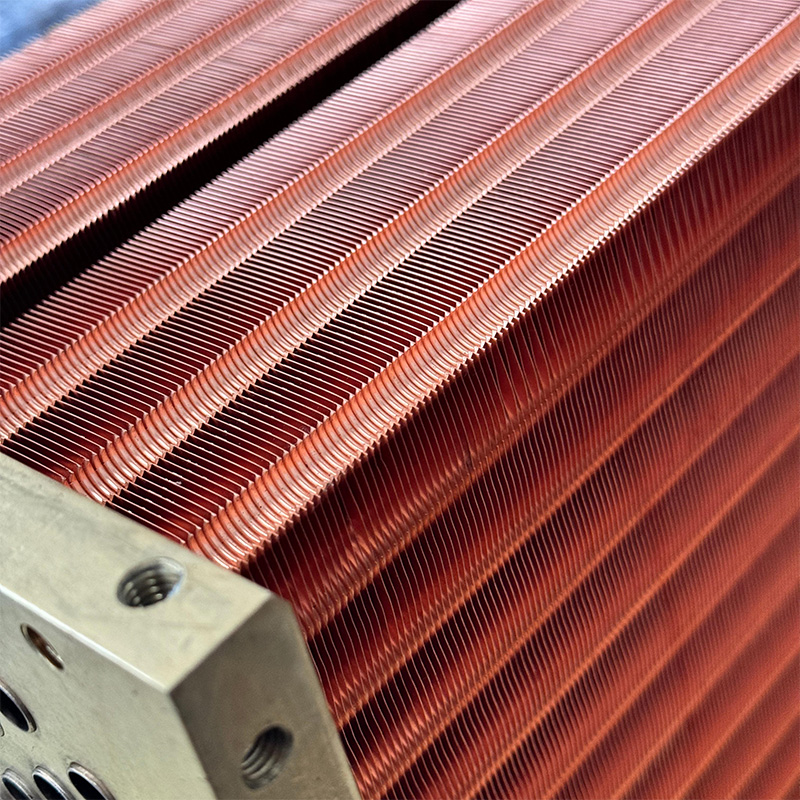
Наш производственный портфель включает титановые кожухотрубные теплообменники, высоконапорные аппараты стандарта ASME, а также гофрированные трубные пучки из нержавеющей стали марки 316, морской латуни C46400, медно-никелевых сплавов и никелевых сплавов N06625. Мы также производим котлы-утилизаторы, воздушные охладители и критически важные компоненты, такие как трубные решетки из нержавеющей стали 321 и различных медных сплавов. Вся наша продукция изготавливается из углеродистой, нержавеющей, легированной стали, титана и специальных сплавов, проходя строгую сертификацию по международным стандартам PED и ASME.
Благодаря использованию передовых технологий сварки и контроля качества, аналогичных описанным в данной статье, наши изделия отличаются исключительной коррозионной стойкостью, теплоэффективностью и способностью работать под высоким давлением и при экстремальных температурах. Оборудование ООО «Уси Кайшэн» успешно эксплуатируется в нефтепереработке, химической промышленности, судостроении и системах опреснения морской воды по всему миру. Мы предоставляем заказчикам индивидуальные инженерные решения, гарантируя надежность каждого узла — от маленькой детали до магистральной трубы диаметром 250 мм.
Conclusion
Монтаж трубопровода, где используетсятруба нержавеющая 250 мм, — это сложный инженерный процесс, требующий дисциплины, специального оборудования и глубокого понимания физики металлов. От качества выполнения каждого этапа, от хранения до пассивации, зависит безопасность и долговечность всей системы. Экономия на мелочах, таких как чистота инструмента или качество газа, в масштабах больших диаметров оборачивается колоссальными убытками на этапе эксплуатации.
Наша компания обладает многолетним опытом реализации проектов любой сложности с использованием нержавеющих трубопроводов большого сечения и производства сопутствующего высокотехнологичного оборудования. Мы гарантируем соблюдение всех технологических норм, предоставление паспортов на сварные стыки и полный цикл сопроводительных услуг. Если вы планируете модернизацию производства или строительство нового объекта, свяжитесь с нашими инженерами для получения консультации и расчета стоимости работ.
Каталог нержавеющих труб большого диаметра | Услуги промышленного монтажа
Свяжитесь с нами сегодня для обсуждения вашего проекта.