
Stainless steel pipe 15 mm: thin-walled structures and fittings
2026-07-13
- Stainless steel pipe 15 mm: critical parameters for thin-walled systems
- Technical characteristics and quality standards GOST/ISO
- Features of thin-walled structures and installation methods
- Selection of fittings for 15 mm pipes: types and compatibility
- Economic aspects of procurement and logistics
- Frequently Asked Questions
- Expert opinion and recommendations
Stainless steel pipe 15 mm: critical parameters for thin-walled systems
A 15 mm thin-wall stainless steel pipe is not just a connecting element, but a key component of hydraulic and pneumatic circuits, where every gram of weight and millimeter of internal diameter affects the overall efficiency of the system. In our practice of working with manufacturers of equipment for the food industry and instrument making, we have repeatedly encountered a situation where choosing a pipe with a wall of 1.0 mm instead of the calculated 1.5 mm led to depressurization of joints at pressures above 16 bar after just three months of operation. This material is devoted to an in-depth analysis of the characteristics that determine the reliability of such structures, including the specifics of fittings, the requirements of GOST and ISO standards, as well as real economic risks when purchasing uncertified metal products.
The market offers a wide range of products with a diameter of 15 mm, but it is the “thin-walled” category that requires special attention to production technology. Seamless pipes produced by cold deformation demonstrate 30-40% better resistance to cyclic loads compared to welded counterparts of the same thickness. If you are planning to integrate these elements into systems with vibration loads or harsh environments, ignoring the production method may cost you the shutdown of your production line. Below we will examine in detail how to distinguish high-quality rolled products from defects and which fittings will ensure tightness throughout their entire service life.
Technical characteristics and quality standards GOST/ISO
When choosing a 15 mm stainless steel pipe, the main guideline is state standards, which strictly regulate the chemical composition and mechanical properties of the metal. In Russia and the EAEU countries, GOST 9941-81 dominates, which defines the requirements for seamless hot-deformed and cold-deformed pipes made of corrosion-resistant steel. For 15 mm diameter, this standard allows outer diameter deviations of ±0.15 mm for increased accuracy, which is critical when using compression fittings. Failure to meet this tolerance by even 0.2 mm will result in the fitting ring not cutting into the pipe properly, creating a path for media to leak.
The chemical composition of steel grade 12Х18Н10Т (analogous to AISI 321) or 08Х18Н10 (AISI 304) directly affects weldability and corrosion resistance. The titanium content in grade 12Х18Н10Т prevents intergranular corrosion in weld areas, which makes it preferable for high-temperature applications up to 600°C. However, many suppliers offer products made from 12Х18Н9 steel without sufficient stabilizing elements, which during welding leads to precipitation of chromium carbides and loss of anti-corrosion properties. We recommend asking the supplier for a quality certificate with a breakdown of the melt, which will indicate the exact percentages of chromium (17-19%), nickel (9-11%) and other alloying elements.
Mechanical testing includes tensile, flattening and expansion testing. For thin-walled pipes, the flattening test is especially important: the sample must withstand compression up to a distance between the plates equal to three wall thicknesses without cracking. In practice, we have seen batches where the metal was overheated and became brittle, collapsing at the first attempt at bending or rolling. Hardness testing using the Rockwell or Brinell method is also required: for annealed steel, the value should not exceed 179 HB. Exceeding this value indicates insufficient tempering, which will complicate installation and increase the risk of vibration cracking.
EAC (Eurasian Compliance) certification is a mandatory requirement for the legal circulation of pipeline fittings in the territory of the Customs Union. The absence of the EAC mark on the pipe or accompanying documents means that the product has not passed safety testing and may be seized by customs authorities. In addition, for export to the European Union, a declaration of conformity with the PED (Pressure Equipment Directive) is required, which classifies equipment according to pressure and volume. Ignoring these regulations when importing can result in serious legal consequences and fines.
Comparison of popular steel grades for 15 mm pipes
| Parameter | AISI 304 (08Х18Н10) | AISI 316 (10Х17Н13М2) | AISI 321 (12Х18Н10Т) |
|---|---|---|---|
| Main Application | Food industry, general environments | Chemical industry, sea water | High temperature components, exhaust systems |
| Corrosion resistance | High in neutral environments | Excellent chloride resistance | High resistance to intergranular corrosion |
| Maximum operating temperature | up to 450°C | up to 550°C | up to 600-650°C |
| Cost (relative) | Basic (100%) | +35-40% to base | +15-20% to base |
| Weldability | Excellent | Good, requires special electrodes | Excellent, does not require stabilization after welding |
The choice of a specific steel grade should be based not only on cost, but also on operating conditions. For example, for a distilled water supply system in pharmaceutical production, AISI 304 is sufficient, while for the transport of solutions of salts or acids, AISI 316 with the addition of molybdenum is required. In our practice, there was a case where a client saved 15% on the purchase of 304 pipes instead of 316 for a seawater cooling system, but six months later he encountered pitting corrosion and was forced to replace the entire circuit, incurring losses five times higher than the initial savings.
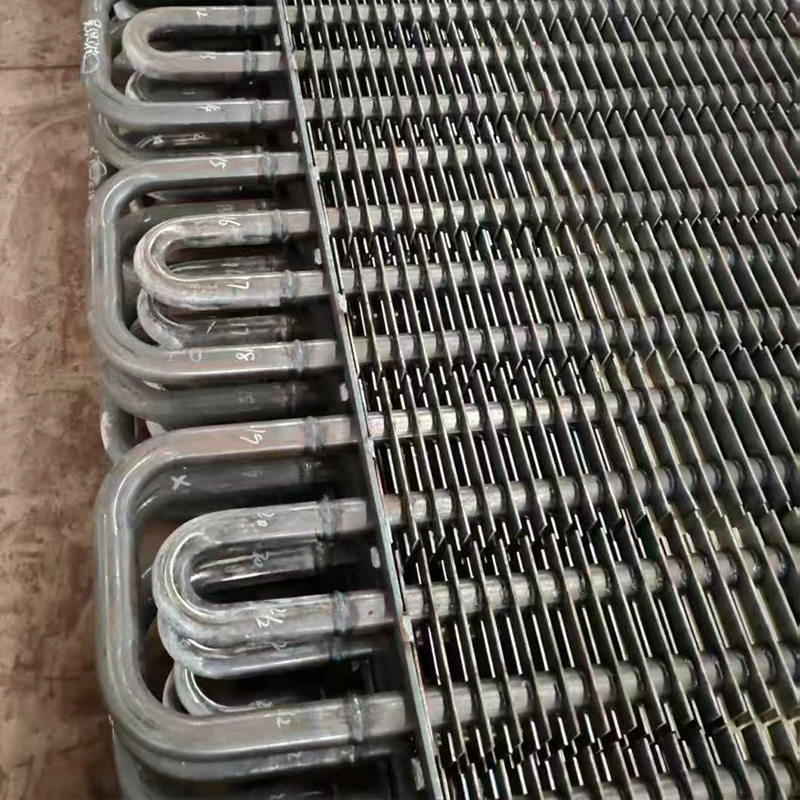
Particular attention is paid to the selection of materials by companies operating in extreme conditions in the oil, gas and energy industries. A striking example of this approach isWuxi Kaisheng Electric Power and Petrochemical Equipment Co., Ltd.. Specializing in the development and production of high-load heat exchangers and components for the petrochemical industry, the company uses in its products exactly those grades of steels and alloys mentioned above: from stainless steel AISI 316 and 321 to complex nickel alloys N06625 and copper-nickel compositions. Their products, certified to the strict international standards of ASME and PED, prove that the correct selection of material (for example, the use of corrugated tube bundles from AISI 316 or tube sheets from AISI 321) is the foundation of the reliability of the entire system. The experience of such manufacturers confirms: in aggressive environments, be it sea water or high temperatures up to 600°C, compromises in metal quality are unacceptable.
Features of thin-walled structures and installation methods
The 15mm diameter thin-walled tubes (1.0-1.5mm wall thickness) offer a unique strength-to-weight ratio, making them ideal for mobile installations and the aerospace industry. However, their installation requires highly qualified personnel and specialized tools. The main problem when working with such pipes is the risk of cross-section deformation when tightening fittings. The use of conventional adjustable wrenches is strictly prohibited, as they leave marks and can ovalize the pipe, breaking the tightness of the connection.
To cut small diameter pipes, use only pipe cutters with carbide rollers. Hacksaws leave a jagged edge and chips that get caught inside the system and can damage valves or pumps. After cutting, end processing is required: removal of internal and external chamfers at an angle of 15-30 degrees. This action ensures that the O-ring or cutter ring of the fitting is seated correctly. Neglecting this stage is the most common cause of leaks in the first weeks of operation.
Bending of thin-walled pipes is carried out using mandrels (internal mandrels), which prevent the formation of corrugations and flattening at the bending site. The bending radius should not be less than three outer diameters of the pipe (3D), unless otherwise specified in the project. When cold bending without a mandrel, the inner wall of the bend becomes thinner by 20-25%, which sharply reduces the working pressure at this point. We recommend using CNC hydraulic pipe benders for mass production as they provide angle and radius repeatability within 0.5 degrees.
Welding thin-walled pipes with a diameter of 15 mm requires the use of argon arc welding (TIG) at low currents (30-60 A) with mandatory purging of the internal cavity with argon. Without protecting the root of the weld with an inert gas, oxidation of the inner surface occurs, scale (“sugar”) is formed, which is torn off by the flow of the medium and clogs the system. To automate the process, orbital welding is often used, which guarantees identical quality of all joints regardless of the human factor. In one of our bottling line modernization projects, we introduced orbital welding, which reduced the number of defective joints from 4% to 0.2%.
Typical installation errors and their consequences
- Re-tightening of compression fittings:An attempt to achieve a tight seal using maximum tightening force results in pushing through the pipe wall or destruction of the split ring. The result is instantaneous leakage when pressure is applied or fatigue failure after a few cycles.
- Ignoring thermal expansion:Stainless steel has a linear expansion coefficient of 16.5 10⁻⁶ 1/°C. On a section 10 meters long, when heated from 20°C to 100°C, the pipe will lengthen by 13 mm. If expansion joints or U-bends are not provided, enormous stresses will arise at the fastening points, which can tear out the fasteners or deform the equipment.
- Carbon steel contact:Storing or installing stainless pipes together with ferrous metal leads to the transfer of iron particles to the surface of the stainless steel. Moisture causes rapid corrosion of these inclusions, which then spreads to the base metal. Use wooden or plastic spacers when storing.
Selection of fittings for 15 mm pipes: types and compatibility
Fittings are an integral part of any pipeline system, and their choice for a 15 mm pipe is dictated by the requirements for tightness, dismantability and operating pressure. The market offers three main types of connections for a given diameter: compression (crimp), threaded and welded. Each type has its own advantages and limitations that must be taken into account at the design stage.
Compression fittings (for example, Ermeto or DIN 2353 types) are most popular for thin-walled pipes due to their ease of installation without welding. The operating principle is based on the deformation of a split ring (olive), which cuts into the outer surface of the pipe and creates a metal seal. For 15 mm pipes, such fittings can withstand pressures of up to 400 bar in static conditions. The key advantage is the possibility of repeated assembly and disassembly (up to 5-7 times) without loss of tightness if a high-quality ring is used. However, they are sensitive to vibrations: under constant dynamic loads, it is recommended to use fittings with an additional locking ring or switch to a welded connection.
Threaded fittings (NPT, BSP, metric threads) are used less frequently for thin-walled pipes due to the need for threading or the use of fittings that reduce the flow area. Threading on a 1.0 mm wall is practically impossible without the risk of through-break, so only union nuts with a cone seal are used. Such connections are suitable for low pressure (up to 16-25 bar) and environments where welding is not permitted (for example, galvanized elements, although this is less relevant for stainless steel). The main disadvantage is the tendency to self-unscrew due to vibration, requiring the use of thread lockers or locknuts.
Welded fittings for butt welding or socket welding ensure the integrity of the system and maximum reliability. For a diameter of 15 mm, socket welding is more often used, where the pipe is inserted into the recess of the fitting and welded around the perimeter. This connection can withstand any vibration and thermal loads, but is non-separable. Repairing a section requires cutting out the defective segment and welding in a new one, which increases downtime. Welded fittings are indispensable in systems with a highly clean environment (pharmaceuticals, semiconductors), since there are no cavities or gaps inside where bacteria or contaminants could accumulate.
Recommendations for choosing fittings depending on the task
If your system requires frequent maintenance and replacement of fixtures, choose quality stainless steel compression fittings of the same grade as the pipe (for example, 316 to 316) to avoid galvanic corrosion. Ensure that the fitting manufacturer is ISO 8434-1 certified. For stationary lines with high pressure and temperature, the only correct solution is butt welding followed by passivation of the seams. In conditions of strong vibration (pump groups, compressors), we strongly recommend using welded connections or special vibration-resistant compression fittings with double crimp.
Pay attention to the seal geometry. The 24° cone (DIN standard) provides more reliable centering and sealing compared to the 37° cone (JIC/SAE standard), which is more often used in high-pressure hydraulics on thick-walled pipes. For thin-walled pipes, a 15 mm cone of 24° is preferable, since it creates less bursting force on the pipe wall. Always check the compatibility of standards: mixing fittings from different manufacturers and standards, even with the same diameter, often leads to leaks due to micron differences in angles and dimensions.
Economic aspects of procurement and logistics
Purchasing 15mm stainless steel pipe in bulk requires careful analysis of not only the price per kilogram, but also the total cost of ownership (TCO). Cheap rolled metal of unknown origin often has hidden defects: heterogeneity of structure, low nickel content (replacement with copper or manganese), which is visually invisible, but sharply reduces corrosion resistance. In the long term, replacing a leaking pipeline costs 3-5 times more than the initial savings. We recommend working only with suppliers who provide a full package of documents: manufacturer’s certificate, quality certificate, spectral analysis report.
The logistics of pipes 6 meters long (standard measure) creates certain difficulties during transportation, especially if the site is located in an urban area or has limited access. Many suppliers offer a cut-to-size service, which allows you to optimize cutting and reduce waste on site to 5-7% instead of the standard 15-20%. However, side cutting should be done with professional equipment to avoid damaging the protective layer and the geometry of the ends. Packaging is critical: pipes must be shipped in wooden boxes or pallets with soft padding to prevent metal-to-metal contact and moisture ingress.
The minimum shipment quantity (MOQ) for large factories is usually 500-1000 kg for warehouse items and from 1-2 tons for ordering a specific wall size. The production time for non-standard sizes (for example, a 1.2 mm wall instead of a 1.5 or 2.0 mm chassis) can reach 4-6 weeks due to the need to readjust the cold rolling mill. Plan purchases in advance, taking these deadlines into account, so as not to disrupt installation schedules. For urgent projects, it is advisable to look for distributors with their own warehouse stock, even if the price is 10-15% higher than the factory price.
Currency risks and payment terms also affect the final cost. When importing from Asia or Europe, fluctuations in exchange rates may offset the benefit of a low price per ton. Concluding contracts with fixed prices in national currency or using hedging instruments helps stabilize the budget. Also, pay attention to the terms of Incoterms: EXW delivery (ex-factory) transfers all the risks of transportation and customs clearance to the buyer, while DDP (delivery duty paid) gives a predictable final price, but costs more.
Frequently Asked Questions
What is the maximum operating temperature for a 15x1.5 mm pipe made of AISI 304 steel?
For a pipe made of AISI 304 steel (08Х18Н10) measuring 15x1.5 mm, the maximum recommended operating temperature in continuous mode is 450°C. For short-term exposure, heating up to 800°C is allowed, but this can lead to scale formation and a decrease in mechanical properties. If your system operates at temperatures above 500°C continuously, you will need to upgrade to AISI 321 (12Х18Н10Т), titanium stabilized steel, which maintains strength and creep resistance up to 650°C. Exceeding temperature limits leads to irreversible changes in the crystal lattice and loss of tightness of connections.
Можно ли соединять трубу 15 мм с фитингами на 1/2 дюйма?
Нет, прямое соединение невозможно без переходников. Труба с наружным диаметром 15 мм не соответствует стандартному дюймовому размеру 1/2″ (который имеет наружный диаметр около 21,3 мм для водогазопроводных труб или 12,7 мм для некоторых специфических стандартов, но несовместимых по шагу резьбы и типу уплотнения). Для подключения трубы 15 мм к системе с резьбой 1/2″ необходимо использовать специальный переходной фитинг (ниппель или муфту), имеющий с одной стороны компрессионное соединение под 15 мм, а с другой — резьбу 1/2″ BSP или NPT. Попытка подгонки размеров кустарными методами приведет к гарантированной утечке.
Как проверить качество нержавеющей трубы в домашних условиях?
Полноценную проверку качества без лабораторного оборудования провести нельзя, но можно выполнить предварительную экспресс-диагностику. Во-первых, используйте магнит: аустенитные стали (304, 316) в отожженном состоянии не должны магнититься или магнититься очень слабо (только в зоне шва или после холодной деформации). Сильное притяжение магнита указывает на ферритную структуру или подмену марки (например, 430 вместо 304), что неприемлемо для многих задач. Во-вторых, осмотрите поверхность под ярким светом: наличие раковин, трещин, цветных пятен (побежалости) свидетельст вует о нарушении технологии производства или хранения. Для точного определения состава необходим портативный спектрометр или лабораторный анализ.
Какой срок службы трубопровода из нержавеющей стали 15 мм?
При правильной эксплуатации в соответствии с проектными параметрами (давление, температура, среда) и качественном монтаже срок службы трубопровода из нержавеющей стали превышает 20-25 лет. В агрессивных средах (хлориды, кислоты) этот срок может сократиться до 10-15 лет в зависимости от марки стали (316 служит дольше 304). Основными факторами, сокращающими жизнь системы, являются внешняя коррозия из-за неправильного хранения, внутренняя эрозия из-за высоких скоростей потока (>3 м/с для жидкости) и усталостные разрушения в местах вибрации. Регулярный визуальный осмотр и контроль толщины стенки ультразвуковым дефектоскопом позволяют продлить ресурс системы.
Expert opinion and recommendations
Труба нержавеющая 15 мм для тонкостенных конструкций представляет собой высокотехнологичный продукт, требующий ответственного подхода к выбору, монтажу и эксплуатации. Ошибки на любом этапе — от покупки материала сомнительного качества до нарушения технологии обжима фитингов — могут привести к аварийным ситуациям и значительным финансовым потерям. Мы убедились на опыте сотен реализованных проектов, что соблюдение стандартов ГОСТ и ISO, использование сертифицированных фитингов и привлечение квалифицированного персонала являются единственной гарантией долговечности системы.
Не экономьте на качестве исходного материала и комплектующих. Разница в цене между премиальным и бюджетным сегментом часто составляет менее 20%, тогда как разница в надежности и сроке службы может быть десятикратной. Перед началом работ обязательно разработайте проектную документацию с указанием всех параметров среды, нагрузок и требований к соединениям. Проведите входной контроль материалов и обучите монтажные бригады специфике работы с тонкостенной нержавейкой.
Если вы ищете надежного поставщика труб, фитингов или комплексных решений в области теплообменного и нефтехимического оборудования с полным пакетом сертификатов (ASME, PED) и технической поддержкой,contact us today. Наши инженеры помогут подобрать оптимальную конфигурацию под ваши задачи, рассчитают смету и обеспечат своевременную доставку продукции любого объема. Мы также предлагаем услуги по изготовлению нестандартных узлов, включая трубные пучки и решетки из различных сплавов, и шеф-монтажу сложных систем. Доверьте профессионалам создание инфраструктуры, от которой зависит бесперебойность вашего производства.
Для получения дополнительной информации о характеристиках других типоразмеров и марок стали посетите наш разделкаталог нержавеющих труб, где представлены подробные спецификации и примеры применения.