
Buy a bundle of heat exchange pipes made of alloy seamless pipe
2026-07-02
- Buy a bundle of heat exchange pipes made of alloyed seamless pipe: selection criteria and technical parameters
- Technical characteristics and grades of steels for aggressive environments
- Design features and beam manufacturing technologies
- Application in oil and gas and chemical industries
- Certification, quality standards and compliance control
- Logistics, delivery times and terms of cooperation
- Frequently Asked Questions
- Почему выгодно покупать пучки труб напрямую у производителя
Buy a bundle of heat exchange pipes made of alloyed seamless pipe: selection criteria and technical parameters
When a design engineer is faced with a problembuy a bundle of heat exchanger pipes made of alloyed seamless pipe, he is looking not just for rolled metal, but for a ready-made engineering solution that can withstand extreme pressures up to 35 MPa and temperatures over 600°C. In the practice of leading manufacturers such as the companyWuxi Kaisheng Electric Power and Petrochemical Equipment Co., Ltd., specializing in the development and production of heat exchange equipment for oil refineries in Siberia and chemical plants in the Volga region, we have repeatedly observed situations where an attempt to save on the grade of steel or ignoring the requirements for the cleanliness of the internal surface led to the shutdown of the production line after 6 months of operation. The cost of downtime for one reactor can reach millions of rubles per day, which many times covers any initial savings on purchases.
The market is saturated with offers, but not every supplier is able to provide a full cycle of quality control from steel smelting to the final flaw detection of the finished beam. We work directly with factories that have NAKS licenses and certificates of compliance with GOST R, ISO 9001, as well as international standards ASME and PED, which allows us to guarantee the absence of hidden defects in welded joints and the metal structure itself. In this article, we will look at exactly what parameters affect the durability of heat exchange equipment, how to correctly calculate the required wall thickness, and why the geography of steel production is critical for working in aggressive environments.
Technical characteristics and grades of steels for aggressive environments
The choice of material is the foundation for the reliability of the entire heat exchange unit. Alloyed seamless pipes used in bundles must have a specific set of properties: heat resistance, corrosion resistance and the ability to maintain mechanical integrity under cyclic loads. The most popular steel grades in the industrial sector are 12Х1МФ, 15ХМ, 08Х18Н10Т and their foreign analogues ASTM A335 P11/P22 and AISI 321. Each of these grades has a clear area of application, determined by chemical composition and heat treatment.
12Х1МФ steel, for example, contains chromium, molybdenum and vanadium, which gives it exceptional heat resistance at temperatures up to 580°C. Molybdenum prevents temper brittleness, and vanadium refines the grain, increasing toughness. In our projects for hydrocracking plants, we strongly recommend the use of this particular grade, since ordinary carbon steels under such conditions quickly undergo graphitization - a process in which carbides break down into free graphite, making the metal as brittle as glass. In 2023, one of our clients experienced heat exchanger depressurization precisely due to the use of a pipe of the wrong grade, which led to a high-pressure hydrogen leak.
For environments with high corrosive activity, such as sulfuric or nitric acid, austenitic steels of type 08Х18Н10Т (AISI 321) are indispensable. Titanium added to the alloy binds carbon, preventing intergranular corrosion in the weld area. This is critical for tube bundles where the number of welded connections to tube sheets is in the hundreds. If you are planningbuy a bundle of heat exchanger pipes made of alloyed seamless pipefor working with sea water or brines, pay attention to the molybdenum content in the alloy; its absence in standard “food grade” 304 stainless steel will lead to pitting in the first year of operation. That is why in the assortment of Wuxi Kaisheng LLC, a special place is occupied by bundles of marine brasses C46400, copper-nickel alloys and nickel alloys N06625, which demonstrate excellent resistance in the most aggressive environments, including seawater desalination.
The geometric parameters of the pipes are also dictated by the process conditions. The diameter usually varies from 19 mm to 57 mm, with smaller diameters allowing for increased beam packing density and heat transfer area per unit volume of the apparatus. However, reducing the diameter increases hydraulic resistance. The wall thickness is calculated not only based on the operating pressure, but also taking into account the corrosion tolerance. The standard range of thicknesses includes 2.0, 2.5, 3.0, 3.5, 4.0 mm and above. It is important to understand that the tolerances for the production of seamless pipes in accordance with GOST 8732 may differ from imported ASTM analogues, therefore, when designing, it is necessary to use real minimum wall thickness values, and not nominal ones.
When ordering, be sure to request a quality certificate for each batch of metal. The document must indicate the results of chemical analysis, mechanical tests (yield strength, tensile strength, elongation) and ultrasonic testing data. The absence of any of these items is a red flag. We have seen cases where suppliers replaced an alloy pipe with a regular structural one, painting it in a protective color, and the difference was discovered only after the installation began using spectral analysis.
Design features and beam manufacturing technologies
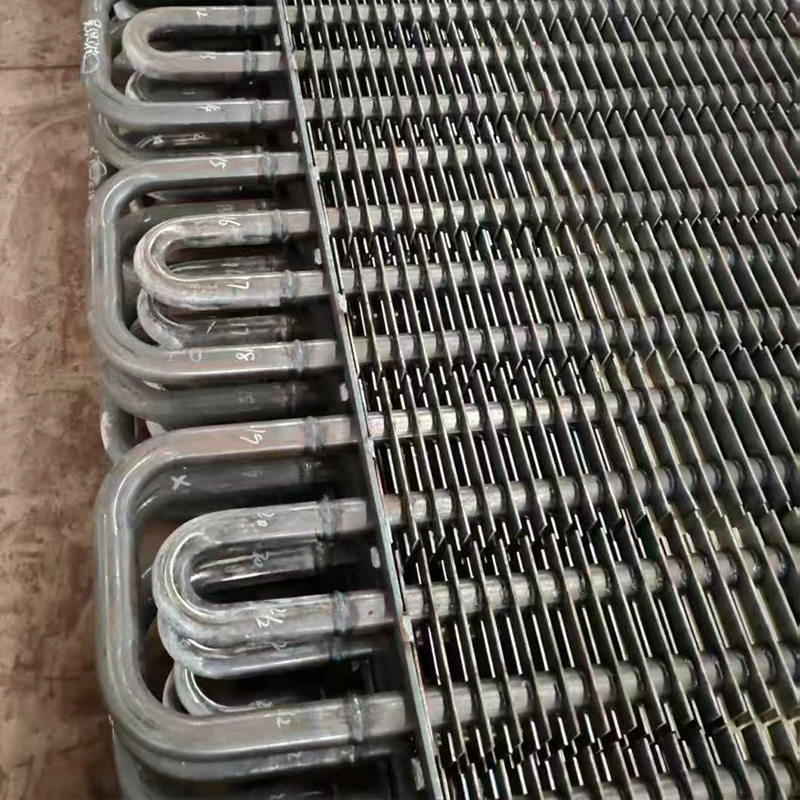
A heat exchange tube bundle is a complex assembly consisting of many tubes secured in tube sheets, often reinforced with baffles to direct the coolant flow. The quality of this assembly is determined not so much by the quality of the pipes themselves, but by the technology of their connection with the gratings and the general geometry of the assembly. There are two main methods of fastening: flaring and welding. In modern highly loaded devices, a combined method is most often used: first, flaring to ensure contact density, then welding to ensure tightness and strength.
The flaring process requires highly skilled operators and the use of precision equipment. Excessive flaring leads to hardening of the metal and the formation of microcracks in the pipe, which is especially dangerous in alloy steels prone to corrosion cracking. Insufficient flaring leaves a gap between the pipe and the grid, where stagnant corrosion and vibration wear begin. In our production practice, we use automated machines that control the tightening torque and the degree of expansion of the pipe, which eliminates the human factor. For responsible customers, we provide video reports of the flaring process of key components.
Welding of pipes with gratings is carried out in a protective gas environment (argon or helium) to prevent oxidation of the seam. For alloy steels, it is critical to observe the welding temperature and cooling rate so as not to disturb the structure of the metal in the heat-affected zone. For example, when welding steels of class 12Х1МФ, preheating to 200-250°C and subsequent tempering of the seam is required. Ignoring these requirements leads to the formation of hardening structures and cold cracks. We strictly control these parameters using thermocouples and recording devices, the data of which is stored in a quality archive.
The partitions in the bundle play the role of not only guide elements, but also supports that prevent vibration of the pipes under the influence of liquid or gas flow. Vibration is the hidden killer of heat exchangers. Resonant vibrations can cause fatigue failure of pipes at the grid entry points in a matter of weeks. The distance between the partitions is calculated individually for specific hydrodynamic conditions. Too sparse placement leads to bending of pipes, too frequent - to excessive pressure drop. We carry out vibration resistance calculations for each project using specialized software that takes into account the natural vibration frequencies of the tube bundle.
The finished bundle undergoes mandatory hydraulic testing. The test pressure is usually 1.25–1.5 times higher than the working pressure. During the test, a visual inspection of all welds and connections is carried out for leaks. To detect microscopic defects, penetrant testing (color flaw detection) or ultrasonic method is used. Only after successfully passing all stages of testing, the bundle receives the Quality Control Department stamp and is packaged for shipment. When purchasing from us, you receive not just a set of pipes, but a fully tested unit, ready for installation in the heat exchanger casing.
Application in oil and gas and chemical industries
Real operating conditions dictate strict requirements for equipment. Let's look at two specific cases from our practice, illustrating the importance of the correct selection of materials and design.
Case 1: Diesel fuel hydrotreating unit.
The customer was faced with the problem of frequent failures of raw material and product heat exchangers. Working medium: a mixture of hydrocarbons with a hydrogen sulfide content of up to 2% and hydrogen under a pressure of 4.0 MPa. The process temperature reached 380°C. Previously, bundles made of 20 (carbon) steel were used, which failed after 8-10 months due to sulfide corrosion and hydrogen erosion. Losses from downtime amounted to about 15 million rubles per month.
Solution:We proposed a replacement with bundles of 15X5M pipes (analogous to ASTM A335 P5). This steel contains 5% chromium and 0.5% molybdenum, which provides high resistance to hydrogen sulfide corrosion at high temperatures. In addition, the wall thickness was increased from 3.5 to 5.0 mm to compensate for the corrosion rate for the entire turnaround period (3 years).
Result:After the introduction of new bundles, the period of trouble-free operation exceeded 40 months. The economic effect from reducing the frequency of repairs and product losses amounted to more than 60 million rubles in the first year of operation. The client confirmed that the initial cost of the alloy steel bundle was 2.5 times higher, but was recouped in 4 months.
Case 2: Production of caprolactam.
The synthesis process uses aggressive acidic environments. The customer required a capacitor to handle vapors containing traces of sulfuric acid. Condensation temperature 140°C, pressure close to atmospheric. Previous attempts to use cheap AISI 304 stainless steel resulted in through-corrosion of the pipes in less than six months.
Solution:The analysis showed that the problem is the insufficient resistance of 304 steel to local types of corrosion in the presence of chlorine and sulfur ions. We recommended a bundle of 10Х17Н13М2Т (AISI 316Ti) pipes. The presence of molybdenum (2-3%) dramatically increased the resistance to pitting. The design of the partitions was also changed to eliminate stagnant zones where acid could concentrate.
Result:The equipment has been operating for three years without any signs of corrosion. Laboratory analysis of samples of pipe walls after 2 years of operation showed a decrease in thickness by less than 0.05 mm, which is within the design life.
These examples demonstrate that skimping on metal quality in aggressive environments is a direct path to financial losses. When choosing a supplier, always request a reference list with facilities where your equipment is already operated under similar conditions. If the supplier cannot name a single similar facility in your industry, this is a reason to think about its competence.
Certification, quality standards and compliance control
In the industrial equipment industry, safety and reliability are subject to strict regulations. Purchasing a bundle of heat exchange pipes without proper certification is not only risky, but also illegal for commissioning at hazardous production facilities (HPF). The main document confirming compliance with the requirements of the Technical Regulations of the Customs Union “On the safety of machinery and equipment” (TR CU 010/2011) is the EAC Certificate of Conformity.
For pressure pipes, compliance with material standards is critical. In Russia and the CIS countries, the main standard is GOST 8732-78 “Hot-deformed seamless steel pipes” and GOST 8734-75 for cold-deformed pipes. These documents regulate dimensions, maximum deviations, mechanical properties and test methods. For alloy steels, GOST 550-75 (oil industrial pipes) and GOST 9941-81 (seamless cold- and heat-deformed pipes made of corrosion-resistant steel) are additionally used.
ASTM (USA) and EN (Europe) standards are widely recognized internationally. For example, ASTM A335 specifies requirements for seamless ferritic alloy tubes for high temperature service, and ASTM A213 specifies requirements for seamless ferritic and austenitic steel tubes for boilers, superheaters, and heat exchangers. Having a 3.1 certificate according to EN 10204 is mandatory for serious projects. This certificate implies that the manufacturer's representative has independently verified the product's compliance with the declared characteristics based on specific tests of the given batch. Wuxi Kaisheng LLC's products, including titanium shell-and-tube heat exchangers and ASME high-pressure units, are certified to PED and ASME standards, which opens up the possibility of supplying customers around the world.
The NAKS (National Agency for Welding Control) license is another important quality marker for Russian enterprises. It confirms that welding technology and personnel have been certified to work with specific steel groups. The lack of a valid NAKS certificate among the welders who assembled the beam makes it impossible to register the equipment with Rostekhnadzor.
We provide a full package of accompanying documentation: metal quality certificate, EAC certificate of conformity, hydraulic test report, non-destructive testing reports (ultrasonic testing, capillary), general drawings and product passports. All documents are generated in electronic and paper form and transferred to the customer along with the cargo. Transparency of document flow allows our clients to easily undergo industrial safety examinations.
| Comparison parameter | Premium segment (Our approach) | Budget segment (Market minimum) |
|---|---|---|
| Origin of the metal | Well-known plants (ChTPZ, TMK, Severstal), full melt tracking | Small smelters, recycled metal, lack of passports |
| Welding control | 100% ultrasonic inspection + capillary inspection of each seam, certified NAKS welders | Random control (1-2%), visual inspection, no protocols |
| Beam geometry | Laser cutting of gratings, CNC flaring, alignment tolerance< 0.5 mm | Manual marking, mechanical flaring “by eye”, possible distortions |
| Documentation | Complete set (EAC Certificate, 3.1, passports, drawings) | Only delivery note, general or expired certificates |
| Warranty | 24 months from the date of commissioning | 6-12 months or no warranty |
| Production time | 4-6 weeks (strict adherence to schedule) | They promise 2 weeks, but miss the deadline by 2-3 months |
Logistics, delivery times and terms of cooperation
Timely delivery of equipment often becomes a decisive factor in the implementation of a project. A delay in the delivery of a tube bundle can block the installation of the entire heat exchanger and delay the start-up date of the entire line. We understand this responsibility, so we build logistics taking into account all possible risks. The standard production time for a standard bundle is 4-6 weeks from the moment the contract is signed and the advance payment is received. This period includes the purchase of metal (if not in stock), machining, welding, quality control and packaging.
For urgent orders, we can offer expedited production in 14-21 days using our stock of popular pipe brands and sizes. However, it is worth considering that the express mode may entail an increase in the cost of work by 15-20% due to the need to pay for overtime work and priority logistics. The minimum shipment quantity (MOQ) depends on the complexity of the product: for standard bundles the MOQ is 1 piece, which is convenient for the repair needs of existing production facilities. For large projects with unique parameters, the minimum order is discussed individually.
Packaging plays an important role in the safety of products during transportation. Pipe bundles are packaged in wooden lathing or metal frames to prevent pipe deformation during loading and unloading operations. The ends of the pipes are closed with plastic plugs to protect them from moisture, dust and foreign objects. Маркировка наносится несмываемой краской и дублируется на бирках, прикрепленных к упаковке. Мы работаем со всеми видами транспорта: автомобильным (для доставок по РФ и СНГ), железнодорожным (для крупногабаритных партий) и морским (для экспортных поставок).
Финансовые условия гибки и адаптируются под потребности заказчика. Возможна работа по предоплате (30-50%), а также поэтапная оплата для долгосрочных контрактов. Для постоянных клиентов предусмотрена система скидок и отсрочки платежа. Все расчеты проводятся в рублях, что защищает заказчика от валютных рисков. Мы работаем официально, предоставляем полный пакет закрывающих документов (счет-фактура, УПД) для бухгалтерского учета и возмещения НДС.
Frequently Asked Questions
Какой минимальный объем заказа для изготовления пучка труб?
Мы принимаем заказы на изготовление единичных изделий (MOQ = 1 шт.), что особенно актуально для ремонтных служб предприятий, которым необходимо заменить вышедший из строя пучок без замены всего теплообменника. Однако для оптовых закупок и крупных проектов действуют специальные ценовые условия. Стоимость единицы продукции при заказе от 10 штук снижается на 10-15% за счет оптимизации производственных процессов и закупки материалов большими партиями.
Можете ли вы изготовить пучок по чертежам заказчика?
Yes, this is our main specialization. Мы работаем как по готовым чертежам заказчика, так и выполняем проектирование “под ключ” на основе технического задания (опросного листа). Наши инженеры проверяют предоставленную документацию на технологичность и соответствие стандартам. Если в чертежах есть ошибки или нестыковки, мы обязательно сообщим об этом до начала производства и предложи м корректировки. Это позволяет избежать брака и переделок на поздних стадиях.
Какие гарантии вы предоставляете на свою продукцию?
Гарантийный срок на изготовленные нами пучки теплообменных труб составляет 24 месяца с даты ввода в эксплуатацию, но не более 36 месяцев с даты отгрузки. Гарантия распространяется на дефекты материалов и изготовления, выявленные в ходе нормальной эксплуатации при соблюдении условий монтажа и обслуживания. В случае выявления гарантийного случая мы обязуемся бесплатно устранить недостатки или заменить изделие в согласованные сроки.
Используете ли вы импортные материалы?
Основной объем продукции мы изготавливаем из российского металла ведущих производителей, что гарантирует стабильность поставок и соответствие ГОСТ. Однако по требованию заказчика возможно использование импортных труб (Китай, Индия, Европа) при наличии необходимых сертификатов и заключений о соответствии. В текущих условиях импортозамещения мы рекомендуем ориентироваться на качественные российские аналоги, которые по своим характеристикам не уступают зарубежным, но стоят дешевле и доступны быстрее.
Как происходит контроль качества перед отгрузкой?
Контроль качества многоступенчатый. Входной контроль металла, операционный контроль на каждом этапе производства (резка, сверловка, сварка, развальцовка) и приемочный контроль готового изделия. Финальный этап включает гидравлические испытания давлением, превышающим рабочее в 1.5 раза, и визуальный осмотр. Заказчик или его представитель может присутствовать при проведении испытаний. По запросу предоставляется фото- и видеоотчет всех этапов контроля.
Почему выгодно покупать пучки труб напрямую у производителя
Покупка теплообменных пучков через посредников или торговые дома часто приводит к удорожанию конечной стоимости на 20-30% без какого-либо добавления ценности. Работая напрямую с производителем, таким как ООО «Уси Кайшэн», вы получаете ряд неоспоримых преимуществ. Во-первых, это цена. Исключение посреднической наценки позволяет нам предлагать более конкурентные условия. Во-вторых, это прозрачность. Вы знаете, кто реально делает вашу продукцию, можете посетить производство, увидеть процессы своими глазами и лично пообщаться с инженерами.
В-третьих, это скорость реакции. При возникновении любых вопросов или необходимости внесения изменений в проект, решение принимается мгновенно, без длительных согласований через цепочку посредников. В-четвертых, это ответственность. Производитель несет полную ответственность за качество своего продукта и не может переложить вину на поставщика металла или субподрядчика. Мы дорожим своей репутацией и каждым клиентом, поэтому делаем все возможное, чтобы сотрудничество было долгим и взаимовыгодным.
Наша компания накопила огромный опыт в производстве теплообменного оборудования для самых разных отраслей промышленности: от нефтепереработки и химии до судостроения и энергосбережения. Мы знаем все подводные камни и умеем их обходить. Доверьте нам задачу по обеспечению вашего производства надежными компонентами, и вы получите продукт, который будет работать годами без сбоев.
Если вы готовы обсудить детали вашего проекта, рассчитать стоимость или получить консультацию специалиста, не откладывайте это на потом. Время — деньги, и каждый день простоя оборудования приносит убытки. Свяжитесь с нами сегодня для получения коммерческого предложения и технической консультации. Наши менеджеры готовы ответить на любые вопросы и помочь вам сделать правильный выбор.
Каталог теплообменных труб | Услуги по изготовлению на заказ | Sales contacts
Contact us today, чтобы обсудить ваш проект и получить индивидуальное предложение. Мы гарантируем высокое качество, соблюдение сроков и профессиональный подход к решению ваших задач.