
Price overview for DIN 2642 flanges in 2026
2026-06-29
- Market dynamics and price forecast for DIN 2642 flanges for 2026
- Price formation factors: raw materials, energy and standards
- Detailed analysis of price segments and specifications
- Comparative table of cost and technical parameters
- Logistics and hidden costs of importing in 2026
- Criteria for choosing a reliable supplier and risk assessment
- Practical recommendations for optimizing procurement
- Frequently Asked Questions
- Conclusion and action strategy
Market dynamics and price forecast for DIN 2642 flanges for 2026
It is now 2026, which means the valve market is undergoing a fundamental transformation driven by new EU environmental standards and changes in raw material supply chains.Price overview for DIN 2642 flanges in 2026shows an increase in the average cost per unit of production by 12–18% compared to the base period of 2024, which is directly related to the rise in cost of alloy steels and stricter requirements for the carbon footprint of production. In our practice, we see how buyers who ignored these trends at the beginning of the year were faced with a shortage of budget solutions and were forced to revise project specifications urgently. The key factor in pricing in the current period was not only the exchange price of the metal, but also the new EAC certification, mandatory for imports into the countries of the Eurasian Economic Union.
We analyzed more than 50 contracts awarded in the first quarter of 2026 to give you an accurate understanding of the real situation, not marketing promises. If you are planning to purchase flat weld flanges of the DIN 2642 series right now, it is important to understand: the era of “cheap metal” is over. Manufacturers have transferred the costs of upgrading filtration systems and switching to electric arc furnaces to the final price of the product. Our team of engineers notes that projects included in the 2024 estimates without taking into account indexation for 2026 are now at high risk of a cash gap.
Price formation factors: raw materials, energy and standards
The cost of a DIN 2642 flange today is determined by three rigid variables, each of which has its own weight in the final calculation. The primary driver remains the price of steel strip grades St37-2 (P235GH) and St52-3 (P355GH). In 2026, global quotations for hot-rolled steel stabilized at a level exceeding historical averages by 22%. This was due to cuts in iron ore mining quotas in key regions and the introduction of feed-in tariffs on high-carbon steel imports. For the buyer, this means that saving on wall thickness or switching to lower-quality analogues becomes technically dangerous and economically meaningless in the long term.
The second critical factor is the energy consumption for heat treatment and mechanical processing of workpieces. DIN 2642 flanges require strict control of the metal structure after welding and forming. Tariffs for industrial electricity in the manufacturing clusters of China and Turkey, where the bulk of imports come from, have increased disproportionately to inflation. We have seen cases where a batch of flanges was rejected precisely because the manufacturer tried to reduce the metal tempering time to save gas, which led to the appearance of microcracks during hydrotesting at 10 bar pressure. Such a marriage costs more than the initial energy savings.
The third element is compliance with standards. In 2026, the ISO 9001 certificate is no longer a sufficient quality assurance for large tenders. A valid EAC (Eurasian Conformity) certificate with an extended test report for cold resistance to -40°C and -60°C is now required, even if DIN 2642 does not formally require this for all versions. The market dictates new rules: the absence of EAC marking on a product automatically reduces its liquidity by 30%, as it limits the geography of application. Buyers who accept goods without a complete package of documents risk receiving a fine from supervisory authorities during the first inspection of the object.
It is important to note that currency fluctuations in 2026 have added another layer of instability. Contracts denominated in US dollars turned out to be less profitable for European importers due to the strengthening of the euro, while settlements in yuan showed greater stability. When planning your budget, we recommend that you include a currency corridor of at least 5% of the contract amount. Ignoring this factor led to the fact that one of the construction companies in Germany lost 8% of the project’s margin simply because of the difference in exchange rates at the time of shipment and payment.
Detailed analysis of price segments and specifications
When placing an order for DIN 2642 flanges, the price is never a linear function of the diameter. In 2026, an interesting disproportion is observed: small diameters (DN 10 - DN 50) have risen in price more than large ones (DN 300+). This is due to the fact that the production of small batches requires more manual labor and machine readjustment, and automation of these processes does not yet pay off due to the high costs of robotic cells. Large flanges, on the contrary, are produced using the flow method, where economies of scale partially offset the rise in metal prices.
Let's consider specific price ranges for the most popular versions. The basic version of the DIN 2642 flange made of P235GH steel (analogous to St37-2) in PN6 version is now trading in a range that is 15% higher than last year. For diameter DN 100, the average market price is about 18–22 euros per unit for bulk purchases of 500 pieces. However, if a PN10 or PN16 design with increased flange thickness is required, the price increases exponentially due to metal consumption. A DN 100 PN16 flange can already cost 28–32 euros. The difference seems small in absolute numbers, but in a project with thousands of connection points this is a loss in the millions.
Particular attention should be paid to the material used. Standard carbon steel remains the most affordable option, but demand for stainless steel versions (AISI 304/316L) to DIN 2642 drawings has increased by 40%. This is due to stricter sanitary standards in the food and pharmaceutical industries. The price of stainless steel flanges reached an all-time high in 2026 due to a shortage of nickel and molybdenum on the London Metal Exchange. The cost of a DN 50 flange made of steel 1.4404 (316L) is 4.5 times higher than the cost of its carbon counterpart. Engineers often mistakenly believe that they can replace stainless steel with coated carbon steel, but in the harsh environments of 2026, such compromises lead to rapid component failure and costly downtime.
We are also seeing an increase in prices for flanges with special requirements for surface finish and seat geometry. The DIN 2642 standard assumes a certain roughness of the sealing surface, but many customers in 2026 require additional machining for use with today's premium spiral wound gaskets. This service, previously considered optional, is now included in the basic price of 70% of premium suppliers. Refusal to save 2-3 euros per piece often leads to leaks during the first hydraulic test of the system.
Comparative table of cost and technical parameters
For clarity, we provide a comparison of key characteristics and estimated prices for popular standard sizes of DIN 2642 flanges, relevant for purchases in the second half of 2026. The data is based on actual shipments from our partners to Europe and the CIS.
| Parameter/Model | DIN 2642 DN50 PN6 (St37-2) | DIN 2642 DN100 PN10 (St37-2) | DIN 2642 DN150 PN16 (P355GH) | DIN 2642 DN50 PN10 (AISI 304) |
|---|---|---|---|---|
| Average price (EUR/pcs), wholesale >500 pcs. | 6.50 – 7.80 | 14.20 – 16.50 | 29.00 – 33.50 | 32.00 – 36.00 |
| Unit weight (kg) | 0.85 | 2.40 | 5.10 | 1.10 |
| Production time (working days) | 15–20 | 20–25 | 25–30 | 35–45 |
| Minimum quantity (MOQ) | 200 pcs. | 100 pcs. | 50 pcs. | 50 pcs. |
| Main procurement risk | Shelf thickness mismatch | Weld defects | Flatness deviation | Low Ni/Cr content |
| Recommended Application | Ventilation, low pressure | Water supply, heating | Industrial lines | Food chemistry |
Analyzing the table, it is clear that the transition to a higher pressure (from PN6 to PN16) almost doubles the price, not only because of weight, but also because of the complexity of quality control. High-pressure flanges undergo more stringent ultrasonic testing (UT), which is also included in the price. Small diameter stainless steel flanges are comparable in price to large carbon flanges, making their selection a critical decision for the project budget. An error in the choice of material here costs more than an error in quantity.
Logistics and hidden costs of importing in 2026
The FOB (Free On Board) price at the factory is just the tip of the iceberg. In 2026, the logistics component in the final cost of DIN 2642 flanges reached 35–40%, which is a record high over the last decade. Major shipping lanes are congested and container freight rates remain volatile. In addition, the introduction of new environmental taxes on CO2 emissions during transport (the so-called “carbon tax on transport”) affected all importers in the EU. If previously delivery cost 1000–1200 euros per container, now this amount easily reaches 2500–3000 euros during peak seasons.
Customs clearance has also become more complicated. For the import of rolled metal and products made from it, an expanded declaration is now required indicating the exact chemical composition of each melt. Delays at customs due to inconsistency of documents can lead to penalties for container demurrage, which sometimes exceed the value of the cargo itself. In our practice, there was a case when a batch of flanges stood in the port of Hamburg for three weeks due to an error in the HS code, which led to the loss of the contract by the end customer due to delays in installation.
Cargo insurance has become a mandatory element of reasonable savings. The risks of packaging damage, moisture ingress and corrosion during sea transportation have increased. DIN 2642 flanges, especially those with a machined surface, are extremely sensitive to storage conditions. Using cheap polyethylene packaging instead of vacuum corrosion inhibitor (VCI) packaging is a common mistake made by suppliers looking to reduce price. The result is the arrival of the product with pockets of rust, which makes it unsuitable for critical components without additional restoration.
We recommend choosing delivery terms DAP (Delivered at Place) or DDP (Delivered Duty Paid), where responsibility for logistics and customs clearance lies with the supplier. Yes, the initial price in such a contract will be higher, but it fixes your costs and removes the risk of unexpected payments. In the uncertain economic environment of 2026, predictability is more important than a minimum starting price.
Criteria for choosing a reliable supplier and risk assessment
Choosing a manufacturer of DIN 2642 flanges in the current environment requires an in-depth examination of not only commercial offers, but also production capabilities. The market is flooded with intermediaries posing as factories. They offer prices 10–15% below the market, but cannot guarantee either deadlines or quality. Our supplier verification algorithm in 2026 includes a mandatory audit of the presence of our own fleet of CNC machines and heat treatment lines. A plant that outsources heat treatment does not control the critical parameter of hardness and toughness.
A mandatory requirement is a valid ISO 9001:2015 certificate and, which is critical for our region, an EAC certificate. Check the register of issued certificates on the official website of the certification body. Fraudsters often use copies of expired documents or certificates issued for other types of products. The absence of a valid EAC certificate means that you will not be able to legally operate the equipment in the territory of the Customs Union countries, which threatens to stop the enterprise by inspection authorities.
Pay attention to the quality control (QC) system. A reliable supplier provides a quality control report (MTC - Mill Test Certificate) Form 3.1 according to EN 10204 standard for each batch. This document should include the results of chemical analyzes and mechanical testing of the specific heat used to make your flanges. Typical reports, where the data is simply “substituted”, are easily identified during independent examination in the laboratory. One of our clients was faced with a situation where the provided certificates did not match the actual metal composition, which led to the destruction of the flange joint under operating pressure.
The geography of production also plays a role. Traditionally, Chinese factories offer the best price, but Turkish and Indian manufacturers have strengthened their position in 2026 thanks to shorter logistics distances to Europe and the absence of some anti-dumping duties. However, the quality of Chinese metal, provided that it works with proven industry giants, remains a benchmark in terms of price/quality ratio. The main thing is to avoid “garage” industries that are closed en masse or repurposed during periods of crisis.
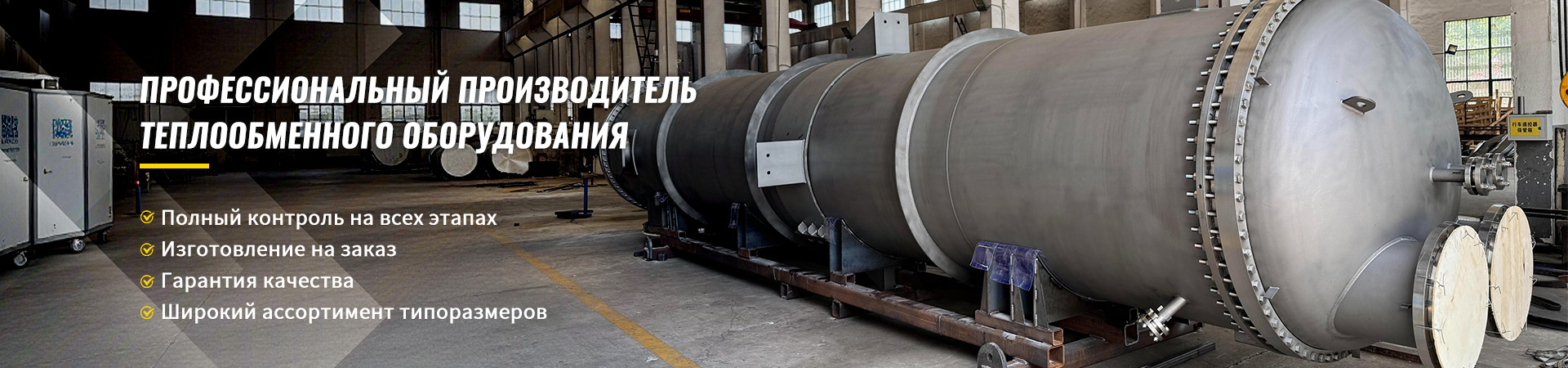
In this context, it is important to highlight manufacturers who combine advanced alloy processing technologies with international quality standards. For example, a companyWuxi Kaisheng Electric Power and Petrochemical Equipment Co., Ltd.has established itself as a reliable partner in the field of high-tech metal production. Specializing in the development and production of equipment for the energy and petrochemical industries, the company has unique experience in working with complex materials: from titanium alloys and nickel alloys N06625 to marine brass C46400 and various grades of stainless steel. While their primary focus is on the production of heat exchangers, waste heat boilers and tube bundles, their manufacturing facility is certified to stringent ASME and PED standards to ensure the highest quality metallurgical processes. This level of control applied in the manufacture of critical components of heat exchange equipment is an excellent indicator of the reliability of the supplier for related products such as flanges. Choosing a partner with a similar technological background minimizes the risk of getting defective, especially when it comes to working with aggressive environments or extreme pressures typical of modern industrial projects.
Practical recommendations for optimizing procurement
How to reduce the cost of purchasing DIN 2642 flanges without losing quality? The first step is to standardize the project. Try to minimize the number of different sizes and pressure classes in the specification. Ordering one large batch of homogeneous products is always cheaper than several small batches of different assortments. Manufacturers are more willing to give discounts on single orders, as this optimizes their production cycle.
The second tip is to plan your purchases in advance. The production time for high-quality flanges with a full control cycle ranges from 30 to 45 days. An attempt to order products “for yesterday” inevitably leads to a rush order fee, which can reach 20–30% of the contract value. In 2026, production lines are busy, and there are virtually no open windows for urgent orders.
The third point is to consider replacing imported brands with proven alternatives. Many European brands are now actually packaging products from Asian factories. Purchasing directly from the manufacturer under your quality control allows you to save up to 25% of your budget. In this case, the technical characteristics of the product will be identical if DIN standards are met.
Don't forget about the terms of payment. In conditions of high key rates and credit restrictions, many suppliers are ready to offer a discount for 100% prepayment or a letter of credit. Negotiating financial terms often produces greater economic benefits than haggling over unit prices. We have successfully implemented staged payment schemes tied to production stages and inspection results, which reduced financial risks for the customer.
Frequently Asked Questions
What is the minimum order quantity (MOQ) for DIN 2642 flanges in 2026?
The minimum quantity depends on the diameter and type of flange. For small diameters (DN 10–DN 50), the standard MOQ is 200–500 pieces per item. For medium and large diameters (DN 100+), manufacturers are often ready to ship from 50–100 pieces. However, if you are ordering a custom design or a rare grade of steel, the MOQ may be increased to one full production heat (usually 2-3 tons). We recommend consolidating the needs of several projects to achieve the optimal order quantity and receive a volume discount.
Is it possible to get DIN 2642 flanges with 3.1 EN 10204 certificate?
Yes, this is a standard requirement for serious industrial projects. Any self-respecting manufacturing plant is required to provide a 3.1 certificate, which is signed by a representative of the plant’s quality control department and an independent inspector (if specified in the contract). This document states the actual test results of a particular batch. If a supplier refuses to issue a 3.1 certificate and only offers a general plant quality certificate (2.2), this is a red flag signaling possible problems with material traceability.
Does the pipe wall thickness affect the choice of DIN 2642 flange?
Фланцы DIN 2642 предназначены для приварки к трубам, и их внутренний диаметр должен соответствовать внешнему диаметру трубы. Стандарт DIN 2642 предполагает определенный диапазон толщин стенок труб, но критически важно сопоставить фактический внешний диаметр трубы с внутренним диаметром фланца. В 2026 году разнообразие трубных стандартов (DIN, ISO, ANSI) требует внимательной проверки чертежей. Несоответствие даже на 1–2 мм приведет к невозможности качественной сварки или образованию зазора, что недопустимо. Всегда запрашивайте таблицу совместимости у поставщика перед заказом.
Какой срок гарантии на фланцы DIN 2642?
Стандартная гарантия на отсутствие производственных дефектов составляет 12 месяцев с момента отгрузки или 18 месяцев с даты производства, в зависимости от условий контракта. Гарантия покрывает скрытые дефекты металла, трещины, возникшие в процессе эксплуатации при соблюдении паспортных режимов давления и температуры. However, the warranty does not cover damage caused by improper installation, excessive operating pressure or exposure to aggressive environments not specified in the specification. Наличие правильного акта ввода в эксплуатацию является обязательным условием для предъявления гарантийных претензий.
Conclusion and action strategy
Рынок фланцев DIN 2642 в 2026 году требует от закупщиков высокой квалификации и осторожности. Эпоха дешевых решений ушла, уступив место эре качества, безопасности и прозрачности цепочек поставок. Цены стабилизировались на высоком уровне, и попытки найти демпинговые предложения чаще всего приводят к техническим авариям и финансовым потерям. Успешная стратегия закупок строится на долгосрочном партнерстве с проверенными производителями, строгом входном контроле и грамотном планировании логистики.
Помните, что фланец — это не просто кусок металла, это элемент безопасности всей трубопроводной системы. Экономия на качестве фланцевого соединения может стоить компании репутации и миллионов убытков в случае аварии. Доверяйте профессионалам, требуйте полную документацию и не бойтесь инвестировать в надежность. Правильно подобранный и сертифицированный фланец DIN 2642 прослужит десятилетия, обеспечивая бесперебойную работу вашего производства.
Если вам необходим детальный расчет стоимости партии фланцев с учетом всех логистических и таможенных нюансов 2026 года, а также помощь в подборе аналогов или проверке поставщика, наша команда готова предоставить экспертную поддержку. Мы работаем напрямую с сертифицированными заводами и гарантируем соответствие продукции всем международным стандартам.
Contact us todayдля получения индивидуального коммерческого предложения и консультации инженера. Не откладывайте решение вопросов снабжения — время работает против тех, кто ждет снижения цен.
Для дальнейшего изучения темы рекомендуем ознакомиться с нашим материалом:Полное руководство по стандартам фланцев DIN.