
Investment casting for the oil and gas industry: prices 2026
2026-07-28
- Market conditions and investment casting cost forecast for 2026
- Pricing factors: why the price of a part can differ by 3 times
- Technical requirements and quality standards for the oil and gas sector
- Comparative analysis of technologies: Lost wax casting vs Sand casting
- Typical mistakes when ordering and ways to prevent them
- How to calculate the project budget and optimize costs in 2026
- Integrated solutions for the oil and gas industry: the experience of Wuxi Kaisheng LLC
- Frequently Asked Questions
- Conclusion and next steps
Market conditions and investment casting cost forecast for 2026
Investment casting prices for the oil and gas industry: 2026 prices are determined by three critical factors: tightening environmental regulations in Europe, rising energy costs for melting refractory alloys, and a shortage of qualified foundry technologists. In the current cycle, we are seeing a shift in cost parity: if five years ago Chinese production was unbeatably cheap, then in 2026 the price difference between localized production in the Russian Federation/CIS and imports from Asia has decreased to 12–15% when taking into account logistics risks and customs duties. For buyers, this means that unit savings are no longer the sole driver of supplier selection; Warranty obligations and compliance with GOST R 53497-2009 or API Spec 6A standards come to the fore.
In our practice of working with large service centers in the oil industry, we have recorded an increase in the average cost of casting body parts for shut-off valves by 18% compared to 2024 figures. This growth is not due to inflation of raw materials, but to the need to introduce multi-stage non-destructive testing (NDT), which is now a mandatory requirement for allowing equipment to operate in environments containing hydrogen sulfide (H2S). A buyer who ignores this factor when comparing commercial proposals risks receiving a part that formally corresponds to the drawing, but is not capable of withstanding cyclic loads under real operating conditions.
The forecast for the rest of 2026 indicates price stabilization in the second half of the year, but only for contracts with a fixed purchase volume of 500 kg of alloy per month. One-time orders in small quantities (up to 50 kg) will continue to rise in price due to the high labor intensity of preparing wax models and ceramic molds. We recommend revising your procurement strategy: switching from purchasing single replacement parts to long-term contracts for mass production allows you to fix the cost at the level at the beginning of the year and avoid seasonal price surges during the autumn pipeline repair period.
Pricing factors: why the price of a part can differ by 3 times
The cost of the final product in lost-wax casting technology (lost wax casting) is never a linear function of the weight of the metal. In 2026, the cost structure underwent changes: the share of energy costs (electricity for induction furnaces and gas for drying molds) reached 35%, whereas previously this figure did not exceed 20%. This fundamentally changes the approach to price calculation: a part with complex geometry with thin walls requires more time for heat treatment of the mold, which directly affects the final receipt, even if the weight of the casting is minimal.
The key parameter that determines the price is the class of accuracy and surface finish required by the customer. For the oil and gas industry, where working environments are aggressive, a surface roughness of Ra 3.2 µm is often insufficient; polishing to Ra 0.8 microns or application of special coatings is required at the stage of the wax model. Each additional accuracy class according to GOST 26645-85 increases the cost of wax processing and application of ceramic layers by 25–30%. In our practice, there was a case when a client refused to reduce the cost of the process by reducing the number of ceramic layers, which led to the failure of the entire batch of valves due to the penetration of metal into the pores of the mold - a loss of more than 2 million rubles.
The choice of alloy also dictates the pricing policy. If for general engineering tasks stainless steel grade 12Х18Н10Т (analogous to AISI 321) is used, then for oil production in the Arctic or high-sulfur fields, special alloys with a high content of nickel and molybdenum are required, such as 03Х16Н15М3Б or duplex steels. The cost of charge for such alloys in 2026 increased by 40% due to sanctions restrictions on the supply of ferroalloys. Moreover, smelting such materials requires vacuum furnaces or smelting in a controlled atmosphere, which doubles the energy intensity of the process.
Don't forget about the hidden costs associated with quality control. The price indicated in the turnkey price list must include ultrasonic testing (UT), radiographic testing (RK) and penetrant testing (PVC). An attempt to save money and have these operations performed by a third-party laboratory often results in the manufacturer abdicating responsibility for internal defects. We insist that NDT protocols be an integral part of the acceptance certificate. Without this document, a casting for the oil and gas industry is considered scrap metal, regardless of its appearance.
The logistics component in 2026 became the number one factor for import orders. Delivery of pattern equipment and finished castings from Southeast Asia takes up to 60 days, which freezes the customer’s working capital. Local production, even at a higher rate per kilogram of casting, benefits due to the speed of capital turnover. The calculation shows: with a delivery time of 14 days instead of 60, the enterprise’s economy receives a gain in liquidity, which covers the difference in the price of castings during two quarters of equipment operation.
Technical requirements and quality standards for the oil and gas sector
The oil and gas industry does not forgive mistakes in metallurgy. Any casting that operates under pressure or in contact with aggressive media must comply with strict regulations. In 2026, the main regulatory document for suppliers in Russia remains GOST R 53497-2009, harmonized with international API standards (American Petroleum Institute). Deviation from the chemical compositions specified in the specification, even by 0.1%, is grounds for returning the entire batch. This is not bureaucracy, but a safety issue: an incorrect ratio of chromium and nickel in an acidic environment leads to intergranular corrosion and sudden destruction of the valve body.
Particular attention is paid to mechanical properties. For parts operating at low temperatures (down to -60°C), the KCU/KCV impact strength test is mandatory. Lost wax casting technology makes it possible to achieve high levels of structure homogeneity, but only if heat treatment conditions are observed. Violation of the tempering temperature or cooling rate can lead to the formation of brittle phases. In one of our northern field projects, we encountered a batch of pump crankshafts that showed satisfactory tensile strength but failed the -50°C impact test. The reason lay in the use of an old oven with uneven heating of the working chamber. This incident cost us the melting of 400 kg of expensive alloy and two weeks of line downtime.
The tightness of the castings is another critical parameter. The presence of through gas pockets or micropores is unacceptable for pump casings and shut-off valves. The standard allows for the presence of single non-through defects of a certain size, but their location is strictly regulated. Modern control methods, such as computed tomography, make it possible to identify hidden defects that are invisible with conventional x-rays. However, the mass introduction of tomography is so far economically justified only for critical nodes. For serial products, we use a combination of hydraulic testing with a pressure exceeding 1.5 times the working pressure and penetrant testing of surfaces.
Production certification plays a decisive role in tender procurement. Having an ISO 9001 certificate is a basic requirement, but to work with Gazprom or Rosneft, certification of experts from NAKS (National Agency for Control and Welding Technology) and permission to use a specific casting technology are required. The process of obtaining such permits takes from 6 to 12 months and requires the provision of marriage statistics for the last three years. A supplier that does not have these documents is automatically excluded from major contracts, regardless of the price offered.
Documentation requirements have become more stringent in 2026. The quality passport must contain not only chemical analysis and mechanical properties, but also data on the heat (heat number, date, charge used), heat treatment modes and results of all types of NDT. Digitalization of the industry requires the transfer of this data electronically with a digital signature of the responsible person. The lack of a complete set of documents makes it impossible for supervisory authorities to commission equipment.
Comparative analysis of technologies: Lost wax casting vs Sand casting
When choosing a technology for manufacturing parts for oil and gas equipment, the customer is often faced with a dilemma: choose traditional sand casting or more expensive investment casting (IMC). In 2026, the limit of applicability of these methods has shifted. If previously LVM was used only for jewelry or small turbine blades, now this technology dominates in the production of complex fittings with a diameter of up to 300 mm. Below is a detailed analysis of the differences, based on real production statistics.
| Comparison criterion | Lost wax casting (LMC) | Sand casting (in HTS/ZhSS) |
|---|---|---|
| Dimensional accuracy (class according to GOST 26645) | 4th–6th grade. Minimum allowances for machining (1–2 mm). | 8th–10th grade. Large allowances (3–5 mm or more), requiring significant machining. |
| Surface roughness (Ra) | Ra 1.6 – 3.2 µm. The surface is smooth, suitable for working with aggressive environments without additional processing. | Ra 12.5 – 25 µm. Requires sandblasting and often sanding to remove burnt marks. |
| Geometry complexity | High. Possibility of obtaining internal cavities of any configuration without rods or with a minimum number of rods. | Limited. Complex internal cavities require the installation of rods, which increases the risk of displacement and flash formation. |
| Economic efficiency (batch) | Beneficial for medium and small series (from 10 to 1000 pieces). The high cost of equipment pays off due to savings on machining. | Beneficial for single production or very large batches of simple parts. Low cost of equipment. |
| Metal consumption and yield | High yield (up to 60–70% for complex parts) due to the absence of a large-volume gating system. | Low yield (40–50%) due to the massive gating system and the need for large allowances. |
| Applicability in oil and gas | Ball valve bodies, pump impellers, high pressure fittings, parts with thin walls. | Large valve bodies (DN > 400), base plates, simple flanges, low pressure piping elements. |
An analysis of the table shows that for most shut-off valve units of medium diameter (DN 50–DN 200), lost wax casting is the only choice. Savings on machining completely offset the higher cost of shaping. In the case of sand casting, the cost of milling and turning to remove allowances can be up to 40% of the cost of the finished part. In addition, the smooth surface of the LVM reduces the risk of corrosion, which is critical for extending the service life of equipment in wells.
However, sand casting retains its position in the large-size products segment. The production of valve bodies with a diameter of over 400 mm using the LVM method is technically difficult and economically infeasible due to the huge dimensions of the installations for burning models and impregnating molds. Here, sand casting in cold-hardening mixtures (CMC) remains the industry standard. It is important to understand that an attempt to use LVM where it is ineffective will lead to a multiple increase in price without improving performance characteristics.
Our recommendation for design engineers: when developing a new part, carry out a technical and economic calculation (TEC) for both methods. Consider not only the cost of the casting at the factory gate, but also the total cost of ownership, including machining costs, inspection costs and potential waste from defects. In 2026, the trend is obvious: where space allows, the lost wax technology wins due to its precision and material savings.
Typical mistakes when ordering and ways to prevent them
Purchasing castings for the oil and gas industry involves risks that are often underestimated at the stage of forming technical specifications. The most common mistake is the lack of clear requirements for the chemical composition and mechanical properties in the drawing. The phrase “stainless steel” is unacceptable. It should be indicated: “Steel 08Х18Н10Т according to GOST 5632-2014, carbon content no more than 0.08%, titanium 5xC%.” The ambiguity is interpreted by the supplier in favor of reducing the cost of the process, which leads to the use of a cheaper analogue with worse characteristics.
The second critical mistake is ignoring the requirements for the gating system. Many customers believe that the location of the sprues is up to the foundryman. In fact, incorrect metal insertion can create thermal stress zones precisely in those places where the part will experience maximum load. In our practice, there was a case of destruction of the filter housing during hydrotesting precisely in the area where the sprue was inserted, which was not structurally provided for and weakened the wall section. Request approval of the gating system layout before starting to make wax models.
The third problem is unrealistic deadlines. Lost wax casting is a long process. Making a mold for wax takes 10–15 days, assembling model blocks and applying ceramic layers takes another 7–10 days, drying, burning, melting and heat treatment takes at least 5 days. An attempt to shorten this cycle by violating the mold drying technology (for example, using accelerated drying in microwave chambers without proper humidity control) is guaranteed to lead to the formation of cracks in the ceramics and metal penetration into the mold (“breakthrough”). The result is 100% defective batch. We categorically do not recommend agreeing to a period of less than 25–30 days for the first batch, even if the supplier promises a “miracle”.
The fourth mistake concerns acceptance. Often the customer is limited to a visual inspection and checking the dimensions with a caliper. This is not enough for oil and gas equipment. A mandatory step is selective or complete non-destructive testing. Refusing to pay for the services of an independent laboratory or inspector at the manufacturing plant in order to save 5-10% of the contract amount is a false economy. The cost of replacing a failed valve at an operating field, taking into account the shutdown of production, can be thousands of times higher than the price of the casting itself.
Finally, the importance of packaging and preservation is underestimated. Parts made of stainless steel and heat-resistant alloys are sensitive to transport corrosion, especially during sea transportation or storage in open areas. The lack of vacuum packaging and corrosion inhibitors can lead to the appearance of pitting even before installation of the equipment. Include packaging requirements (GOST 9.014) in the order specification as a mandatory item.
How to calculate the project budget and optimize costs in 2026
Budget planning for the purchase of castings in conditions of market volatility requires a flexible approach. The basic formula for calculating the cost of a batch is as follows:Price = (Casting weight × Price kg of alloy) + (Weight of gates × Price kg of alloy × Yield rate) + Cost of pattern equipment / Circulation + Standard machining hours + Factory overhead + Margin. However, in 2026, it is necessary to add a logistics instability coefficient (1.1–1.2) and a reserve for enhanced quality control to this formula.
To optimize costs, we offer the following strategies. Firstly, the unification of alloys. If your fleet uses 5 different grades of steel, consider revising the design to use 2-3 universal grades (eg duplex steel for a wide range of environments). This will make it possible to increase the melt size, reducing specific costs for energy and charge. Secondly, grouping orders. Combining the needs of different departments into one contract with a volume of 1 ton or more entitles you to a wholesale discount and priority production planning.
Third, consider a tolling scheme if you have access to quality own-brand scrap metal. Хотя многие заводы предпочитают работать с полной стоимостью материалов, в некоторых случаях предоставление собственной шихты (при условии ее сертификации) может снизить затраты на 15–20%. Однако будьте готовы к тому, что завод возьмет на себя ответственность только за технологический процесс, но не за химический состав, если входной контроль вашей шихты покажет отклонения.
Важным инструментом экономии является правильный выбор класса точности. Не требуйте 4-й класс точности там, где достаточно 6-го. Каждый лишний класс точности экспоненциально растет в цене из-за необходимости использования более дорогих восков, большего числа слоев керамики и более жесткого контроля геометрии модели. Проведите аудит чертежей: часто конструкторы перестраховываются, указывая допуски, недостижимые или избыточные для данной функции узла.
И наконец, инвестируйте в долгосрочные отношения с одним проверенным поставщиком. В 2026 году рынок литья стал рынком продавца. Заводы, имеющие свободные мощности и квалифицированный персонал, загружены на месяцы вперед. Постоянный заказчик получает не только стабильную цену, но и приоритет в очереди, техническую поддержку на этапе проектирования и гибкие условия оплаты. Переход от транзакционной модели (“купил-продал”) к партнерской является самым надежным способом защиты от ценовых шоков.
Integrated solutions for the oil and gas industry: the experience of Wuxi Kaisheng LLC
В контексте растущих требований к качеству и надежности оборудовани я, выбор партнера становится стратегическим решением. Ярким примером компании, успешно интегрирующей передовые технологии литья в производство сложного нефтегазового оборудования, являетсяWuxi Kaisheng Electric Power and Petrochemical Equipment Co.,Ltd" Специализируясь на разработке и производстве теплообменного оборудования, компания демонстрирует, как высокие стандарты литейного производства трансформируются в надежность конечных изделий.
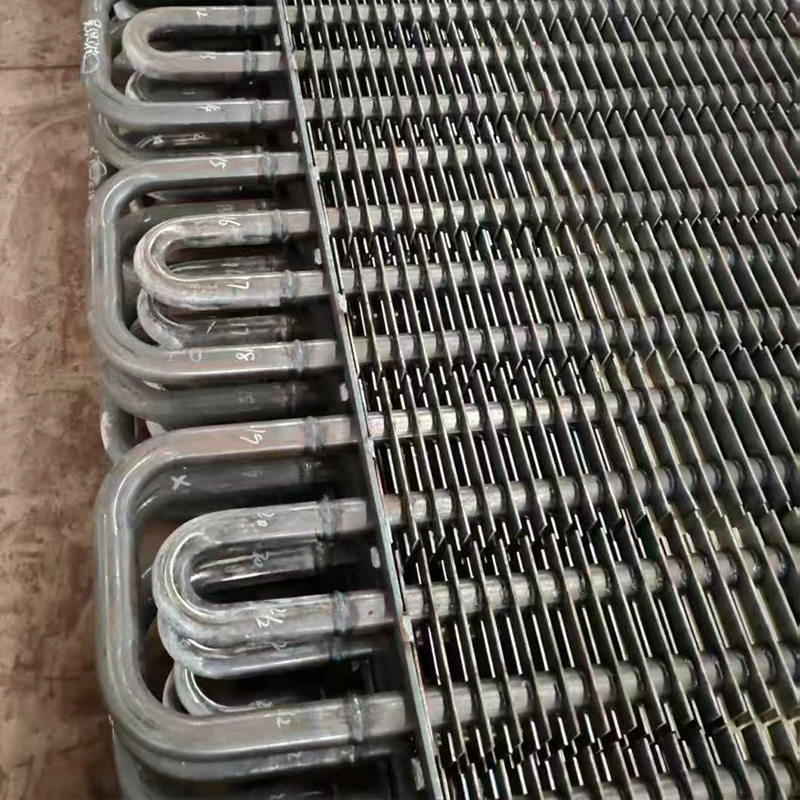
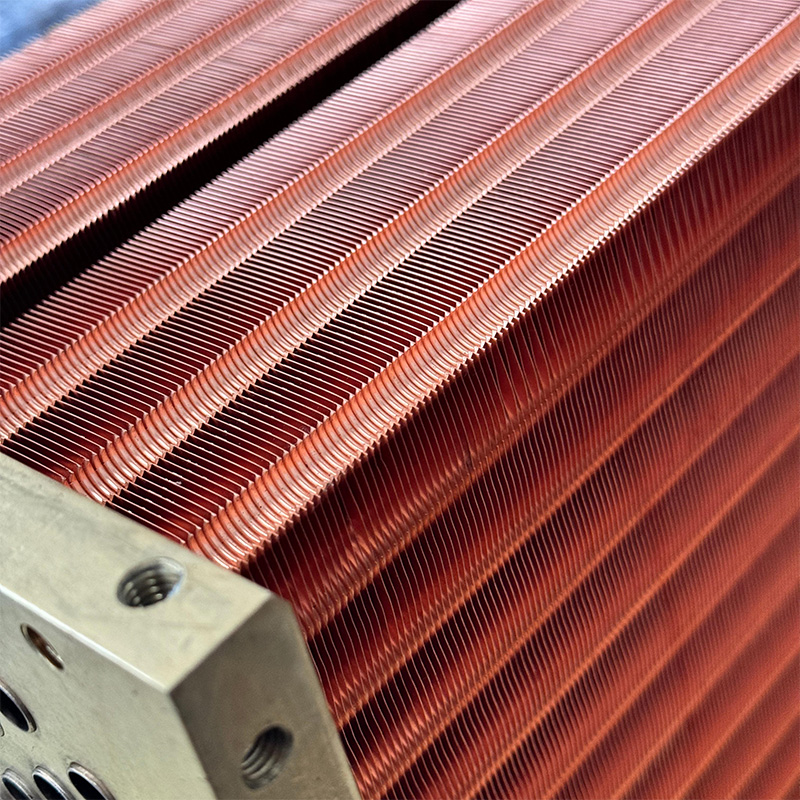
Основной портфель продукции ООО «Уси Кайшэн» включает титановые кожухотрубные теплообменники, высоконапорные аппараты стандарта ASME, а также сложные трубные пучки из нержавеющих сталей (включая марку 316), морской латуни C46400, медно-никелевых сплавов и никелевых сплавов N06625. Ключевым элементом успеха здесь является использование прецизионного литья для изготовления критических компонентов, таких как трубные решетки из нержавеющей стали 321, латуни C46400 и сплава C70600. Именно качество этих отливок определяет герметичность и долговечность всего теплообменного аппарата в агрессивных средах.
The company's products are made from a wide range of materials: carbon, stainless and alloy steel, titanium, copper and nickel alloys. Все изделия сертифицированы по строгим международным стандартам PED и ASME, что подтверждает их способность выдерживать экстремальные давления и температуры. Высокая коррозионная стойкость и теплоэффективность оборудования ООО «Уси Кайшэн» делают его востребованным не только в нефтепереработке и нефтехимии, но и в судостроении, опреснении морской воды и энергосберегающих проектах по всему миру. Компания предлагает не просто отдельные детали, а высококачественные индивидуальные решения, обеспечивая стабильную работу оборудования заказчика в самых суровых условиях эксплуатации.
Frequently Asked Questions
Каков минимальный объем заказа (MOQ) для литья по выплавляемым моделям?
Технологически возможно изготовить даже одну деталь, однако экономически это нецелесообразно из-за высокой стоимости разработки и изготовления пресс-формы для восковой модели. Для стандартных изделий минимальный объем заказа обычно составляет 10–20 штук, что позволяет amortize (распределить) стоимость оснастки. Для уникальных крупногабаритных деталей MOQ может быть равен 1 штуке, но цена за единицу будет включать 100% стоимости модельной оснастки. В 2026 году некоторые заводы предлагают услугу 3D-печати восковых моделей для опытных образцов, что позволяет заказать партию от 1 шт. без изготовления металлической пресс-формы, но стоимость такой модели будет в 3–5 раз выше традиционной.
Какие сроки изготовления типовой партии корпусов шаровых кранов?
Стандартный производственный цикл для партии весом до 500 кг составляет 30–35 рабочих дней с момента утверждения чертежей и оплаты аванса. Этот срок включает: 10 дней на изготовление пресс-формы и первых образцов воска, 5 дней на согласование образцов заказчиком, 15 дней на формирование керамических блоков, плавку и термообработку, и 5 дней на механическую обработку и контроль. Ускорение процесса возможно только за счет параллельного выполнения операций и работы в три смены, что увеличивает стоимость заказа на 20–25%. Times longer than 45 days are considered a sign of problems with plant staff utilization or qualifications.
Можно ли получить отливки с внутренней полостью сложной формы без стержней?
Да, это одно из главных преимуществ литья по выплавляемым моделям. Сложные внутренние каналы, полости и отверстия формируются непосредственно восковой моделью, которая изготавливается в пресс-форме со специальными знаками (выступающими частями). Это исключает необходимость установки керамических или песчаных стержней, устраняя риск их смещения и образования облоя внутри детали. Однако для очень глубоких и узких каналов, где невозможно обеспечить вымывание воска или нанесение суспензии, иногда приходится использовать растворимые стержни, что усложняет технологию и повышает цену.
Гарантируете ли вы герметичность отливок под высоким давлением?
Герметичность не является inherent (врожденным) свойством литья, она достигается за счет соблюдения технологии и контроля. Ни один честный производитель не даст 100% гарантии без проведения гидравлических испытаний. Стандартная процедура включает испытание давлением, превышающим рабочее в 1.5 раза, с выдержкой в течение времени, регламентированного ГОСТ или API. Если в процессе испытаний обнаруживаются свищи, отливка подлежит ремонту (заварке) с последующим повторным контролем или отправляется в переплавку. Мы рекомендуем всегда требовать протокол гидравлических испытаний для каждой критической детали.
Do you work with customer-supplied raw materials?
Большинство современных литейных заводов предпочитают работу с полным циклом (давальческая схема с материалом заказчика встречается все реже). Это связано с тем, что качество шихты напрямую влияет на результат, и завод несет ответственность за химический состав. Принимая давальческий металл, завод рискует получить брак не по своей вине. Тем не менее, для крупных постоянных клиентов возможна индивидуальная договоренность при условии предоставления сертификатов качества на каждую плавку металла и проведения входного спектрального анализа на территории завода перед плавкой.
Conclusion and next steps
Рынок литья по выплавляемым моделям для нефтегазовой отрасли в 2026 году предлагает баланс между высокими технологиями и жесткой экономической реальностью. Цены растут, но вместе с ними растет и ценность качественного, сертифицированного продукта, способного обеспечить бесперебойную работу скважин и трубопроводов. Выбор поставщика сегодня — это выбор партнера, который разделит с вами риски и обеспечит прозрачность каждого этапа производства. Не позволяйте низкой начальной цене стать причиной будущих аварий и простоев.
Если вы планируете модернизацию парка оборудования или запуск нового проекта, мы готовы провести бесплатный аудит ваших чертежей и предложить оптимизированное технологическое решение. Наши инженеры рассчитают точную стоимость партии с учетом всех скрытых факторов и предложат варианты экономии без потери качества. Свяжитесь с нами сегодня для получения детального коммерческого предложения и консультации по выбору сплава.
Для получения дополнительной информации о наших возможностях и примерах выполненных работ посетите страницулитье для нефтегазовой промышленности, где представлены кейсы успешной реализации проектов в условиях Крайнего Севера и шельфовых месторождений.