
CNC Laser Plywood Cutting Machine: Review
2026-07-22
- Criteria for choosing equipment for cutting plywood: from laser power to smoke removal systems
- Design features of machines: why a “Chinese designer” is cheaper, but more expensive to maintain
- Safety and environmental systems: hidden costs that sellers are silent about
- Typical mistakes in selection and operation: lessons from service practice
- Итоговый чек-лист перед подписанием договора
Criteria for choosing equipment for cutting plywood: from laser power to smoke removal systems
Choosing a CNC machine for processing sheet materials is not just a purchase of hardware, but an investment in the production chain, where an error in the specification can cost tens of thousands of rubles monthly. In our practice, we have repeatedly encountered a situation where a company purchased a powerful 150 W laser engraver for thin 3-4 mm plywood, expecting high speed, but received charred edges and constant downtime due to overheating of the optics.CNC Laser Plywood Cutting Machine: ReviewKey parameters will help you avoid such financial losses and choose equipment that will actually pay for itself in the first 6-8 months of operation. We analyzed more than 40 models presented on the Russian and CIS markets in 2025-2026 to give you not a marketing booklet, but a technical map for making a decision.
The main problem of the market today is the substitution of concepts. Managers sell “universal” machines that supposedly cut everything: from paper to metal. The reality is that plywood requires a specific approach to wavelength, focal length and, critically, airflow system. If you plan to work with FK or FSF birch plywood, you need a CO2 laser with a wavelength of 10.6 microns, and not a fiber source, which will simply burn through the material, leaving rough edges. Below we will analyze each component of the machine as if you were assembling it yourself in the workshop.
Why the power of the tube does not guarantee the quality of the cut
The first question that any buyer has is: “How many watts do I need?” Intuitively, it seems that the more, the better. This is a dangerous misconception. For plywood up to 10 mm thick, the optimal range is 80–100 W. Using a 130-150 W tube for such applications often has the opposite effect: the excess energy causes the adhesive layer inside the veneer to instantly ignite, creating deep black deposits (carbonation). In one of our projects, the client insisted on installing a RECI W4 tube (150 W) for furniture production. The result was a 40% increase in post-processing time for parts, as operators had to manually sand each end with a sanding sponge.
The power must be suited to the task. If your main product is souvenir products made from 3mm plywood, 60 W will be enough for you, provided that the optics are of high quality. If you are cutting 15-18 mm structural plywood for construction formwork, then 100-120 W will be justified, but only in conjunction with a high air pressure system. It is important to understand the physics of the process: the CO2 laser evaporates the material. When cutting multi-layer plywood, the beam must pass through layers of glue and wood with different densities. Too high an energy density “explodes” the glue before it can cut through the next layer of wood.
Pay attention to the emitter resource. Chinese glass tubes (such as RECI, SPT, Yongli) have a declared resource of 10,000 - 12,000 hours, but in real conditions of Russian operation (temperature changes in the workshop, unstable voltage) this period is reduced to 6,000 - 7,000 hours. Ceramic-metal tubes (Synrad, Coherent) last longer (up to 20,000 hours), but their cost is 3-4 times higher, and repairs in Russia can take up to 3 weeks due to logistics. For small businesses, where machine downtime equals stopping shipments, having a service center within a 200 km radius is more important than the brand of the tube.
Recommendation:Before purchasing, ask the supplier for a test cut on your material. Don't believe the videos on the Internet where they cut perfect American plywood. Bring a sample of your plywood (with the glue content you are working with) and check the cut edge under a magnifying glass. If you see a solid black stripe more than 0.3 mm wide, the power is selected incorrectly or the focus is broken.
Design features of machines: why a “Chinese designer” is cheaper, but more expensive to maintain
The market is flooded with machines assembled from ready-made modules based on the Lego principle. Manufacturers take profiles, racks, motors and controllers from different brands, assemble them into a common frame and sell them as a single system. The problem with this approach is the lack of a unified engineering culture. We have seen cases where excellent German THK slats were installed on a frame made of thin-walled aluminum, which after six months of operation began to “play” from vibrations. This led to a defocus of the beam and the appearance of steps on vertical cuts.
A key element of reliability is the type of guides. For cutting plywood, where high acceleration and deceleration dynamics are required (so as not to burn corners), profile guides with high-precision carriages (class H or P) are required. Ball screws (ball screws) must be pre-tensioned to eliminate play when reversing direction. Cheap machines use round shafts and plain bearings. They work fine when engraving, but when cutting thick plywood at high speed they produce vibration, which turns a smooth cut into a “wave”. The price difference between these options can be 15-20%, but the difference in product quality is colossal.
The motion transmission system also plays a role. Belt drive (HTD synchronous belts) provides high speed, but over time the belts stretch, requiring constant tightening. For high-precision work (for example, mortise-tenon assembly without glue), a rack and pinion with a gearbox is preferable, although it is a little noisier and has limitations on maximum speed on small formats. In 2025, a hybrid system became standard for 1300x900 mm formats: a rack in the X axis and a belt in the Y axis, which allows a balance between speed and positioning accuracy.
One of our clients encountered the problem of “floating” part sizes after three months of work. It turned out that the manufacturer saved on the bearings of the ball screw support units by using conventional ball bearings instead of thrust bearings. Under load, the shaft sagged, changing the geometry of the head movement. The repair took two weeks and required replacing half of the mechanics. This is a classic example of how skimping on second-tier components kills the entire project.
Action:Require a passport for the main components (guides, screws, motors). If the specification simply says “linear guides” without indicating the brand (HIWIN, TBI, PMI) and accuracy class, this is a red flag. Insist on a replacement with well-known brands or a reduction in price, taking into account the risks.
Electronics and control: the brain of your factory
The controller is the interface between the operator and the machine. The plywood laser cutting segment is dominated by two types of systems: standalone controllers (Ruida, Trocen) and PC control (Mach3, LinuxCNC, in-house developments). For mass production of plywood products, the undisputed leader is the Ruida series (models RDC6442G, RDC6445G). Why? Because they allow you to load files directly from a USB flash drive without connecting the machine to your computer. In a dusty workshop where wood dust flies, an additional PC is an extra point of failure.
PC-based systems are good for complex 3D engraving or custom tasks, but they are susceptible to viruses, Windows updates, and accidental operator input. We recorded cases when updating video card drivers on the control computer disrupted the calibration of steps, and the machine began cutting parts with an offset of 2 mm at every meter. Standalone controllers are free of these problems: they are “hardwired” into the hardware and work reliably for years.
An important nuance is support for the dynamic focus function. When cutting thick plywood (more than 10 mm), the distance from the nozzle to the material must change during the cutting process, since the focal spot moves deeper into the material. Advanced controllers can automatically adjust the head height (Z-axis) according to a given algorithm. Without this function, the lower part of the cut on thick plywood will be much wider than the upper part, which deteriorates the quality of the connection between the parts.
Also pay attention to the presence of encoders on the motors. Budget machines use stepper motors without feedback. If the head encounters an obstacle (for example, a knot in plywood or a stuck part), the engine skips steps and the coordinates are lost. The system “will not know” about this and will continue cutting with an error. Servomotors or steppers with encoders instantly react to loss of step and stop the process, maintaining the integrity of the workpiece.
Tip:Make sure that the controller control panel has a Russian menu. Many cheap versions of Ruida come with a Chinese or English interface, making it difficult to train staff and increasing the risk of errors when entering power and speed parameters.
Safety and environmental systems: hidden costs that sellers are silent about
Cutting plywood is accompanied by the release of huge amounts of smoke and fine dust. Wood dust is explosive, and the combustion products of glue (especially in FSF plywood with phenol-formaldehyde resins) are toxic. Ignoring the issue of ventilation is a direct path to fines from Rospotrebnadzor and fire inspections. In 2025, requirements for industrial ventilation have become more stringent, and simple exhaust hoods no longer pass inspection in many enterprises.
The standard equipment of machines often includes a weak centrifugal fan with a capacity of 200-300 m³/h. For the 1300x900 format this is catastrophically small. The actual air flow for effective smoke removal should be at least 800-1000 m³/h. In addition, the static pressure of the fan is important to clear the long ductwork and filters. We took measurements: when installing a standard fan, the dust concentration in the workshop air exceeded the maximum permissible concentration by 4 times after only 30 minutes of operation.
Filtration is a separate pain. You can’t just throw wood dust outside. A cyclonic cleaning system or cartridge filters are required. Cyclones are good for large chips, but fine dust (fraction less than 10 microns) passes through them. Plywood requires fabric filters or electrostatic precipitators. A clogged filter reduces draft, smoke begins to settle on lenses and mirrors, damaging the optics. Cleaning lenses with abrasive dust leads to micro-scratches, which scatter the beam and reduce cutting power.
Fire safety is a critical parameter. Plywood burns quickly. A laser beam hitting a stationary point (if the program freezes or the material has moved) burns through the table and sets fire to the remaining material in seconds. A mandatory element of a modern machine is a fire extinguishing system. The basic option is flame sensors that turn off the laser. Advanced - an automatic water or powder extinguishing system that is triggered in the fire zone. In our practice, there was a case when the absence of such a system led to the burning out of an entire hangar. The insurance company refused to pay, citing violation of the rules for operating the equipment.
Check:Ask your supplier to calculate the performance of the exhaust system specifically for your material. Ask if the kit includes an air flow sensor that blocks the laser from starting if the hood is turned off or the filter is clogged. This is cheap insurance against optical failure.
| Comparison parameter | Budget segment (up to 300 thousand rubles) | Middle segment (300-600 thousand rubles) | Premium / Industrial (from 600 thousand rubles) |
|---|---|---|---|
| Guide type | Round shafts, plain bearings | Profile HIWIN/TBI (class H) | Profile precision (class P), linear motors |
| Axle drive | Toothed belt (all axles) | Rack + Belt (hybrid) | Rack + Gearbox (all axes) |
| Controller | Trocen AWC608C (basic) | Ruida RDC6442G/6445G | IoT enabled Ruida / Beckhoff |
| Focus system | Manual table height adjustment | Electric table lift / manual head | Automatic dynamic focus (Auto-focus) |
| Exhaust system | Household fan 200 m³/h | Industrial centrifugal 600 m³/h | Cascade system with cyclone and filtration >1000 m³/h |
| Security | Emergency stop button | Lid opening sensors + E-stop | Auto-extinguishing system + temperature monitoring |
| Resource without maintenance | Up to 500 operating hours (optics cleaning) | 1000+ hours | 2000+ operating hours (subject to regulations) |
Economics of ownership: we calculate the real cost per minute of cutting
The price of the machine on the website is just the tip of the iceberg. To understand the true cost of ownership (TCO), you need to consider consumables, energy and depreciation. The laser tube is the most expensive consumable. The average cost of replacing a 100 W tube is about 40,000 - 60,000 rubles. With a resource of 6000 hours and operation in 2 shifts (12 hours a day), replacement will be required approximately once every 1.5 years. This adds about 100 rubles to the cost of each hour of machine operation.
Optics (lenses, mirrors) require regular replacement. A ZnSe lens costs from 3,000 to 8,000 rubles, depending on the quality of the coating. When actively cutting plywood (which produces a lot of carbon deposits), the lens has to be changed or cleaned every 2-3 months. The use of cheap optics leads to rapid burnout of the coating and loss of power, which forces the operator to reduce the cutting speed, increasing the cycle time by 15-20%.
Electricity. A 100 W laser machine consumes about 1.5 - 2 kWh from the network (including the power supply, chiller and hood). With a tariff of 5 rubles/kWh and work 200 hours per month, the electricity bill will be 20,000 rubles. This is a significant expense item that is often forgotten to be included in the product cost estimate.
Gas. Compressed air is used to cut plywood. The compressor also consumes electricity and requires maintenance (oil change, filters). If you use bottled oxygen to increase the speed (which is not recommended for plywood due to the risk of fire), the costs increase manifold. The optimal choice is a high-quality oil-free compressor with a receiver and dryer to prevent moisture from getting into the optics.
We carried out an analysis for a client who produces plywood construction sets. Switching from a low-end machine to a mid-range model increased initial costs by 40%, but reduced the scrap rate from 8% to 0.5% and increased production speed by 25% due to the lack of downtime for setup and cleaning. The payback for the difference in price was 9 months.
Calculation:Make a spreadsheet of expenses for the year ahead, including 2 tube replacements, 4 sets of optics, compressor maintenance and electricity. Divide the amount by the planned production volume in linear meters. This way you will get a fair cut cost.
Typical mistakes in selection and operation: lessons from service practice
Over the years, we have identified several recurring scenarios that lead to project failure. The first mistake is buying a machine “for growth”. The entrepreneur takes the 1600x1000 mm format and 150 W tube, planning to expand. As a result, the machine takes up half the workshop, consumes a lot of energy, and is 10% loaded with small souvenirs. Downtime of expensive equipment eats up all margins. It’s better to start with a compact format of 600x400 or 900x600, hone the technology, and then scale up.
The second mistake is ignoring the preparation of the premises. The laser machine is afraid of cold and dampness. Installing equipment in an unheated warehouse in winter is a guarantee of failure of the tube (condensation inside) and electronics. The room temperature should be stable, in the range of +15…+25°C. Humidity is also critical. Dry air contributes to the accumulation of static electricity, which can break through the laser ignition unit. A humidifier or climate control is required.
The third mistake is saving on software and training. Many people think that it is enough to buy a machine and it will start cutting itself. No. The operator must be able to vectorize images, adjust the cutting order (so that small parts do not fall out ahead of time), and select modes for different batches of plywood. The difference in speed between an experienced operator and a novice can reach 200%. We recommend budgeting for at least 3-5 days of personnel training directly at the supplier’s production site or with an on-site engineer.
The fourth mistake is the wrong choice of material. Not all plywood is suitable for laser cutting. Plywood with a high glue content or treated with fire-retardant compounds can release chlorine when cutting, which instantly corrodes the metal parts of the machine and mirrors. Always check the composition of the material. Birch plywood of the FK brand (with urea glue) is ideal for the laser; it produces minimal carbon deposits and safe fumes.
Caution:Never leave the machine running unattended for long periods of time. Even with a fire suppression system, human supervision is necessary. Keep a maintenance log where the operator will record hours of operation, the condition of the optics and any oddities in the behavior of the machine. Это поможет диагностировать проблемы до того, как они станут фатальными.
Сервис и гарантия: как не остаться один на один с проблемой
В B2B секторе постпродажная поддержка важнее самой покупки. Станок — сложное устройство, и что-то обязательно сломается в момент аврала. Вопрос в том, как быстро это исправят. Официальные дилеры крупных брендов обязаны иметь склад запчастей в РФ. Узнайте заранее: есть ли у них в наличии трубки, блоки питания, материнские платы контроллеров? Если запчасти нужно везти из Китая 3 недели — ваш бизнес встанет.
Гарантийные условия часто содержат «минные поля». Производитель может аннулировать гарантию, если вы заменили трубку на стороннюю, использовали неоригинальную оптику или не предоставили акт о соблюдении температурного режима в цеху. Read the contract carefully. Пункт о «расходных материалах» обычно исключает из гарантии трубки и оптику, но механика и электроника должны быть защищены минимум на 12 месяцев.
Техническая поддержка по телефону или в мессенджерах должна быть оперативной. Попробуйте позвонить поставщику до покупки с «глупым» вопросом и посмотрите, как быстро и компетентно вам ответят. Если менеджер плавает в терминах или переводит звонок три раза — бегите. Вам придется общаться с ними регулярно.
Наличие сервисных инженеров в вашем регионе — огромный плюс. Выезд специалиста на диагностику стоит денег, но быстрее, чем отправка станка в другой город. Уточните стоимость нормо-часа выезда и условия гарантийного обслуживания (бесплатно ли выезжают при поломке в первый год?).
О компании ООО «Уси Кайшэн»: надежност ь в каждом компоненте
Выбирая промышленное оборудование, важно учитывать не только характеристики самого станка, но и качество его периферийных систем, таких как охлаждение и теплообмен, от которых напрямую зависит стабильность работы лазера. В этом контексте стоит обратить внимание на опыт международных партнеров, задающих высокие стандарты производства.
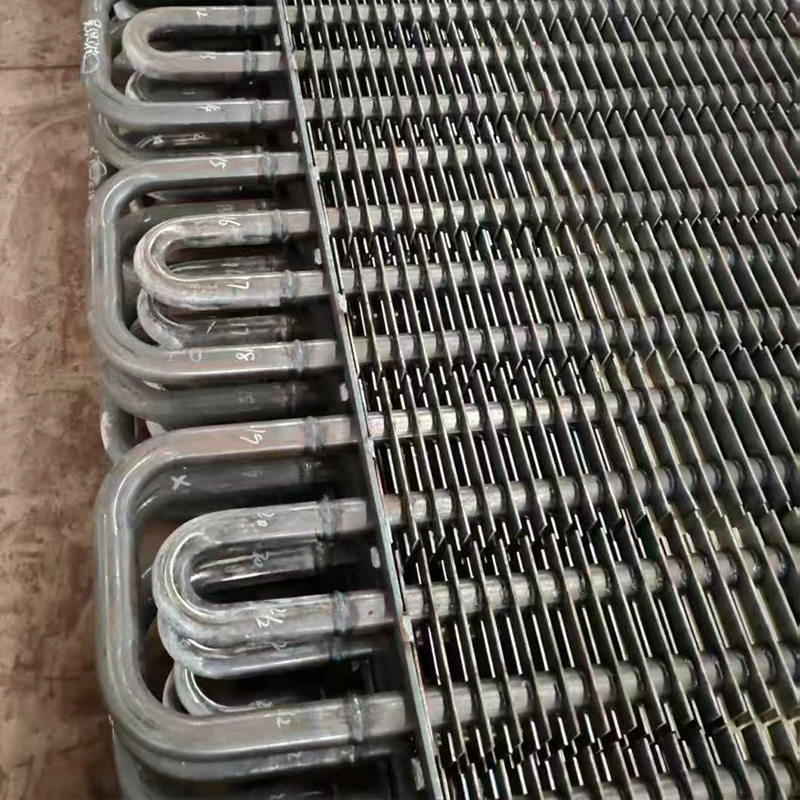
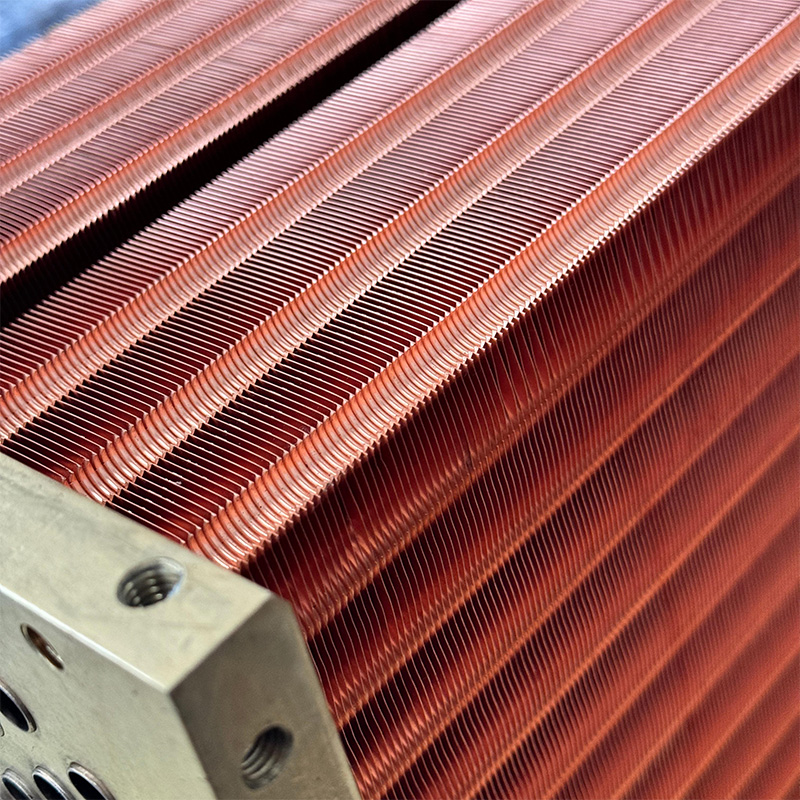
For example,Wuxi Kaisheng Electric Power and Petrochemical Equipment Co., Ltd.зарекомендовало себя как эксперт в разработке и производстве высокотехнологичных теплообменных систем. Хотя их основная специализация — это создание титановых кожухотрубных теплообменников, аппаратов ASME высокого давления и сложных трубных пучков из сплавов (нержавеющая сталь 316, морская латунь C46400, никелевые сплавы N06625) для нефтегазовой и энергетической отраслей, их подход к качеству материалов и сертификации (PED, ASME) является эталоном для всей индустрии.
Принципы, которые использует «Уси Кайшэн» при создании оборудования, устойчивого к экстремальным температурам, давлению и коррозии в судостроении и химической промышленности, применимы и к выбору компонентов для вашего лазерного комплекса. Стабильность работы чиллера, надежность металлических конструкций и долговечность узлов — вот те критерии, которые отличают профессиональное оборудование от любительского. Ориентируясь на производителей, способных поставлять сертифицированные решения мирового уровня для самых требовательных секторов экономики, вы можете быть уверены в выборе надежного партнера и для задач деревообработки.
Action:Запросите список сервисных центров партнера в вашем федеральном округе. Позвоните в один из них инкогнито, представившись владельцем такого же станка, и спросите сроки поставки популярной запчасти (например, зеркала). Это даст реальную картину логистики.
Итоговый чек-лист перед подписанием договора
Чтобы систематизировать полученную информацию, используйте этот список при финальном согласовании сделки. Он поможет отсеять недобросовестных поставщиков и убедиться, что вы получаете именно то, что нужно вашему производству.
- Соответствие задачи:Подтверждено ли тестами, что данная модель режет вашу толщину фанеры с требуемым качеством кромки (без сильного нагара)?
- Equipment:Входит ли в цену чиллер, компрессор, вытяжка, стол сотовый/ножевой, набор оптики и инструмент?
- Бренды компонентов:Указаны ли конкретные модели направляющих, контроллера, трубки? (Избегайте формулировок «аналог Hiwin»).
- Security:Есть ли датчики защиты, аварийная кнопка, система блокировки при открытии крышки?
- ПО и обучение:Предоставляется ли лицензионное ПО (LightBurn, RDWorks), драйверы и курс обучения для оператора?
- Гарантия и сервис:Прописаны ли сроки реакции на заявку, наличие склада запчастей в РФ, условия гарантии на основные узлы?
- Documentation:Выдается ли паспорт станка, руководство на русском языке, сертификаты соответствия (ЕАС)?
- Логистика:Включена ли доставка до вашего цеха, разгрузка и первичная пусконаладка (ПНР)?
Рынок лазерного оборудования в 2026 году предлагает широкий выбор решений, от простых граверов до сложных промышленных комплексов. Ключ к успеху — не гнаться за максимальной мощностью или самым низким ценником, а искать баланс между надежностью, сервисом и соответствием вашим технологическим задачам. Правильно выбранныйлазерный станок для резки фанеры с ЧПУстанет сердцем вашего производства, обеспечивая стабильное качество и высокую рентабельность.
Не позволяйте маркетинговым уловкам затмить здравый смысл. Требуйте тестовых образцов, проверяйте сервисную сеть и считайте полную стоимость владения. Если вы сомневаетесь в выборе конфигурации или хотите получить профессиональную консультацию по подбору оборудования под ваши конкретные задачи, наша команда готова помочь. Мы работаем с ведущими производителями и знаем сильные и слабые стороны каждой модели на рынке.
Посмотреть полный каталог лазерных станков для фанеры | Узнать условия сервисного обслуживания
Contact us today, чтобы получить индивидуальное коммерческое предложение и организовать демонстрацию оборудования в нашем шоу-руме. Пусть ваше производство работает без простоев и брака.