
Buy 316L Stainless Steel Dye Pipe - Supplier
2026-07-07
- Why 316L Stainless Steel Pipe is the Standard for Dye Industry
- Specifications and Quality Requirements for 316L Chemical Pipe
- Risk analysis when purchasing 316L pipes: experience from real projects
- Why buying 316L pipes in China is more profitable than from local distributors
- Order procedure and criteria for selecting a reliable supplier
- The role of specialized manufacturers: the case of Wuxi Kaisheng LLC
- Frequently asked questions (FAQ)
- Conclusion and next steps
Why 316L Stainless Steel Pipe is the Standard for Dye Industry
Selecting a material for transporting aggressive chemical media in the chemical industry is not simply a matter of meeting specifications, but is fundamental to ensuring the safety and economic efficiency of the entire production cycle. When you're looking for an opportunitybuy 316L stainless steel pipeline for dyes, you are essentially investing in protecting your equipment from corrosion caused by chlorides, acids and high temperatures associated with pigment synthesis processes. In our practice, we have repeatedly encountered situations where savings on the grade of steel when purchasing led to through corrosion of pipes after 18 months of operation, which required a complete shutdown of the line and replacement of the kilometers of communications.
AISI 316L stainless steel (Russian analogue 03Х17Н14М3) contains molybdenum in an amount of 2-3%, which is critical for resistance to pitting corrosion in environments containing halides. For dye production, where hydrochloric acid, sulfuric acid, or various chloride salts are often used as catalysts or intermediates, the absence of molybdenum (as in the cheaper 304 steel) is a fatal mistake. We compared pipe samples 304 and 316L in a 5000 ppm chloride environment at 60°C: sample 304 showed signs of pitting after 72 hours, while 316L remained inert.
Purchasing pipeline fittings and pipes from a reliable supplier implies not only obtaining a quality certificate, but also understanding the metallurgical nuances of a particular melt. The “L” (Low Carbon) version ensures that the carbon content does not exceed 0.03%, which prevents the precipitation of chromium carbides in the weld area at high process temperatures. This phenomenon, known as intergranular corrosion, is often a hidden killer of pipelines in reactor assemblies where temperatures reach 400-500°C during sterilization cycles or exothermic fusion reactions.
In this article, we will analyze in detail the technical parameters that need to be checked before placing an order, analyze the real risks of using substandard metal and explain why direct deliveries from certified factories in China are the optimal solution for modern chemical production in Russia and the CIS countries. We will not use general phrases about “high quality”, but will provide specific tolerances, ASTM/GB standards and logistics calculations to help you make an informed decision.
Specifications and Quality Requirements for 316L Chemical Pipe
When developing technical specifications for the purchase of a pipeline for dyes, it is not enough to indicate only the steel grade and diameter. The chemical environment dictates stringent requirements for the condition of the internal surface, wall thickness and pipe manufacturing method. The main standard to follow when importing from China isASTM A312 / ASME SA312for seamless pipes andASTM A358for welded pipes, although many Chinese manufacturers also work according to the national standardGB/T 14976-2012. Understanding the differences between these standards and knowing how to read a Mill Test Certificate is a key skill for a buyer.
Chemical composition and influence of alloying elements
The critical parameter is the exact percentage of elements. For dye production environments where oxidizing agents are often present, the balance of chromium, nickel and molybdenum must be ideal. Below is a table of permissible deviations that we consider acceptable for critical nodes:
| element | Standard Range (%) | Critical value for dyes | Risk of deviation |
|---|---|---|---|
| Carbon (C) | ≤ 0.03% | Strictly ≤ 0.03% | Intergranular corrosion in welding zones |
| Chromium (Cr) | 16.0 – 18.0% | ≥ 16.5% | Reduced overall corrosion resistance |
| Nickel (Ni) | 10.0 – 14.0% | ≥ 11.0% | Loss of ductility and acid resistance |
| Molybdenum (Mo) | 2.0 – 3.0% | ≥ 2.2% | Rapid development of pitting in chloride environments |
| Sulfur (S) | ≤ 0.03% | ≤ 0.015% (desirable) | Deterioration of weldability and surface finish |
Pay attention to the sulfur content. In ordinary structural pipes up to 0.03% is allowed, but for food and fine chemicals (which includes many dye synthesis processes) we recommend requiring a value below 0.015%. High sulfur content leads to the formation of sulfide inclusions, which become centers of initiation of corrosion and make it difficult to electropolish the internal surface.
Surface condition and roughness (Ra)
For pipelines transporting liquid dyes or semi-finished products, the cleanliness of the internal surface directly affects the quality of the final product and the frequency of system flushing. Roughness is measured in microns (Ra). Standard mechanical polishing produces a Ra of 0.8 microns, however, to prevent pigment adhesion and facilitate CIP cleaning (Clean-in-Place), we strongly recommend ordering pipes with Electropolishing, providing Ra ≤ 0.4 microns (15 microinch).
Electropolishing not only smoothes out micro-irregularities, but also enriches the surface layer with chromium, creating an additional passive oxide layer. In one of our projects for a textile dye plant, replacing mechanically ground pipes with electropolished ones reduced the line cleaning cycle time by 35% and reduced the consumption of water and reagents. If your supplier cannot provide an electropolishing certificate with Ra parameters, this is a serious signal of poor quality control.
Production method: Seamless vs Welded pipes
The choice between Seamless and Welded pipes depends on pressure and diameter. For high pressure lines (above 10 bar) and small diameters (up to DN50), the use of ASTM A312 seamless pipes is mandatory. The absence of a weld eliminates the risk of its destruction under the influence of pump vibration or pressure pulsation in reactors.
However, for large-diameter main lines (DN100 and above) at moderate pressure, high-quality welded pipes (TIG/Laser welding technology with subsequent heat treatment of the seam) are more economically feasible. Modern equipment makes it possible to obtain a seam whose strength is 100% of the strength of the base metal. The main requirement here is the presence of a certificate of heat treatment (solution annealing) after welding to restore corrosion resistance in the heat-affected zone. Request confirmation from the supplier that this step has been completed, since it is impossible to visually distinguish a treated pipe from an untreated one.
When preparing the specification, always specify the required non-destructive testing (NDT) method. For critical areas we require 100% eddy current (ET) or ultrasonic (UT) inspection per ASTM E213 or E273. This ensures that there are no internal defects, delaminations or cracks that can only appear under load.
Risk analysis when purchasing 316L pipes: experience from real projects
The stainless steel market is saturated with offers where 304 or low-quality analogues with a compromised chemical composition are sold under the guise of 316L. The price difference between these brands can reach 30-40%, which creates a powerful incentive for unscrupulous suppliers to commit fraud. Our company, during an audit of dozens of factories in the provinces of Jiangsu and Zhejiang, developed a clear algorithm for identifying such risks.
The problem of “gray” metal and mis-grading
The most common deception scheme is the shipment of pipes of grade 304 with the marking 316L in the accompanying documents. It is impossible to visually distinguish these steels, since they have the same silvery color and shine. The only method of protection is an independent spectral analysis of each batch upon arrival. We know of a case where a large chemical plant in the Volga region installed a batch of “allegedly 316L” at the supply site for chlorine-containing raw materials. After 8 months, leaks began. Laboratory analysis showed less than 0.1% molybdenum (it was actually 304 steel). Losses from production downtime and replacement of pipes exceeded the cost of the initial purchase by 15 times.
To avoid this, the contract with the supplier should include a clause stating the buyer's right to have an independent examination carried out by an accredited laboratory (for example, SGS, Bureau Veritas or TUV) before shipment. Inspection costs (usually $300-$500) are negligible compared to the risks. The inspector must take samples from different ends of the coil or bundle of pipes and conduct a PMI (Positive Material Identification) test using a portable spectrometer directly at the plant warehouse.
Risk of intergranular corrosion due to improper heat treatment
Even if the chemical composition complies with standard 316L, violation of the solution annealing mode makes the pipe unsuitable for aggressive environments. The steel must be heated to a temperature of 1040-1100°C and quickly cooled with water. If the manufacturing plant saves on gas or electricity and reduces the tempering temperature, chromium carbides do not dissolve in austenite. As a result, steel loses its main superpower - self-healing of the passive layer.
In our practice, there was a case with a supplier of pipes for a pharmaceutical cluster, where high purity and resistance to acids were required. The pipes passed the chemical analysis perfectly, but began to corrode along the welds of the fittings after six months. The examination revealed that the pipes did not undergo full heat treatment after molding. The supplier saved on energy costs by providing “raw” metal. Solving the problem required a complete replacement of the area and the introduction of strict temperature control in MTC certificates (indicating the actual oven temperature and holding time).
Geometric deviations and installation complexity
Chinese GB standards allow greater deviations in wall thickness and ovality than European EN or American ASTM. A pipe with a thickness tolerance of -12.5% (ASTM standard) can come with a real minus of 20% if the supplier works according to internal specifications. This is critical for calculating pressure. In addition, the strong ovality of large-diameter pipes complicates joining during installation, requiring additional efforts for alignment and increasing welding time. We recommend agreeing on tolerances in advance: for precision systems, it is better to require Cold Drawn pipes with a thickness tolerance of ±10% and high accuracy of the outer diameter.
Why buying 316L pipes in China is more profitable than from local distributors
The question “why China?” for the Russian market in 2025-2026 is especially acute. Traditional European suppliers (Outokumpu, Acerinox) either stopped supplies or increased the terms to 6-9 months and prices by 2-3 times. Local Russian warehouses often offer metal at prices that include multiple markups from intermediaries, and the assortment is limited to popular sizes, and specific pipes take months to order.
Cost advantage and cost structure transparency
China is the world's largest stainless steel producer, controlling more than 50% of global output. Factories in the provinces of Fujian, Jiangsu and Guangdong have a full production cycle: from steel smelting in electric arc furnaces to final polishing and packaging. By purchasing directly from the manufacturer (Manufacturer Direct), you eliminate the chain of intermediaries. The price difference between buying from a local trader in Moscow and direct import from China can range from 25% to 40%, even taking into account logistics and customs duties.
For example, the cost of a ton of 316L seamless pipe with a diameter of 57x3.5 mm on FOB Shanghai terms can be $3800-$4200 (depending on LME nickel quotes). The same pipe from a European distributor will cost €6,000-€7,000, and from a Russian warehouse seller with VAT - up to 600,000 rubles and more. When purchasing volumes of 5 tons or more, savings become a significant item in the project budget.
Production flexibility and customization
Chinese factories are ready to produce pipes of non-standard sizes, which are unprofitable to keep in stock. Do you need a pipe with a wall thickness of 4.5 mm instead of the standard 4.0 or 5.0? Do you need a whip length of 11 meters instead of the standard 6? In Europe and Russia you will be offered to wait for months or buy excess and cut it for scrap. In China, such an order will go into production within 2-3 weeks. In addition, Chinese factories willingly fulfill the requirements for special packaging (wooden boxes, moisture protection, individual labeling), which is critical for the safety of the mirror surface during long-term sea transportation.
Delivery times and logistics routes
In the current geopolitical conditions, logistics from China to Russia has been adjusted to the point of automation. There are direct rail container transportations (China-Europe Railway Express) to Moscow, Novosibirsk or Yekaterinburg with a delivery time of 18-25 days. Sea transportation through the ports of the Far East (Vladivostok, Nakhodka) or St. Petersburg takes 35-45 days. This is significantly faster than waiting for production in the EU followed by complex transit logistics. We recommend scheduling a lead time of 45-60 days from contract signing to receipt of shipment at your warehouse, which is a realistic time frame for production, inspection and delivery.
Order procedure and criteria for selecting a reliable supplier
To successfullybuy 316L stainless steel pipeline for dyesand avoid the risks described above, it is necessary to build a strict procedure for interaction with the supplier. Don't believe beautiful websites and promises from WhatsApp managers. Work only with those partners who are ready to prove their competence documented and factual.
Supplier Due Diligence Checklist
- Factory Verification:Request a live video tour of the workshop (WeChat call). Please note that we have our own cold rolling equipment, heat treatment furnaces and cutting machines. Traders usually do not have access to production on weekends or cannot show specific machines.
- Licenses and certificates:Check for ISO 9001:2015 certification. For work in the Russian Federation and the countries of the EAEU, it is critically important to have a declaration of conformity with TR CU 032/2013 “On the safety of equipment operating under excess pressure.” A reliable Chinese supplier already has experience in preparing these documents for Russian clients.
- Reference list:Ask for contact details of 2-3 customers in the chemical or pharmaceutical industry to whom they have shipped 316L pipe in the last year. Call them or write. If the supplier refuses to provide contact information, this is a red flag.
- Technical audit:Before paying, please send your representative or hire a third party (SGS, Intertek) to inspect the finished products. The inspector must check: geometry, visual condition of the surface, conduct a PMI analysis of the chemical composition and check the packaging.
Payment Terms and Incoterms
Standard practice for direct procurement is to pay a 30% deposit upon contract signing and 70% against a copy of the Bill of Lading (B/L) or upon completion of inspection. Never pay 100% in advance unless you have been working with the supplier for years. Use a letter of credit (L/C) for large transactions (over $50,000), this will provide a bank guarantee.
Regarding the delivery basis, we recommend working on the termsFCA (Free Carrier)factory in China orCIP (Carriage and Insurance Paid to)your city in Russia. FCA terms give you full control over the choice of forwarder and cargo insurance, which is often cheaper than CIF imposed by the supplier. However, if you do not have your own foreign trade department, the DAP (Delivered at Place) condition to the border or warehouse may be more convenient, although more expensive.
Minimum quantity (MOQ) and packaging
Most factories accept orders from 500 kg or 1 ton per item. However, to optimize logistics costs (cost of a container or railway car), we recommend creating groupage orders with a volume of 3-5 tons. One order can include not only pipes, but also fittings (bends, tees, flanges) of the same grade 316L to ensure the uniformity of the material of the entire system. Make sure the fittings are also labeled and certified to match the pipes.
The role of specialized manufacturers: the case of Wuxi Kaisheng LLC
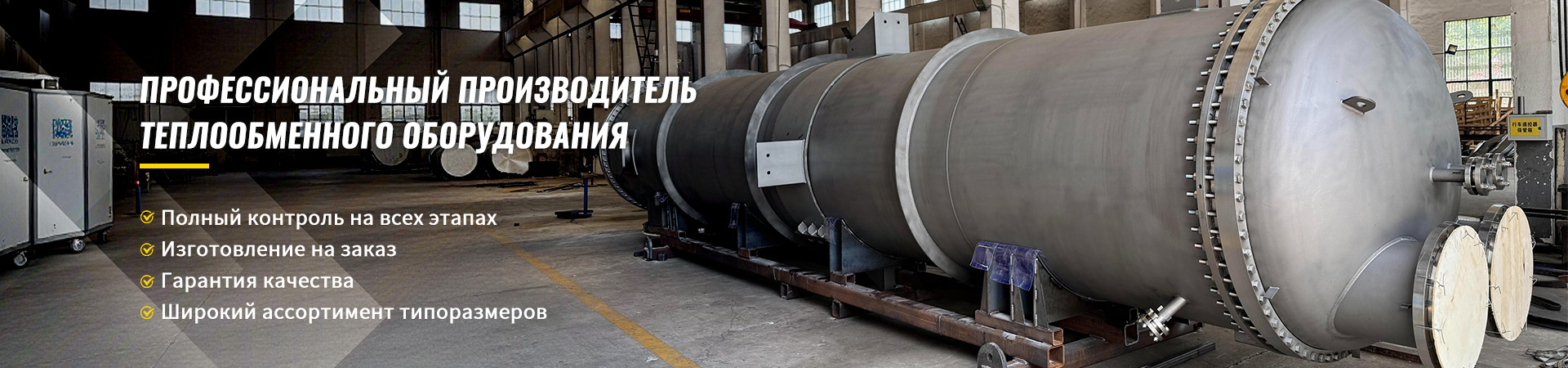
При выборе партнера для поставки критически важных компонентов важно обращать внимание на компании с глубокой экспертизой в области коррозионностойких материалов и высоким уровнем сертификации. A striking example of this approach isWuxi Kaisheng Electric Power and Petrochemical Equipment Co.,Ltd" Эта компания специализируется не только на производстве готовых узлов, таких как титановые кожухотрубные теплообменники, воздушные охладители и котлы-утилизаторы, но и обладает мощной производственной базой для изготовления высокоточных комплектующих из сложных сплавов.
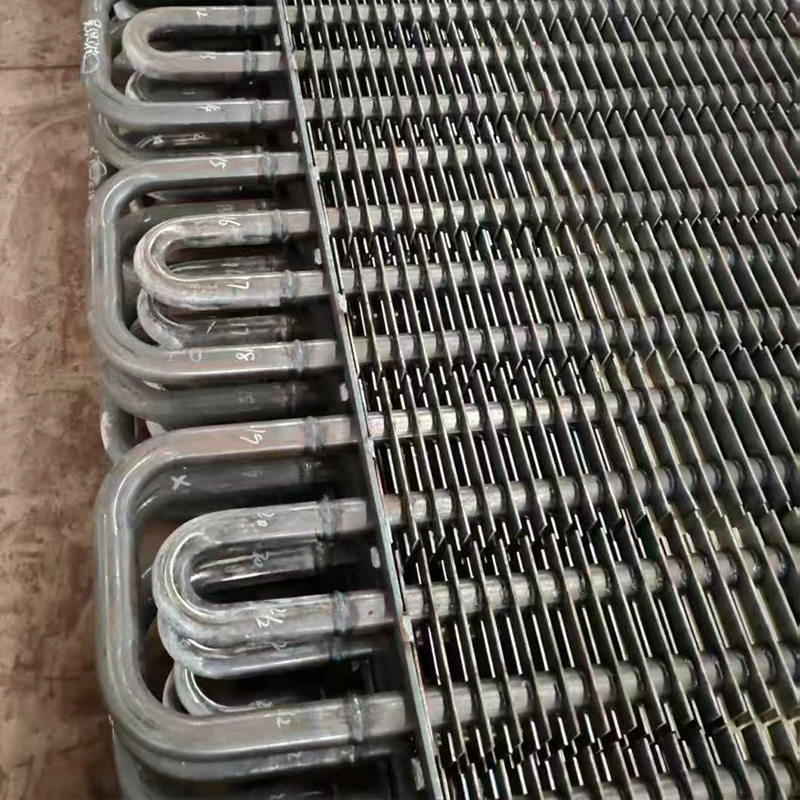
Опыт «Уси Кайшэн» в работе с гофрированными трубными пучками из нержавеющей стали 316, а также с экзотическими сплавами (никелевые N06625, медно-никелевые, морская латунь C46400), демонстрирует их способность контролировать металлургические процессы на высочайшем уровне. Продукция компании сертифицирована по строгим международным стандартамPED and ASME, что подтверждает её пригодность для работы под высоким давлением и в агрессивных средах нефтепереработки, химической промышленности и опреснения морской воды.
Для заказчика, ищущего трубы 316L для производства красителей, сотрудничество с таким производителем означает доступ к материалам с гарантированным химическим составом и отсутствием скрытых дефектов. Возможность заказа индивидуальных решений, включая трубные решетки и пучки из стали 321 или специальных сплавов, позволяет создавать целостные системы, где каждый элемент — от трубы до теплообменника — обладает одинаково высокой коррозионной стойкостью и теплоэффективностью. Стабильность поставок и наличие опыта обслуживания клиентов по всему миру делают таких производителей, как «Уси Кайшэн», предпочтительными партнерами для модернизации химических производств.
Frequently asked questions (FAQ)
Как отличить сталь 316L от 304 без лаборатории?
Со 100% гарантией — никак. Визуально, магнитом (обе стали слабо магнитятся после холодной деформации) или каплей кислоты (стандартные тесты часто дают ложноположительный результат на качественной 304) надежно определить нельзя. Единственный полевой метод — использование портативного спектрометра (PMI analyzer), который показывает содержание молибдена. Если молибдена нет или его следы (<0.5%) — это не 316L. Поэтому правило одно: никогда не принимайте металл без лабораторного протокола от независимой компании.
Какой срок службы труб 316L в среде производства красителей?
При соблюдении технологии изготовления и отсутствии механических повреждений срок службы составляет 15-20 лет и более. Однако этот срок резко сокращается при наличии застойных зон, неправильной сварки (без продувки аргоном изнутри) или превышении температурных лимитов. В нашей практике мы видели трубы, простоявшие 30 лет в идеальном состоянии, и трубы, проржавевшие за год из-за ошибок монтажа. Ключевой фактор — не только марка стали, но и культура эксплуатации.
Можно ли сваривать трубы 316L обычными электродами?
No, this is a grave mistake. Для сварки труб 316L необходимо использовать специальные присадочные материалы, например, проволоку ER316L или электроды E316L-16/17. Использование присадки 308 или 309 приведет к тому, что шов станет анодом по отношению к основному металлу и начнет корродировать в первую очередь. Кроме того, обязательна защита зоны сварки инертным газом (аргон) с обеих сторон (внутри и снаружи трубы) для предотвращения окисления корня шва (“сапфирного” цвета).
Предоставляете ли вы документы для таможенной очистки в РФ?
Да, профессиональный поставщик обязан предоставить полный пакет экспортных документов: коммерческий инвойс, упаковочный лист, коносамент, сертификат происхождения (Form A или общий CO), а также технический паспорт и сертификат качества (MTC) с переводом на русский язык (заверенным нотариально или бюро переводов). Без этих документов вы не сможете получить декларацию соответствия ТР ТС и легально ввести товар на территорию ЕАЭС.
Conclusion and next steps
Инвестиции в качественный трубопровод из нержавеющей стали 316L — это страховка от многомиллионных убытков в будущем. Производство красителей не прощает компромиссов в материалах. Прямая закупка у проверенных китайских производителей, таких как специализированные заводы с сертификацией ASME и PED, позволяет получить продукт мирового уровня по конкурентной цене, сократив сроки поставки и получив гибкость в спецификациях. Главное — не полагаться на удачу, а выстроить систему входного контроля и работать только с прозрачными партнерами.
Мы готовы помочь вам подобрать оптимальную конфигурацию труб, организовать инспекцию на заводе в Китае и доставить груз до вашего предприятия в любую точку России и СНГ. Наши специалисты имеют 15-летний опыт работы с химической отраслью и знают все подводные камни импорта металлопроката.
Не рискуйте своим производством ради сомнительной экономии на этапе закупки. Свяжитесь с нами сегодня для получения детального коммерческого предложения и консультации по вашему техническому заданию. Мы предоставим расчет стоимости с учетом логистики и таможенных платежей в течение 24 часов.
Contact us todayдля обсуждения вашего проекта по поставке труб 316L.