
how to calculate the cost of a distribution cabinet?
2026-07-24
- How to calculate the cost of a distribution cabinet: formula and real numbers
- Factors influencing the final price: how to accurately calculate the cost of a distribution cabinet
- Comparison of purchasing options: Factory production vs Garage assembly
- Step-by-step calculation algorithm for the buyer
- The role of production culture and quality of materials
- Frequently Asked Questions
- Conclusion and next steps
How to calculate the cost of a distribution cabinet: formula and real numbers
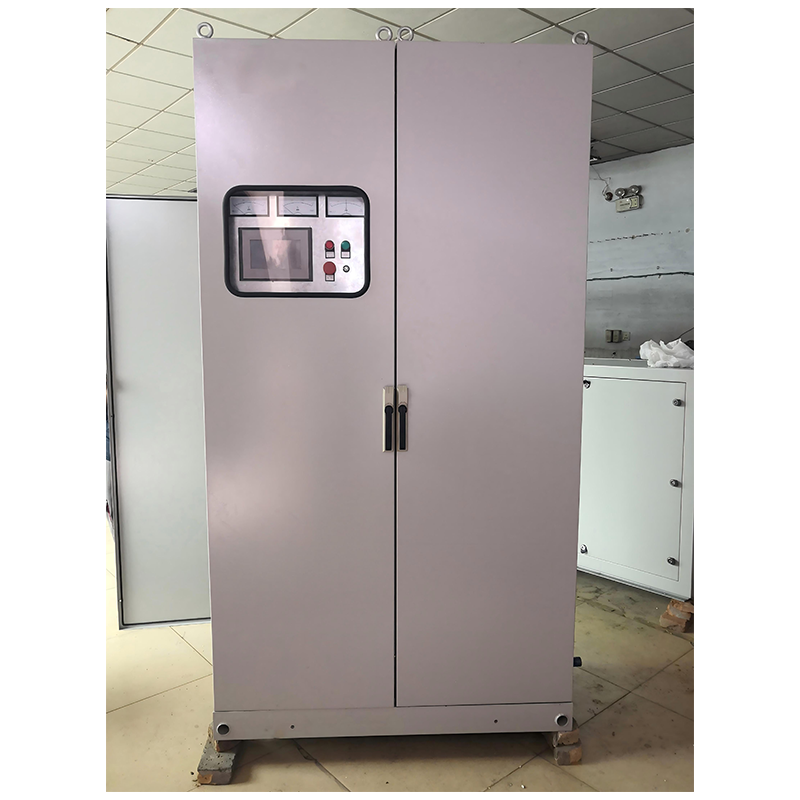
The cost of a distribution board (main switchboard, ASU, ShchO) is formed not from the price of metal per kilogram, but from the sum of the cost of components, the complexity of assembly and certification requirements. To get an exact figurehow to calculate the cost of a distribution cabinet, you need to add up the price of all circuit breakers, busbars, housing and add 30-45% for assembly, logistics and manufacturer's margin. An error in calculations of even 10% can lead to the project becoming unprofitable or you losing the tender due to an inflated price. In this article we will analyze the calculation methodology based on real experience of deliveries to Russia and the CIS countries, avoiding abstract advice.
In our practice, there have been cases where customers tried to save money by choosing a cheap case, but overpaid twice for delivery due to incorrect calculation of dimensions and weight. Or vice versa - we purchased premium machines for temporary construction, where budget solutions are sufficient. Correct calculation begins with a technical specification, and not with a price list. Below we will give a step-by-step algorithm that our engineers use when preparing commercial proposals.
Basic formula for calculating cost
Any professional calculation is based on a simple but rigid structure. Ignoring any element of this formula leads to financial losses. The formula looks like this:
Total price = (Materials + Components) × Assembly factor + Logistics + Certification + Margin.
Let's look at each component in detail, because the devil is in the specification details.
1. Cost of the case (Cabinet)
The price of a metal base depends on three parameters: steel thickness, degree of protection (IP) and the availability of additional options. The standard sheet thickness for industrial panels is 1.5–2.0 mm. If you use 1.2mm steel for an IP54 outdoor panel, it will deform when mounting heavy equipment. We've seen cases where the thin metal sagged under the weight of the copper bars, breaking contact connections and causing overheating.
- Installation type:Wall cabinets are 20-30% cheaper than floor cabinets (MSB) due to lower metal consumption and the absence of a base frame.
- Degree of protection:Going from IP31 to IP54 increases the cost of the enclosure by 15-20% due to the need for seals, double doors and special cable entries.
- Painting:Powder polymerization is standard. For aggressive environments (chemical plants, ports) additional anti-corrosion treatment is required, which adds another 10-15% to the price.
When calculating, always check the presence of a mounting panel (mounting board). Sometimes it comes included, sometimes it is paid separately as a “piece.” The absence of a panel in the estimate is a common mistake for beginners.
2. Power filling: the most expensive element
Components take up 60-70% of the total cost of the shield. Here you cannot save on a brand without understanding the risks. The market is divided into three segments: Premium (Schneider Electric, ABB, Siemens), Medium (IEK, EKF, CHINT, DEKraft) and Budget (Chinese no-name brands).
The difference in price between the premium and mid-range segments can reach 300%, but the reliability differs not linearly, but exponentially in critical conditions. For example, a 250A circuit breaker from a well-known brand guarantees short-circuit tripping with millisecond precision, protecting the cable from fire. A cheap analogue may “stick” or operate with a delay, which will lead to a fire.
To correctly calculate the cost, you need a single-line diagram. Without it, any number is fortune telling on coffee grounds. The diagram should indicate:
- Rated current of the input circuit breaker (In).
- Ultimate switching capacity (Icu) is a critical parameter. For industrial networks this is usually 36 kA or 50 kA. 6 kA circuit breakers are cheap, but in an industrial network they will simply explode at the first serious short circuit.
- Number of outgoing lines and their ratings.
- Availability of RCD (differential protection) and phase control relay.
In our practice, there was a case when a client ordered a shield at the lowest price, saving on a voltage control relay. A month later, a power surge in the network burned out pump motors worth 10 times the cost of the entire switchboard. Always include surge protection in the calculation if the network is unstable.
3. Bus system and switching
Copper is the second most expensive material after branded machines. The calculation is carried out in kilograms or linear meters of tires. The price of copper is volatile, so in long-term projects we fix the cost of the metal in the contract.
The busbar cross-section is calculated based on the load current. A popular mistake is using aluminum bars instead of copper bars to save money. Aluminum is 40% cheaper, but it has greater resistance, requires special contact lubrication and is more likely to weaken over time due to the fluidity of the metal. For critical components (main switchboard input), we recommend only copper.
Don't forget to include in your estimate:
- Insulators (supports) for tires.
- Flexible copper transitions (pigtails) for connecting doors and moving parts.
- Cable lugs and heat shrink.
- Control wires (installation wires PV3, PuGV). Their length is often underestimated. It takes up to 200 meters of wire to assemble one average shield.
Factors influencing the final price: how to accurately calculate the cost of a distribution cabinet
Once you've calculated the hardware, it's time to take into account hidden costs. This is where many suppliers lose margin. Answer to the questionhow to calculate the cost of a distribution cabinetwould be incomplete without taking into account labor costs and logistics.
Labor costs for assembly (standard hours)
Assembling a panel is a high-tech process that requires qualifications of electricians of at least 4-5 categories. In Russia and the EAEU countries, the cost of a standard hour for a qualified assembler varies. Simply connecting wires “as needed” is cheap, but professional assembly with proper tightening torques, marking of each wire and laying out the harnesses is more expensive.
We use the following gradation of complexity to calculate the cost of work:
- Simple boards (SCHO, small ASU):1-2 days of work. Minimum automation, straight lines.
- Medium complexity (main switchboard up to 630A):3-5 days. Availability of ATS (automatic transfer of reserve), electricity metering, complex bus system.
- High complexity (main switchboard from 1000A, switchboard with frequency generators):from 1 week to a month. Programming controllers, setting up protection, thermal imaging control of contacts.
The cost of assembly also includes design of the internal layout. The engineer must locate the equipment to maintain thermal clearances and ease of maintenance. An error in the layout leads to overheating of the machines even under normal load.
Logistics and packaging
Distribution boards are an oversized and heavy load. Delivery of the finished product from the factory to the site can be up to 15-20% of its cost, especially if the site is located in a remote region (North, Siberia, Far East).
When calculating, consider:
- Volumetric weight. The shield takes up a lot of space in the truck, but can be light (if there is little copper).
- The need for wooden sheathing. Transportation without lathing is prohibited by many transport companies due to the risk of damage to the paintwork and deformation of the doors.
- Rigging work. Lifting a panel weighing more than 500 kg to a floor without an elevator requires a crane or winch, which is paid separately.
One of our clients encountered a situation where a cheap shield from China arrived with dented doors due to poor packaging. The repair took 2 weeks, and the downtime of the facility cost millions of rubles. Saving on packaging always has a negative impact.
Certification and documents
For legal sale and operation in Russia and the countries of the Customs Union, equipment must have a certificate of conformity with TR CU 004/2011 “On the safety of low-voltage equipment.” Obtaining a certificate costs money and time.
If you buy a shield from a certified manufacturer, this cost is already included in the price. If you assemble the panel yourself (“garage assembly”), you take on the risk of fines when inspected by fire inspection or energy sales. The absence of a passport and certificate may cause a refusal to connect an object to networks.
GOST 32396-2013, which regulates the requirements for ASUs and main switchboards, is also important. Compliance with this standard implies the presence of certain structural elements (fireproof partitions, certain color markings of tires), which makes the product more expensive, but makes it legal.
Comparison of purchasing options: Factory production vs Garage assembly
Often customers are faced with a choice: order a switchboard from a large factory or assemble it by local electricians. Let's compare these options objectively using specific parameters.
| Comparison parameter | Factory production (OEM) | Local/Garage Assembly |
|---|---|---|
| Cost of components | 15-25% lower due to wholesale purchases directly from brands (Schneider, ABB, IEK). | Retail prices in electrical stores. Much higher. |
| Build quality | Standardized. Use of torque wrenches, laser marking, photo report. | Depends on the electrician's mood. Often violation of tightening torques, chaotic laying of wires. |
| Production time | Stable. From 5 to 14 days depending on the workload of the workshop. Transparent schedule. | Unpredictable. They may take longer due to the master’s illness or the absence of one component. |
| Warranty | Official warranty 2-5 years under contract. Replacement of the unit at the expense of the manufacturer. | Actually absent. “Come, let’s see,” which often turns into a search for those to blame. |
| Documentation | Full package: passport, diagram, certificates, test reports. | Often only a handwritten diagram or no documents at all. Problems with energy supervision. |
Our verdict is clear: for facilities with a capacity of over 100 kW and social infrastructure (schools, hospitals, shopping centers), the only correct option is factory production. The risks of fire and downtime many times outweigh the potential savings of 10-15%. Garage assembly is only permissible for temporary household needs or low-power panels in private homes, where the owner bears responsibility.
Step-by-step calculation algorithm for the buyer
To help you make your own budget estimate, follow this checklist. It will help you avoid unnecessary questions from suppliers and speed up receipt of the proposal.
- Prepare a single line diagram.This is the main document. If there is no diagram, describe it in words: “Input 250A, 3 phases, 5 lines of 40A each, electricity metering, automatic transfer switch.” But the scheme is better.
- Define a brand list.Decide in advance what equipment you want to see inside. It is possible to mix brands (for example, ABB input, IEK output), but this complicates the selection of housing and tires. It's better to stick to one line.
- Set dimensional restrictions.Do you have a room for a shield? Do you need to fit into an existing niche? Increasing the size of the cabinet “in reserve” increases the cost of the design, but facilitates future modernization.
- Check operating conditions.Street or indoors? Is there vibration? Do you need cabinet heating (thermostat + heating element) to operate in winter? Heating is a mandatory option for street panels in the Russian Federation, otherwise condensation will kill the electronics.
- Request CP from 3 suppliers.Compare not only the final figure, but also the specification. If one supplier offers a shield 20% cheaper, check whether he replaced the copper busbars with aluminum ones? Didn't he install circuit breakers with a lower breaking capacity?
Remember the rule: “It’s only cheap once.” In electrical engineering, low price almost always means compromising safety. We have repeatedly audited other people's switchboards and found cardboard insulators inside instead of textolite ones or wires with a cross-section smaller than the declared one. Such savings are a direct road to an accident.
The role of production culture and quality of materials
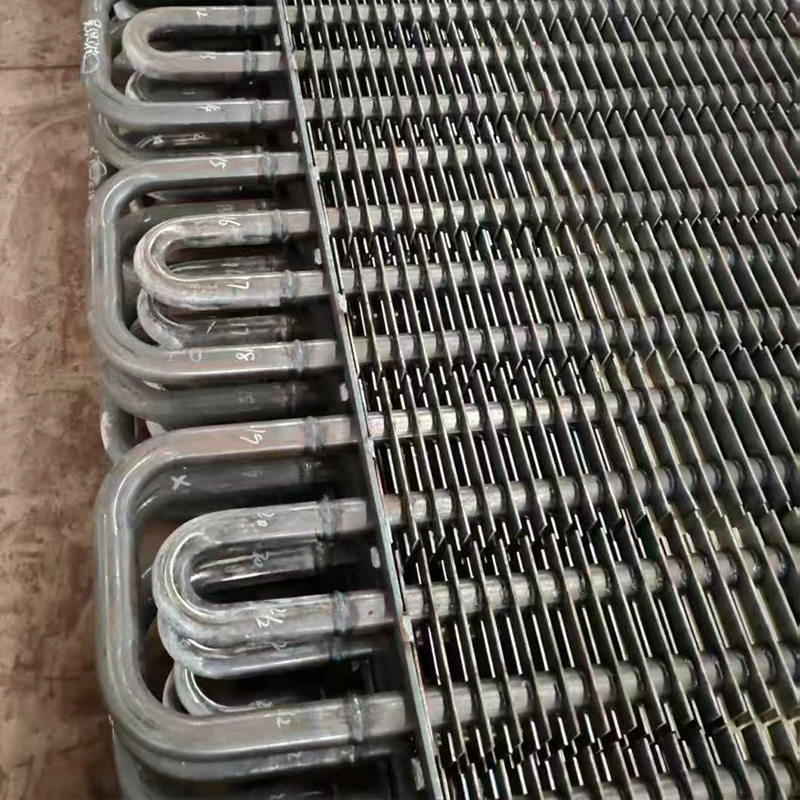
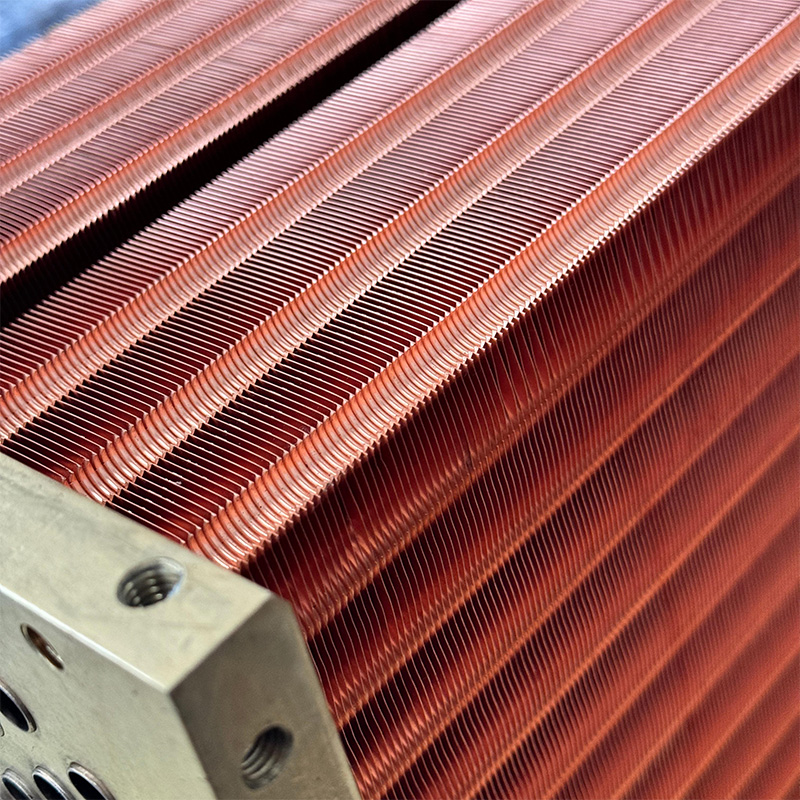
An accurate cost calculation is impossible without understanding who produces the equipment and how. The reliability of the final product directly depends on the technological discipline of the manufacturer and the quality of the materials used. A striking example of an approach where quality is put at the forefront is the company’s activitiesWuxi Kaisheng Electric Power and Petrochemical Equipment Co., Ltd.. Although their core competency includes the design and manufacture of heat transfer equipment (titanium shell and tube heat exchangers, ASME units, air coolers) and petrochemical components, the principles they apply to manufacturing are universal across the heavy industry.
Wuxi Kaisheng's experience with high-pressure systems and aggressive media demonstrates how critical the choice of materials is. The use of 316 and 321 stainless steels, C46400 marine brass, cupro-nickel alloys and titanium provides the products with exceptional corrosion resistance and durability. PED and ASME certificates that the company's products have confirm compliance with stringent international safety standards. The same meticulous quality control, from raw materials to final assembly, is required in the production of switchboards. When choosing an electrical equipment supplier, look for partners who share these high standards: using certified materials, following welding and assembly techniques, and being willing to provide complete documentation. After all, it is this approach that guarantees that your shield will last for decades and will not fail at the first power surge.
Frequently Asked Questions
Is it possible to reduce the cost of a cabinet without losing reliability?
Yes, this is possible through intelligent optimization. First, use a hybrid scheme: an expensive branded machine at the input (main protection) and high-quality, but more affordable analogues (for example, IEK or EKF) on the outgoing lines. Secondly, avoid redundant features. If you have a stable city network, you may not need expensive relays to protect against every conceivable emergency. Thirdly, order standard solutions. Individual case design is always more expensive than the standard series. We often suggest that clients reconsider the scheme in the direction of unifying the devices, which gives a discount for volume from the distributor.
What delivery time is realistic for a 1000A main switchboard?
For a switchboard of this power with imported components (ABB, Schneider), the standard period is now 4-6 weeks. This has to do with the logistics of the components. If you use Russian or Chinese brands (CHINT, TDM), the period is reduced to 2-3 weeks. Urgent production (3-5 days in advance) is only possible if all components are in the supplier’s warehouse, but this entails a 20-30% extra charge for urgency. Plan your purchases in advance, especially in the autumn-winter period when demand increases.
Does the color of the cabinet affect its cost?
The standard color RAL 7035 (light grey) is usually included in the base price. Any other color according to the RAL palette (blue, green, red) will require reconfiguring the powder painting line and washing equipment between orders. This adds about 5-10% to the cost of the case and increases the production time by 2-3 days. If you need a specific color for your corporate style, put it in your budget and time frame right away.
What to do if the cost of the busbar is not indicated in the estimate?
This is a warning sign. Busbar (copper busbar) is one of the most expensive elements. If it is not in the specification, it means that either it is considered separately (which is inconvenient), or the supplier plans to supply aluminum instead of copper, or completely forget about it and then issue an additional invoice. Request details: “Copper busbar TM 40x5, length X meters, price per kg.” Transparency of the estimate is a sign of the contractor’s honesty.
Conclusion and next steps
Calculating the cost of a distribution board is a balance between technical requirements, safety and budget. Understanding the price structure allows you to go beyond simply comparing numbers in Excel spreadsheets to seeing the real value proposition. Don’t chase the lowest price at any cost: in the energy sector, the stingy pays twice, and sometimes with people’s lives.
If you have a ready-made single-line diagram or technical specification, do not waste time on your own calculations “on your knees”. Our engineers are ready to analyze your project for free, offer optimization by brand and calculate the exact cost, taking into account delivery and all certificates.
Contact us todayto get a professional estimate and guarantee the reliability of your power system. We work throughout Russia and the CIS countries, providing a full cycle: from design to commissioning.
For more information about our manufacturing capabilities, visitProduction of electrical panel equipmentor check out ourImplemented projects.