
Stainless steel pipe diameters: complete size table online
2026-07-11
- Stainless steel pipe diameters: complete size table online for accurate selection
- Standards and classification: why the same diameter has different names
- Full table of sizes: seamless hot-deformed pipes (GOST 9940-81)
- Cold-formed and capillary pipes: precision dimensions (GOST 9941-81)
- How to convert inches to millimeters without making mistakes: correspondence table
- Choosing a steel grade: how the environment affects the choice of diameter and wall
- Frequently Asked Questions
- Conclusion and recommendations for purchasing
Stainless steel pipe diameters: complete size table online for accurate selection
In our practice of supplying industrial equipment over the past 15 years, we have encountered one recurring problem: more than 30% of returns and installation downtime occur due to a simple error in choosing the diameter of the pipe. Engineers often confuse nominal diameter (DN), outer diameter (Dn) and inner diameter, especially when working with imported equipment where GOST, DIN and ASME standards overlap. This article doesn't just list numbers - it gives an algorithm that will save your project from rework. Below you will find current data on all main steel grades (AISI 304, 316, 08Х18Н10) and formats (seamless, electric welded), as well asstainless steel pipe diameters: complete size table online, adapted to real warehouse balances and production capabilities.
We'll get straight to the point because an engineer's time is valuable. If you urgently need to check whether a pipe fits your design, use the data below as a reference. However, remember: theoretical dimensions from reference books often differ from actual dimensions by +/- 0.5–1 mm due to rolling tolerances. In one of our cases for a chemical plant in Tatarstan, this discrepancy led to the impossibility of joining flanges, which cost the customer three days of line downtime. Therefore, always ask the supplier for a certificate with actual measurements of the batch, and not just a declaration of conformity.
Standards and classification: why the same diameter has different names
Understanding the notation is critical before learning specific numbers. In Russia and the CIS countries, a dual system has historically developed: pipes are measured either by outer diameter (as in Europe and for stainless steel pipes) or by nominal diameter (as for water and gas steel pipes). This creates chaos in the specifications. When you see “57mm pipe” on a drawing, that is almost always the outside diameter of a seamless stainless pipe. But if it says “pipe DN 50”, this is a conditional diameter that can correspond to an outer diameter of 57 mm, 60 mm or even 60.3 mm, depending on the wall series.
Let's look at the main standards you will encounter when purchasing:
- GOST 9940-81 and GOST 9941-81:Basic documents for seamless hot-formed and cold-formed pipes. Here the size is set strictly asOuter diameter × Wall thickness. For example, 57x3.5.
- GOST 10704-91:Regulates electric-welded straight-seam pipes. Also uses outside diameter as a base parameter.
- DIN/EN 10217-7:European standard, widely used for import. The designations are close to GOST, but tolerances may differ.
- ASME B36.19:American standard. The NPS (Nominal Pipe Size) system is used here, where the number (for example, NPS 2) only approximately corresponds to inches and is not directly equal to either the internal or external diameter in millimeters.
It is important to note that when ordering stainless steel pipes for the food or pharmaceutical industry (GMP standard), priority is given to the internal diameter and surface roughness (Ra), and not just the external dimensions. One of our clients, a manufacturer of dairy products, lost a batch of raw materials due to the fact that they purchased pipes with a wall thickness of +10% of the project. This narrowed the internal passage, increased hydraulic resistance and disrupted the sterilization mode of the CIP wash.
When submitting an application, always indicate the standard you are relying on. The phrase “pipe 108 mm” without specifying GOST or DIN may lead to you receiving a product with a wall thickness of 4 mm instead of the required 6 mm, since the supplier will choose the cheapest option available. We recommend that you always attach a table with the required parameters to your request to eliminate the human factor.
Full table of sizes: seamless hot-deformed pipes (GOST 9940-81)
Hot-formed pipes are used where high temperatures and pressures are important. They have a thicker wall and less precise geometry compared to cold-drawn counterparts, but benefit from cost per ton and availability of larger diameters. Below are the main running sizes that are usually available in metal warehouses. Please note: the full range is much wider, but these items account for 80% of market turnover.
| Outer diameter (Dn), mm | Wall thickness (S), mm | Theoretical weight of 1 meter, kg (for steel 12Х18Н10Т) | Conditional pressure (Pu), MPa (approximate) | Typical Application |
|---|---|---|---|---|
| 57 | 3.5 | 4.62 | 10.5 | Low pressure steam pipelines, structures |
| 57 | 4.0 | 5.23 | 12.0 | General industrial piping |
| 76 | 4.0 | 7.10 | 10.0 | Heat exchangers, collectors |
| 76 | 5.0 | 8.75 | 13.5 | Aggressive environments, high loads |
| 89 | 4.0 | 8.38 | 8.5 | Water supply and ventilation lines |
| 89 | 5.0 | 10.36 | 11.0 | Oil refining, chemistry |
| 108 | 4.0 | 10.26 | 7.0 | Major transport lines |
| 108 | 6.0 | 15.09 | 11.5 | High pressure systems |
| 133 | 4.0 | 12.73 | 5.5 | Ventilation, drainage |
| 133 | 6.0 | 18.79 | 9.0 | Power structures, supports |
| 159 | 4.5 | 17.15 | 5.0 | Main gas pipelines (low pressure) |
| 159 | 7.0 | 26.24 | 8.5 | Critical sections of pipelines |
| 219 | 6.0 | 31.52 | 4.5 | Industrial sewerage, ventilation |
| 219 | 8.0 | 41.63 | 6.5 | Petrochemicals, high temperatures |
| 273 | 7.0 | 45.92 | 4.0 | Large collectors |
| 325 | 8.0 | 62.54 | 4.0 | Main technological lines |
The weight of the pipe is calculated using a formula that takes into account the density of the steel (for AISI 304/08Х18Н10 it is approximately 7900–8000 kg/m³). The values indicated in the table are theoretical. The actual weight may differ by 5–7% upward due to the plus tolerances on wall thickness that GOST allows. When purchasing by weight (tonnage), this means that you are actually buying more metal than you calculated for the length. When purchasing by the meter, this nuance is less important, but it affects logistics.
For diameters above 325 mm, hot-formed pipes become economically impractical due to the complexity of production. In this segment, they usually switch to welded analogues or use sheet steel to manufacture coils for a specific object. If your project requires pipes with a diameter of 426 mm or 530 mm, check the production time in advance - such items are rarely in the warehouse ready-made.
Cold-formed and capillary pipes: precision dimensions (GOST 9941-81)
When it comes to instrumentation, high-pressure hydraulics or food lines with stringent cleanliness requirements, cold-formed pipes come into play. Their key difference is the high accuracy of geometric dimensions and the quality of the internal surface. Herestainless steel pipe diameterscan be very small, down to 4 mm, and the wall thickness is controlled with an accuracy of tenths of a millimeter.
The main problem with this size is the confusion between “capillary” and “instrument” pipes. Capillary pipes (GOST 14162-79) are designed for transmitting liquids and gases under pressure in devices. They have smaller diameters (from 0.5 to 6 mm) and very thin walls. Instrumental or structural cold-formed pipes (GOST 9941) cover the range from 5 mm to 250 mm.
Consider the popular sizes for small diameters, which are often required for connecting sensors, pneumatics and laboratory equipment:
- 6 × 1 mm:A classic for instrumentation and automation impulse lines. Withstands high pressure due to the ratio of wall thickness to diameter.
- 8 × 1 mm and 8 × 1.5 mm:Used in hydraulic systems of machine tools. The 1.5 mm option is preferable for vibration loads.
- 10 × 1 mm:Standard for pneumatic distributors.
- 12 × 1.5 mm:Often used in fuel line fittings.
- 14 × 2 mm:Reinforced version for aggressive chemical environments.
An important nuance that many suppliers are silent about: cold-deformed pipes after rolling have residual stresses. If you plan to bend or weld them without subsequent heat treatment, there is a high risk of cracks, especially at small bending radii. In our practice, there was a case when a batch of 10×1 pipes made of AISI 321 steel cracked when bending 90 degrees with a radius of 15 mm. The reason was the hardening of the metal. For such operations, it is better to order pipes in the “annealed” (soft) state, although they are more expensive and have lower tensile strength.
It is also worth mentioning electric welded pipes (GOST 10704-91). They are cheaper than seamless ones and are ideal for decorative purposes (railings, frames) and low-impact communications. Their main disadvantage is the weld seam. Even after grinding, it remains a weak point under corrosion and high pressure. For food production, it is allowed to use only pipes with a stripped and passivated seam, or seamless analogues. The diameter of electric-welded pipes is the same as seamless pipes (57, 76, 89, 114, 133, 159 mm), but the wall thickness increment may be different (often 1.5, 2.0, 3.0 mm).
How to convert inches to millimeters without making mistakes: correspondence table
The most painful topic for suppliers is the conversion of inch sizes (NPS/DN) to millimeters. Imported equipment (pumps, valves, fittings) often comes with threads or flanges in inches, while Russian pipes are sold in millimeters. The mistake here costs money: you will buy a pipe that will not physically screw onto the fitting.
Golden Rule:never multiply inches by 25.4 to obtain the outside diameter of a pipe. This only works for linear dimensions, not for pipe nomenclature. The “1 inch” pipe has an outer diameter not of 25.4 mm, but of 33.7 mm (in the European system) or 33.4 mm (in the American system). A “2 inch” pipe is 60.3 mm, not 50.8 mm.
Below is a quick translation cheat sheet that we keep with every manager:
| Inches (Inch) | Nominal diameter (DN) | Outer diameter (Europe/Russian Federation), mm | Outer diameter (USA ASME), mm | Comment |
|---|---|---|---|---|
| 1/4″ | DN 8 | 13.5 | 13.72 | Control and measuring lines |
| 3/8″ | DN 10 | 17.0 | 17.15 | Pneumatics |
| 1/2″ | DN 15 | 21.3 | 21.34 | The most popular size for water/gas |
| 3/4″ | DN 20 | 26.9 | 26.67 | Household connections |
| 1″ | DN 25 | 33.7 | 33.40 | Attention: not 25 mm! |
| 1 1/4″ | DN 32 | 42.4 | 42.16 | Connections to equipment |
| 1 1/2″ | DN 40 | 48.3 | 48.26 | Drain lines |
| 2″ | DN 50 | 60.3 | 60.32 | Main branches |
| 2 1/2″ | DN 65 | 76.1 | 73.03 | The difference between the standards is noticeable |
| 3″ | DN 80 | 88.9 | 88.90 | Large consumers |
| 4″ | DN 100 | 114.3 | 114.30 | Main risers |
Please note that there are 2.5" and above size discrepancies between European (ISO/DIN) and American (ASME) standards. If you order an American valve and a Russian pipe, be sure to check the drawing. Sometimes a difference of 3 mm (as in the case of DN 65) makes joining impossible without adapters. For critical components, we recommend using fittings of the same standard as the pipe, or ordering adapter couplings in advance.
Choosing a steel grade: how the environment affects the choice of diameter and wall
The diameter and wall thickness are inextricably linked to the grade of steel. You can't just take a size chart and order the cheapest steel (usually AISI 430 or 12X13) if the environment is aggressive. Corrosion will “eat” the pipe wall from the inside, reducing the effective diameter and creating the threat of a breakthrough. Calculation of pipe service life must take into account the corrosion addition to the wall thickness.
Let's look at the three main scenarios we face:
1. Food industry and water (AISI 304 / 08Х18Н10).
The main thing here is the absence of release of harmful substances and ease of washing. Typically, pipes with a polished surface are used (grinding 180–320 grit or electropolishing). Diameters are standard (DN 15–DN 100). The wall thickness is chosen to be the minimum allowable for pressure in order to save weight and cost, since corrosion in this environment is minimal. A common mistake: using pipes with a matte surface in areas where sanitization is required. Roughness leads to the accumulation of bacteria.
2. Chemistry and acids (AISI 316 / 08Х17Н13М2).
The presence of molybdenum in 316 steel is critical for handling chlorides and acids. In this case, 1–2 mm “for corrosion” is often added to the calculated wall thickness. If in terms of pressure you need a wall of 3 mm, then the project includes 4 or 5 mm. This changes the internal diameter and flow capacity. Ignoring this rule led to an accident at one of the pulp and paper mills, where a 57x3 pipe made of 304 steel rotted in 8 months instead of the guaranteed 5 years.
3. High temperatures (AISI 321 / 12Х18Н10Т).
Titanium-stabilized steel prevents intergranular corrosion when welded and heated to 600°C. At high temperatures, the strength of steel decreases, so to maintain the load-bearing capacity it is necessary to increase the wall thickness or reduce the diameter of the pipe (split the flow into several lines of smaller diameter). This is a complex engineering calculation that cannot be done “by eye”.
Always specify operating environment and temperature when requesting a quote. The phrase “57 mm stainless steel pipe” without context will lead to the manager offering you the cheapest available product, which may not be suitable for chemical resistance. In our work, we always require the customer to fill out a questionnaire that indicates the pH of the environment, the presence of abrasive particles and a temperature schedule.
Frequently Asked Questions
What diameter should I choose for my home water supply?
For water distribution inside an apartment or private house, the optimal choice is a pipe with an outer diameter of 20 mm (corresponding to a nominal diameter of DN 15 or 1/2 inch) or 26 mm (DN 20 or 3/4 inch) for risers. AISI 304 steel with a wall thickness of 1.5–2.0 mm will provide a safety margin for decades. The use of larger diameter pipes (for example, 33 mm) is impractical: it increases the cost of the system, requires more bulky fittings and does not provide a noticeable increase in pressure with a standard urban network.
What is the difference between a DN 50 and 57 mm pipe?
This is the most frequently asked question. DN 50 (DN 50) is a conditional diameter, a throughput characteristic. A pipe with DN 50 most often has an outer diameter of 57 mm (according to GOST for seamless pipes). However, for water and gas pipes (WGP), DN 50 corresponds to an outer diameter of 60 mm. Therefore, if the project says “DN 50”, you must look at the specification: what kind of pipe is laid there - seamless (57 mm) or VGP (60 mm). Buying a 57 mm pipe for fittings for a 60 mm pipe will lead to installation defects.
Is it possible to weld pipes of different diameters?
Welding pipes with different outer diameters is directly prohibited by welding technologies. If it is necessary to connect a 57 mm pipe and a 76 mm pipe, a transition element is used - a concentric or eccentric transition (reduction). An attempt to butt weld pipes of different diameters will create a zone of stress concentration, lack of penetration and flow turbulence, which will quickly destroy the connection. A slight difference in diameters (up to 1-2 mm) is allowed when using special edge preparation technologies, but this is the exception, not the rule.
How to check the quality of the pipe upon receipt?
Primary control can be carried out visually and instrumentally. First, check the markings on each pipe (factory mark, steel grade, size, heat number). Secondly, use a caliper to measure the diameter and wall thickness at 4 points around the perimeter and at 3 points along the length. The spread should not exceed GOST tolerances (usually ±1% for diameter and ±10% for wall). Third, inspect the surface for scale, deep scratches and delamination. If you have doubts about the grade of steel, order a spectral analysis - it is inexpensive, but saves you from counterfeits.
Conclusion and recommendations for purchasing
Selecting the right pipe is a balance between technical requirements, budget and logistics. We saw thatstainless steel pipe diameters: complete size table online- this is just a starting point. Real efficiency depends on understanding the standards (GOST vs DIN), correct conversion of inches and taking into account the corrosive properties of the environment. Do not try to save money at the design stage: a mistake in choosing the wall thickness or steel grade will cost many times more during operation.
If you are planning a large purchase, pay attention to the seasonality of prices and logistics. Stainless steel products are sensitive to exchange rates and the cost of nickel on the London Stock Exchange. Fixing the price in a long-term contract can be a profitable solution. Also check the conditions for cutting to size: many factories offer free cutting for orders over 500 kg, which avoids waste on site.
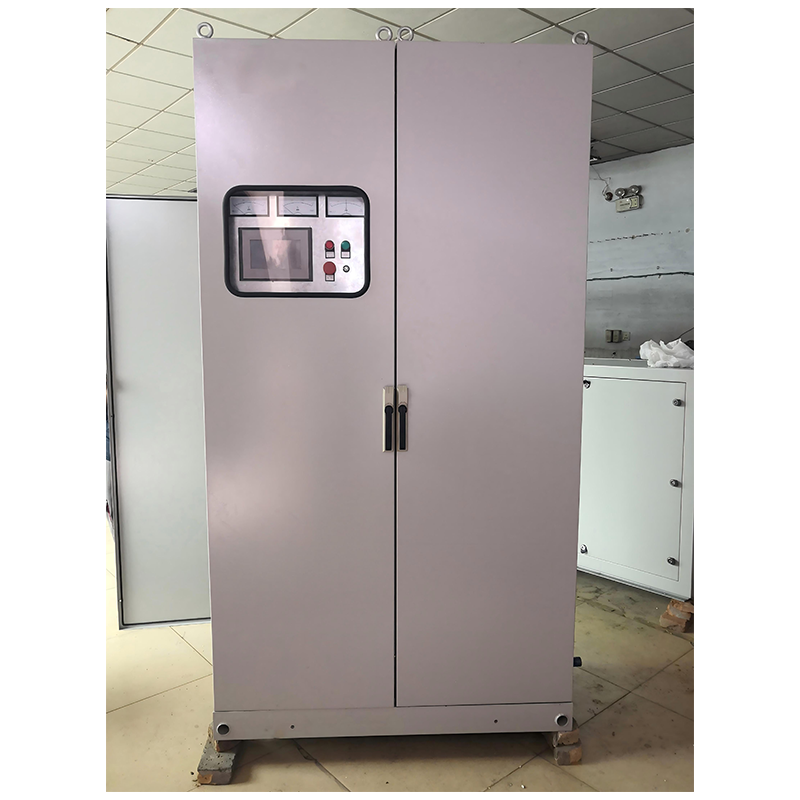
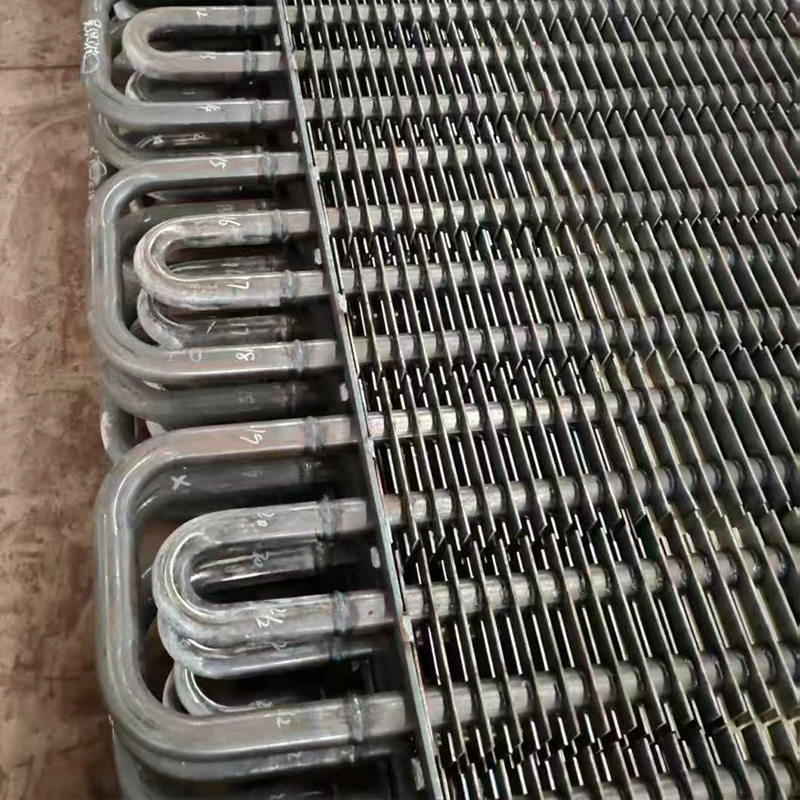
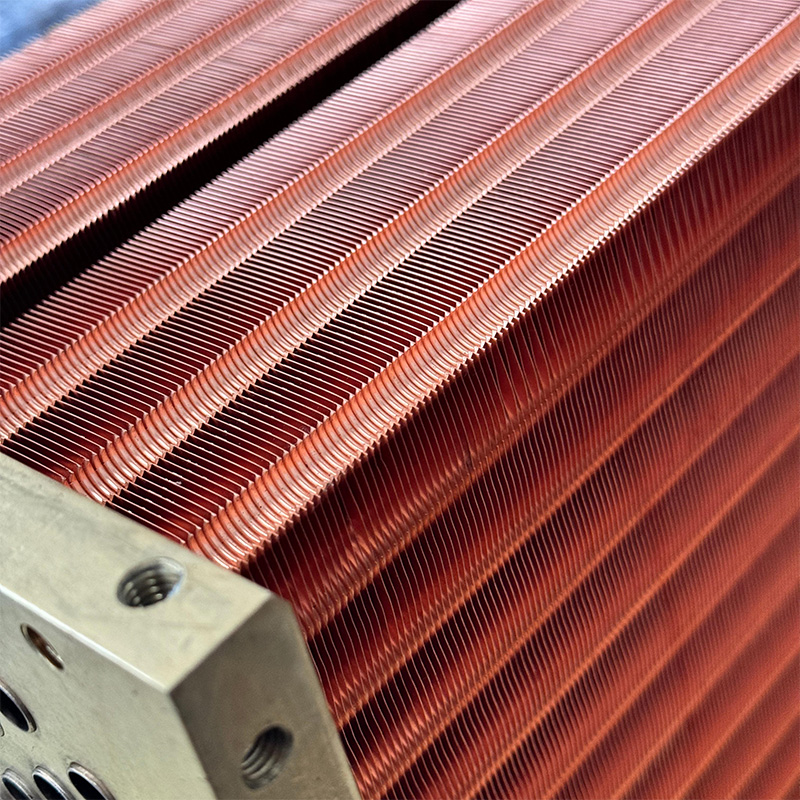
However, choosing the right pipe is only half the battle. It is critical that these pipes are integrated into reliable process equipment that can withstand the specified pressure and temperature parameters. This is where the company’s expertise comes to the rescueWuxi Kaisheng Electric Power and Petrochemical Equipment Co., Ltd.. Specializing in the development and production of heat exchange equipment for the oil and gas and energy industries, the company creates solutions where pipe dimensional accuracy plays a critical role.
В ассортименте «Уси Кайшэн» представлены высоконапорные теплообменники стандарта ASME, титановые кожухотрубные аппараты и гофрированные трубные пучки из нержавеющей стали AISI 316, морская латуни C46400 и сплавов типа N06625. Продукция сертифицирована по PED и ASME, что гарантирует соответствие строгим международным нормам. Будь то опреснение морской воды, сложные химические процессы или энергосберегающие системы, инженеры компании подбирают оптимальные конфигурации трубных решеток (из стали 321, латуни C46400, Cupro-Nickel) и пучков, обеспечивая максимальную теплоэффективность и коррозионную стойкость. «Уси Кайшэн» не просто поставляет оборудование, а предоставляет индивидуальные инженерные решения, заменяя дорогие импортные аналоги без потери качества, и берет на себя ответственность за надежность каждого узла в вашем проекте.
Не рискуйте надежностью вашего производства. Получите профессиональную консультацию по подбору труб и готовых теплообменных решений прямо сейчас.
Contact us todayдля расчета стоимости вашей заявки, получения технической поддержки инженера и консультации по продукции ООО «Уси Кайшэн».