
High quality tube sheet forgings: factories
2026-06-29
- High-quality tube sheet forgings: factories and supplier selection criteria
- Technical requirements for materials and forging process
- Review of production facilities: which factories do professionals choose
- Logistics, certification and import risks
- Typical mistakes when ordering and how to avoid them
- Process of interaction with the factory: from drawing to shipment
- Frequently Asked Questions
- Conclusion and recommendations for choosing a partner
High-quality tube sheet forgings: factories and supplier selection criteria
In our practice of working with large oil refineries, we have repeatedly encountered a situation where savings at the stage of purchasing raw materials led to a shutdown of production after 18 months of operation.Высококачественные поковки трубной решетки: заводы, capable of guaranteeing compliance with GOST and ASME, is not just a list of manufacturers, but a safety filter for your heat exchange equipment. The tubesheet is the heart of a shell-and-tube heat exchanger, withstanding enormous changes in temperature and pressure. An error in the choice of material or forging technology is unacceptable here.
We analyzed the production lines of more than 40 enterprises to identify those that actually control the metallurgical cycle, and do not simply resell semi-finished products. In this article you will find specific technical parameters, an analysis of the risks when working with intermediaries, and a clear algorithm for checking the supplier. If you are looking for a reliable partner for a project with pressures above 10 MPa or temperatures above 450°C, this information will save you budget on repairs and downtime.
Technical requirements for materials and forging process
The choice of steel grade determines 80% of the success of the heat exchanger operation. For tube sheets, carbon steels (St20, SA-516 Gr.70), alloy steels (09G2S, SA-387 Gr.11/22) and stainless steels (08Х18Н10Т, SA-182 F304/F316) are most often used. However, the mere fact of having a steel certificate does not guarantee the quality of the finished forging. The key factor is the degree of elaboration of the metal during the forging process.
Unlike casting, where the grain structure may be non-uniform, high-quality open-loop forging or stamping ensures grain refinement and elimination of internal defects. We require suppliers to maintain a packing ratio of at least 3:1 for critical components. This means that the original workpiece must be reduced in cross-section by at least three times during the deformation process. This is the only way to achieve the required impact strength and resistance to brittle fracture at low temperatures.
Particular attention should be paid to the chemical composition. The presence of sulfur and phosphorus should be kept to a minimum (no more than 0.025% for each element), since these impurities create pockets of corrosion and reduce ductility. Plants using ladle furnace (LF) and vacuum degassing (VD) in steelmaking consistently show better results with ultrasonic testing (UT). In our practice, there was a case when a batch of gratings made of 09G2S steel was rejected at the machining stage due to the detection of internal delaminations, which class A ultrasonic testing did not detect during the incoming inspection, but which appeared when drilling holes for pipes.
The mechanical properties of forgings must comply with the requirements of the drawing and regulatory documentation. Typically these are the yield strength (σт), tensile strength (σв) and relative elongation (δ5). For highly loaded applications, the impact strength of KCU/KCV at operating temperature becomes a critical parameter. For example, for the arctic version a value of at least 30 J/cm² is required at a temperature of -40°C or -60°C. Factories that ignore this parameter risk brittle failure of the apparatus in the first winter season.
When ordering forgings, be sure to indicate the delivery condition: normalized, hardened and tempered, or annealed. Heat treatment relieves residual stresses after forging and forms the required structure. Lack of proper heat treatment leads to cracks appearing in the heat-affected zone during subsequent welding or operation. Check whether the plant has its own heat treatment equipment of sufficient capacity. Sending large slabs for third-party heat treatment increases the risk of warping and geometry violations.
Quality control and non-destructive testing (NDT)
Reliable factories implement a multi-stage control system. Primary control is carried out immediately after the forging has cooled. A mandatory step is ultrasonic testing (UT) according to ASTM A388/A388M or GOST R 55724-2013 standards. We insist on carrying out ultrasonic testing not only along the mesh, but also throughout the entire volume of the workpiece with a sensitivity not lower than the equivalent reflector area of 2-3 mm².
Magnetic particle testing (MPT) or penetrant testing (PVT) of the surface allows you to identify surface cracks, sunsets and hairlines that can become a source of fatigue failure. For stainless steel forgings, the color flaw detection method is often used. It is important to understand that the presence of defects up to a certain size is allowed by standards, but their location relative to future holes for pipes is strictly regulated. Defects in the perforation zone are unacceptable.
Chemical analysis must be carried out by spectral analysis with the issuance of a protocol for each heat. Mechanical tests are carried out on witness samples cut from the forging body or from specially forged satellite blanks that have undergone the same heat treatment cycle. The test results are recorded in a quality passport (Certificate 3.1 according to EN 10204). The absence of a 3.1 certificate signed by an independent inspector or plant representative makes product acceptance impossible for critical facilities.
Review of production facilities: which factories do professionals choose
The tube sheet forgings market is segmented based on technological capabilities. Conventionally, we divide manufacturers into three categories: heavy engineering, specialized forge shops and trading houses with their own processing. Understanding this gradation will help you avoid mistakes when choosing a counterparty.
Heavy engineering factories. These enterprises have hydraulic presses with a force of 2000 to 8000 tons and large heating furnaces. They are capable of forging solid slabs with a diameter of up to 3000-4000 mm and a weight of up to 20 tons. The advantage of such plants is the ability to produce large-sized forgings without welds. This is critical for high-pressure vessels, where the welded joint of the shells and grilles is a weak point. Examples of such enterprises in the Russian Federation are Omsktransmash, Uralmashzavod, Atommash. Their main disadvantage is long production times (from 3 to 6 months) and a high minimum order. They are focused on large serial projects or unique equipment.
Specialized forging factories. These mills often work with rolled products (round grade) or smaller ingots. They use open forging on hammers or presses of lower force (up to 1600 tons). Their niche is medium-sized forgings, flanges, small tube sheets for “pipe-in-pipe” heat exchangers or compact devices. The flexibility of such factories is higher; they are ready to take orders from 1 piece and carry out urgent work. However, when ordering a large grille, they may offer a welded structure of several parts, which requires additional approval from the design office and additional testing of the welds.
Resellers and service centers. There are many companies on the market that position themselves as manufacturers, but in fact buy blanks from metallurgical plants and perform only mechanical processing. Sometimes they order forging from subcontractors. You can work with them if your volume is small and deadlines are pressing, but you lose control over the metallurgical cycle. The risk of obtaining metal with hidden defects increases. We recommend asking such suppliers for certificates of origin of the workpiece and conducting an independent examination before payment.
When choosing a specific plant, pay attention to the availability of its own fleet of metalworking machines. Tube sheet forging is not just a disk of metal. This is a part with high precision machining of pipe seats, grooves for seals and welding edges. A plant that can complete the full forging + heat treating + machining cycle reduces the risk of misalignment and surface damage during transport between workshops.
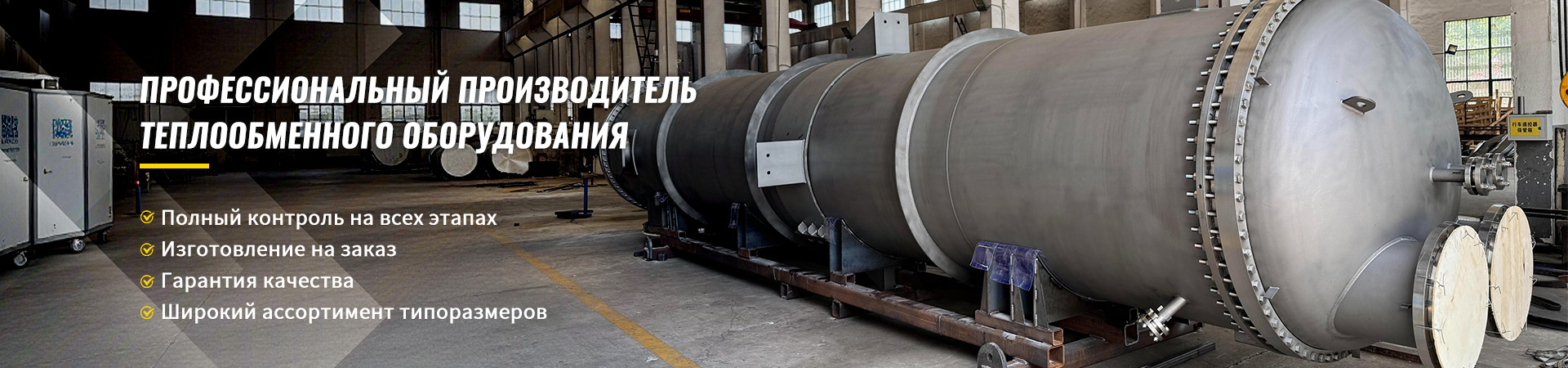
This is the comprehensive approach that the company implementsWuxi Kaisheng Electric Power and Petrochemical Equipment Co., Ltd.. Specializing in the development and production of heat exchange equipment for the oil and gas and energy industries, the company offers not just individual components, but ready-made engineering solutions. The company's portfolio includes the production of tube sheets from a wide range of materials: from 321 stainless steel and carbon alloys to exotic C70600 copper-nickel alloys, C46400 marine brass and titanium. The products are certified to strict international ASME and PED standards, which confirms the plant's ability to work with high pressure and temperature apparatus. Through in-house control of the entire cycle - from alloy selection to finishing machining - Wuxi Kaisheng ensures high corrosion resistance and thermal efficiency of products supplied to customers around the world for projects in the fields of water desalination, shipbuilding and petrochemicals.
Supplier Type Comparison Chart
| Comparison criterion | Heavy engineering factories | Specialized forging factories | Resellers / Service Centers |
|---|---|---|---|
| Maximum forging diameter | Up to 4000 mm (solid) | Up to 1500 mm (often welded composites) | Depends on the capabilities of the subcontractor |
| Production time | 3-6 months | 2-4 weeks | 1-2 weeks (subject to availability of preparations) |
| Minimum Order Quantity (MOQ) | From 5 tons or series | From 1 piece | From 1 kg |
| Metallurgical cycle control | Full control (melting, casting, forging) | Partial (purchase of rolled products/ingots) | Absent (incoming control only) |
| Unit cost | High (power depreciation) | Average | Low (but risks are hidden) |
| Flexibility to change drawings | Low (line reconfiguration required) | High | Very high |
| Recommended Application | Reactors, columns, recovery boilers | Heat exchangers, condensers, vessels | Repair, prototypes, small-scale production |
Logistics, certification and import risks
In the current geopolitical conditions, the issue of the origin of metal and equipment has come to the fore. For Russian enterprises, a mandatory requirement is the presence of a conclusion from the Ministry of Industry and Trade confirming the production of industrial products on the territory of the Russian Federation. Without this document, participation in tenders of government customers and work at facilities with increased safety requirements is impossible.
Imported forgings, even of high quality (for example, European or Chinese), face problems with customs clearance and logistics. Delivery times by sea have increased from 30 to 60-75 days. In addition, there are risks of sanctions restrictions on certain steel grades or technologies. We are observing a trend towards complete import substitution in the segment of forgings for the oil and gas industry. Leading Russian factories have mastered analogues of European brands (P265GH → St20K, 16Mo3 → 16GNM) and are successfully undergoing certification by NAKS (National Agency for Welding Control).
NAKS certification is mandatory for elements of pressure vessels that are subject to registration with Rostechnadzor. When requesting a quote, always check whether the cost of certification is included in the price of the product. The process of certification of manufacturing technology and the products themselves can take up to 2 months. A plant that has a valid NAKS certificate for the required type of equipment (KO, SO) significantly speeds up the commissioning of your device.
Logistics of heavy forgings requires special transport. Slabs with a diameter of more than 2 meters and weighing more than 5 tons are classified as oversized cargo. It is necessary to work out the route in advance, take into account the carrying capacity of bridges and the presence of low-loader trawls. Damage during loading and unloading operations is a common problem. Request the supplier to use wooden spacers and slings exclusively for technological holes or special trunnions, so as not to damage the working surface and ends.
Typical mistakes when ordering and how to avoid them
Over the years, we have identified several recurring mistakes that buyers and chief engineers make when ordering tube sheets. Avoiding these pitfalls will save you money and stress.
Mistake #1: Saving on allowances.In an effort to reduce the weight and cost of the workpiece, customers often specify minimum allowances for machining. This leads to the fact that after removing scale and rough turning, surface defects are discovered that cannot be eliminated without going beyond the dimensions of the drawing. The result is the failure of the entire expensive forging.Recommendation:Allow an allowance of at least 5-8 mm per side for roughing and 2-3 mm for finishing, especially if heat treatment after forging is planned, which causes warping.
Mistake #2: Ignoring grain direction.When forging, the metal acquires anisotropy properties. Properties along the direction of metal flow (along the fibers) differ from properties across. For tube sheets, it is critical that the fiber direction be parallel to the plane of the screen (ring forging or upsetting). If the fibers are directed perpendicular to the plane (as in conventional rolled products), then when the pipes expand in the holes or due to temperature deformations, delamination of the material is possible.Recommendation:In the specification, explicitly state the requirement for macrostructure and fiber direction with reference to the relevant standards (for example, ASTM A262 for stainless steels for intergranular corrosion).
Error No. 3: Hardness does not meet welding requirements.Often forgings are supplied with a hardness that exceeds that allowed for subsequent welding without preheating. This leads to the formation of cold cracks in the heat-affected zone when the grid is welded to the body.Recommendation:Agree with welding technologists on the limiting hardness values (usually no more than 220 HB for carbon steels) and require an indication of the heat treatment mode in the product passport.
Mistake #4: Lack of conservation.Carbon steel forgings are susceptible to atmospheric corrosion. When stored in an open warehouse or long-term sea transportation, the surface may become covered with rust up to 1-2 mm deep. Removing such corrosion mechanically disrupts the geometry and requires a revision of the allowances.Recommendation:Require the application of temporary preservative oil or corrosion inhibitor immediately after finishing and packaging in moisture-proof containers.
Process of interaction with the factory: from drawing to shipment
To ensure transaction transparency and quality assurance, we recommend the following algorithm for working with a forgings supplier:
- Preparation of technical specifications (TOR).Don't limit yourself to submitting a drawing. The technical specification must contain: steel grade according to international and Russian standards, requirements for mechanical properties (indicating test temperature), scope and NDT methods, requirements for packaging and labeling. Clearly state the terms of acceptance.
- Supplier audit.Before concluding a contract, request a reference list for the last 2 years. Ask to see photos of similar completed orders. If possible, arrange for an inspector to visit the plant to verify equipment availability and personnel qualifications.
- Technology coordination.The plant must submit a Technological Instruction (TI) or a Process Map (TPM) for approval. Pay attention to the heating modes for forging, the degree of compression, and heat treatment modes. This is the document by which quality will be assessed.
- Production monitoring.For large orders, provide stages of inspection control. Key control points: acceptance of metal (melting), control after forging (geometry, ultrasonic testing), control after heat treatment (hardness, mechanics), final control before shipment.
- Reception and shipment.Acceptance is carried out on the basis of a quality passport (Certificate 3.1). Check that the actual dimensions correspond to the drawing, the presence of marks, and the completeness of the accompanying documentation. Only after signing the acceptance certificate is the shipment processed.
Compliance with this algorithm minimizes the risks of receiving substandard products. Remember that the cost of correcting defects at the heat exchanger installation stage is 10-20 times higher than the cost of the forging itself.
Frequently Asked Questions
What is the minimum order quantity (MOQ) for tube sheet forgings?
The minimum order depends on the type of plant. Large metallurgical plants usually accept orders from 1-2 tons or from one batch of smelting (about 20-30 tons), since reconfiguring equipment is not economically feasible for small batches. Specialized forging shops can produce a single product from 50 kg. Однако цена за килограмм в единичном производстве будет в 2-3 раза выше, чем в серийном. Для опытных образцов целесообразно использовать технологию лазерной резки из толстолистового проката с последующей обработкой, если требования к структуре металла позволяют это (давление до 2.5 МПа).
Можно ли использовать сварную трубную решетку вместо цельнокованой?
Да, использование сварных конструкций допускается нормами (ПБ 03-576-03, ASME VIII Div.1), но с ограничениями. Сварные решетки разрешены для аппаратов с условным давлением до 4.0 МПа (иногда до 6.3 МПа при обосновании) и температурой стенки до 300°C. Они изготавливаются из отдельных сегментов, соединенных стыковыми швами с полным проплавлением. Все сварные швы подлежат 100% контролю (УЗК или радиография). Главный недостаток — зона шва является зоной риска для коррозии и усталостных трещин. Для агрессивных сред и высоких давлений цельнокованая решетка остается безальтернативным вариантом.
Какие сроки изготовления типичны для поковки из стали 09Г2С?
Стандартный срок изготовления составляет 4-6 недель при наличии заготовок нужного сечения на складе завода. Этот срок включает раскрой, нагрев, ковку, нормализацию, механическую обработку (черновую) и УЗК. Если требуется заказ слитка или непрерывно литой заготовки под конкретный вес, срок увеличивается на 3-4 недели. При необходимости сложно й термообработки (закалка+отпуск) добавьте еще 1 неделю. Срочные заказы (до 2 недель) возможны только при наличии подходящей заготовки в наличии и свободных мощностях, что влечет наценку до 30%.
Как контролируется плоскостность трубной решетки?
Плоскостность является критическим параметром для обеспечения герметичности развальцовки или приварки труб. Контроль производится на поверочной плите с использованием щупов или лазерных сканеров. Допуск на плоскостность обычно составляет не более 0.5 мм на 1 метр диаметра (или согласно чертежу). Деформация (“винт” или “седло”) возникает из-за неравномерного охлаждения после ковки или термообработки. Исправление плоскостности производится холодной правкой на прессе или шлифовкой торца, если позволяет запас по толщине. Заводы с современным оборудованием для контролируемого охлаждения после термообработки обеспечивают лучшую геометрию.
Conclusion and recommendations for choosing a partner
Покупка трубной решетки — это инвестиция в надежность всего теплообменного аппарата. Выбор между дешевым посредником и проверенным заводом-производителем часто сводится к оценке рисков. Дешевая поковка может стоить дороже в долгосрочной перспективе из-за аварийных остановок и ремонтов.Высококачественные поковки трубной решетки: заводы, обладающие полным циклом производства и серьезной системой контроля качества, являются единственным разумным выбором для ответственных проектов.
Мы рекомендуем фокусироваться на поставщиках, которые открыто демонстрируют свои производственные мощности, имеют действующие сертификаты НАКС и готовы предоставить образцы металла для независимой экспертизы. Не бойтесь задавать неудобные вопросы о технологиях плавки и методах контроля — профессиональный завод ответит на них подробно и аргументированно.
Если вы планируете модернизацию существующего парка теплообменников или строительство нового производства, начните с аудита ваших технических требований. Свяжитесь с нами сегодня для получения консультации по подбору оптимальной марки стали и проверенного производителя под ваш конкретный проект. Мы поможем составить грамотное техническое задание и избежать типичных ошибок при закупке.
Для получения детальной информации о доступных марках сталей и актуальных сроках производства посетите наш разделКаталог поковок для нефтегазовой отрасли, где представлены подробные спецификации и примеры выполненных работ.