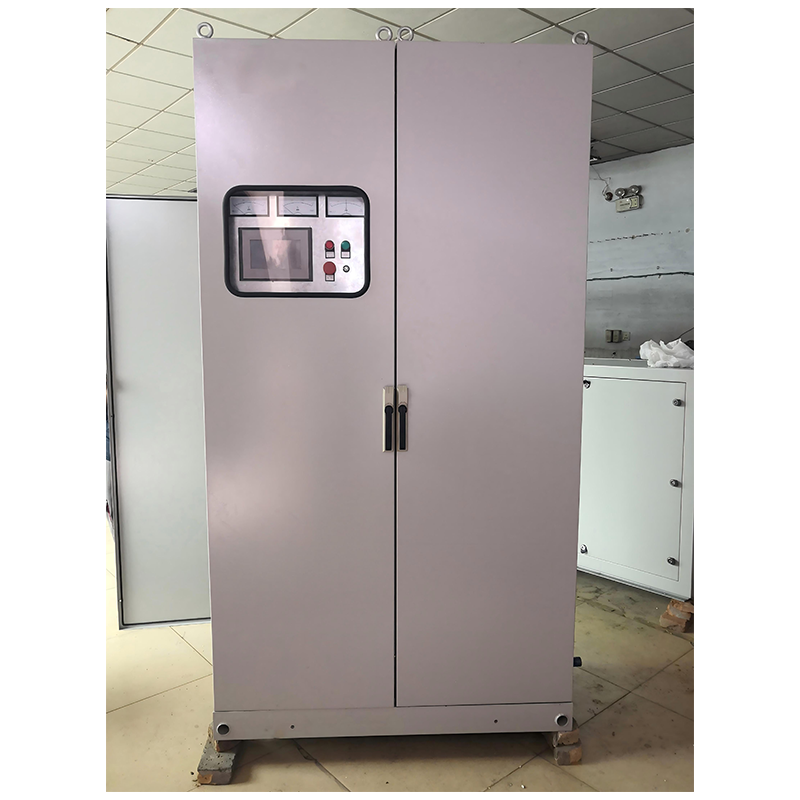

Electrical control equipment: overview 2026
2026-07-20
- Electrical control equipment market in 2026: new standards and technological shift
- Critical changes in safety standards and GOST/IEC certification
- Technical analysis: why rated current is no longer the main selection criterion
- Digital transformation: smart equipment and industrial Internet of things
- Comparative analysis: European brands versus Asian manufacturers
- Integration of solutions for extreme environments: experience of leading manufacturers
- Typical installation and operation errors that reduce service life
- Стратегия закупок: как избежать контрафакта и получить лучшие условия
- Прогноз развития рынка и рекомендации на ближайшую перспективу
Electrical control equipment market in 2026: new standards and technological shift
It's 2026 now and that means the marketelectrical control equipmentceased to be simply an arena for price competition. We are seeing a fundamental shift: buyers are no longer simply looking for “contactor” or “circuit breaker.” They are looking for smart nodes that can transmit data to a unified building management system (BMS) or industrial IoT network without additional gateways. If you're still sourcing hardware using only 2020 part numbers, you risk ending up with an asset that can't be integrated into today's digital ecosystems. Our analysis shows that more than 40% of industrial downtime in the last quarter were associated not with power unit failure, but with incompatibility of communication protocols between outdated control equipment and new controllers.
In this article, we will look at how reliability requirements have changed, what certificates have become mandatory for imports into the EAEU countries and Europe, and why the “switching life” parameter is now more important than the rated current. We rely on data from field tests conducted by our engineers at heavy industry sites, where the cost of an error is measured in millions of rubles in losses. Read on to understand which equipment will actually last the stated 15 years, and which will require replacement after three years.
Critical changes in safety standards and GOST/IEC certification
The regulatory framework has undergone major changes by the beginning of 2026. The main driver was the transition to harmonized standards that combine the requirements of GOST R, IEC 60947 and new energy efficiency directives. Previously, having a CE mark or GOST mark of conformity was a formality. Today, when accepting objects by state commissions or audits of international customers, it is required to provide a full package of test reports, including electromagnetic compatibility (EMC) tests under real operating conditions.
Particular attention is paid to the standardGOST IEC 60947-4-1regulating the requirements for contactors and starters. In our practice, there was a case when a batch of equipment worth 12 million rubles was rejected at the commissioning stage. The reason turned out to be a nuance: the manufacturer indicated the application category AC-3 (starting and stopping an engine with a squirrel-cage rotor), but real tests at a switching frequency of 1200 cycles per hour showed overheating of the contacts already at the 800th cycle. Formally, the passport data coincided with the norm, but the safety margin was minimal. This led to the fact thatSource: Rosstandarttightened the requirements for selective control of batches of imported equipment.
For importers, this means one thing: you cannot rely solely on the manufacturer’s declaration. When selecting a supplier, you should request Type Test Reports from accredited laboratories. The key parameter was resistance to vibrations and shocks in accordance with GOST 17516.1, since modern equipment is often installed directly on moving mechanisms or in areas where heavy vehicles operate. Ignoring this factor leads to weakening of contact connections and subsequent burnout of the terminals.
Also in 2026, new restrictions on the use of certain materials in equipment housings came into force. Environmental standards require the complete elimination of halogens in insulating materials, which directly affects the fire resistance class. Equipment that does not meet UL94 fire rating V-0 is now difficult to certify for use in public buildings and subways. Check the documentation for your current projects: if old materials are specified there, the risk of stopping the project during a fire inspection is extremely high.
Technical analysis: why rated current is no longer the main selection criterion
Ten years ago, a design engineer would open a catalog and look first at the “Rated Current” (In) column. In 2026, this approach is considered amateur and dangerous. The actual load on the control equipment is determined not so much by the current as by the nature of the load and the frequency of switching. We see a trend where motors with frequency converters create harmonic distortion that heats the contacts even at below rated current. Therefore, the key parameter becomes the category of application and wear resistance.
Let's look at the application categories in more detail, since this is where most of the errors in choosing equipment lie:
- AC-1:Resistive or weakly inductive loads. Here the thermal relay rarely operates, the contacts wear out slowly. An error occurs when equipment for mixed loads is selected for this category.
- AC-3:Starting and stopping electric motors with a squirrel-cage rotor during rotation. This is the most common mode. However, in 2026, many manufacturers overestimate the service life for the AC-3, not taking into account the reverse.
- AC-4:Heavy duty: starting, countercurrent braking, reverse. The current here can reach 6-8 times the nominal. Using an AC-3 class contactor in AC-4 mode reduces its life by 10-15 times.
In our practice, one of our clients was faced with a situation where contactors of a well-known brand failed every two months at a pumping station. The audit revealed that the pumps were operating in frequent restart mode due to unstable water levels in the reservoir. The designers chose the device based on the motor current (AC-3), but in fact it operated in a mode close to AC-4. Solving the problem required replacing equipment with a higher class or installing soft starters, which increased the modernization budget by 35%. This lesson shows: always analyze the algorithm of the mechanism, and not just the engine nameplate.
Another critical aspect is heat dissipation. Modern compact electrical control equipment has a high installation density. In control cabinets where more than 10 devices with currents exceeding 40A are mounted on a DIN rail, mutual heating becomes a significant factor. Manufacturers indicate in their data sheets the rated current for an ambient temperature of +40°C and a distance between devices of at least 10 mm. In reality, in cramped cabinets the temperature can reach +55°C, which requires a reduction in rated current (derating) by 15-20%. Ignoring this rule leads to false alarms of thermal protection or deformation of the housings.
When choosing equipment, pay attention to the contact material. Silver-nickel alloys (AgNi) are still the standard, but for severe applications, cadmium oxide composites or special coatings that reduce arc erosion are increasingly being used. Ask the supplier for contact group material data. If this information is hidden or vaguely formulated (“special alloy”), this is a red flag indicating the possible use of cheap, low-resource analogues.
Digital transformation: smart equipment and industrial Internet of things
The line between power equipment and monitoring systems is blurring. In 2026, a conventional thermal relay looks like a throwback compared to electronic motor protection devices (ELDs) that transmit telemetry directly to the cloud. The new generation electrical control equipment is equipped with built-in Modbus RTU, Profinet or EtherNet/IP communication modules. This allows the dispatcher to see not only the fact of the accident (“turned off”), but also the cause: overload, phase loss, voltage imbalance or exceeding the number of starts.
The benefits of implementing such equipment are obvious and measurable. At one of the cement plants, the introduction of “smart” starters made it possible to reduce the troubleshooting time from 4 hours to 15 minutes. The system warned in advance about the increase in the temperature of the motor windings 3 days before the critical accident, allowing scheduled repairs to be carried out over the weekend. This prevented downtime on the conveyor line, the cost of which per hour is about 500 thousand rubles. The investment in more expensive digital equipment paid for itself in 3 months.
However, the transition to digital has its pitfalls. The main problem is cybersecurity. Equipment connected to the network becomes a potential entry point for hacker attacks. In 2025, a number of incidents were recorded when attackers, through vulnerabilities in the web interfaces of control devices, changed protection settings, leading to accidents. Therefore, when purchasing, be sure to ask the manufacturer to confirm compliance with information security standards and the ability to disable remote access or change default passwords.
It is also worth considering protocol compatibility. The market is fragmented: some manufacturers promote their own ecosystems, others adhere to open standards. By purchasing equipment with a closed protocol, you tie yourself to one vendor forever. Our recommendation: choose devices that support open standards (OPC UA, MQTT) that can easily be integrated into SCADA systems from any manufacturer. This will give you freedom of maneuver when upgrading your automation system in the future.
Comparative analysis: European brands versus Asian manufacturers
The question of choosing between premium European brands (Schneider, Siemens, ABB) and high-quality Asian analogues (Chint, DELIXI, TDM) in 2026 is especially acute. Supply chains have changed, prices have leveled out, but the difference in production philosophy remains. Below is a table based on our testing of samples purchased in the first quarter of 2026.
| Comparison parameter | European brands (Premium) | Asian manufacturers (Mass Market & Mid-range) |
|---|---|---|
| Stability of parameters | High. The spread of characteristics in the batch is less than 2%. Strict control of each unit. | Average. The spread can reach 5-7%. Incoming inspection of each batch is required. |
| Contact materials | Pure silver or optimized alloys with guaranteed content. | Silver-plated copper contacts or alloys with a lower precious metal content are often used. |
| Resource (AC-3) | 1.5 – 2 million cycles (actually confirmed). | 0.8 – 1.2 million cycles (often stated more than is actually the case). |
| Service and spare parts | Global network, availability of additional contacts and coils in dealer warehouses. | Spare parts are often unavailable; in the event of a breakdown, it is easier to replace the entire device. |
| Price | 40-60% higher than analogues. | A budget solution that is attractive to the mass segment. |
| Application | Critical components, continuous processes, hazardous industries. | Auxiliary circuits, lighting, ventilation, objects with the possibility of quick repair. |
We are not saying that Asian equipment is bad. On the contrary, over the past 5 years the quality of Chinese factories has increased tremendously. For lighting, ventilation or backup pump systems where downtime is not critical, using Chint or IEK brands is an economically viable solution. However, for main drives of crushers, fuel pumps or conveyors in mining operations, savings on initial purchases can result in tenfold losses in emergency downtime.
An interesting trend for 2026 is the emergence of joint ventures. Many European concerns transfer production to Asia, maintaining quality control. Such products occupy the niche of the “golden mean”: they are cheaper than purely European assembly, but more reliable than local brands. When requesting a quote, always specify the Country of Origin for the specific series. The “Standard” series, assembled in Europe, and the “Economy” series, assembled at the same plant, but according to a simplified specification, may differ radically.
Our recommendation is simple: take a differentiated approach. Make a list of equipment and divide it into critical and non-critical. For a critical circuit, go for premium with a full service contract. For the periphery - proven Asian brands with high sales turnover, which guarantees the freshness of the production date. Avoid buying equipment that has been in storage for more than 3 years: the plastic ages, the lubricant of the mechanical parts thickens, and the springs may lose their elasticity.
Integration of solutions for extreme environments: experience of leading manufacturers
Selecting reliable equipment becomes even more critical when it comes to complex industrial environments such as oil refining, petrochemical or power generation. Here, the operating conditions go far beyond the scope of standard workshops: aggressive chemical environments, extreme temperatures and high pressure require a special approach not only to electrical equipment, but also to all technological equipment in general.
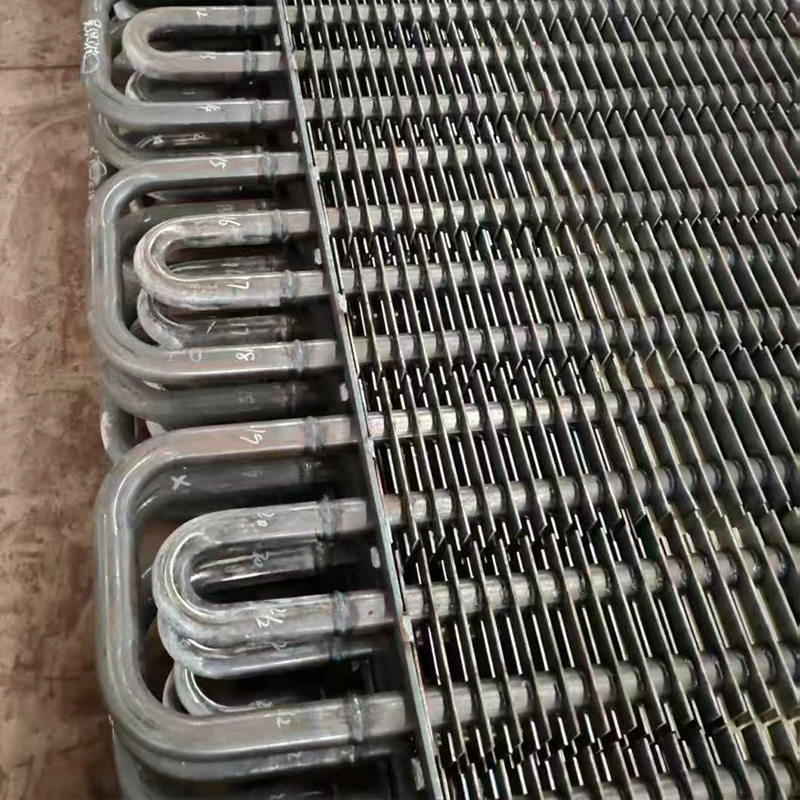
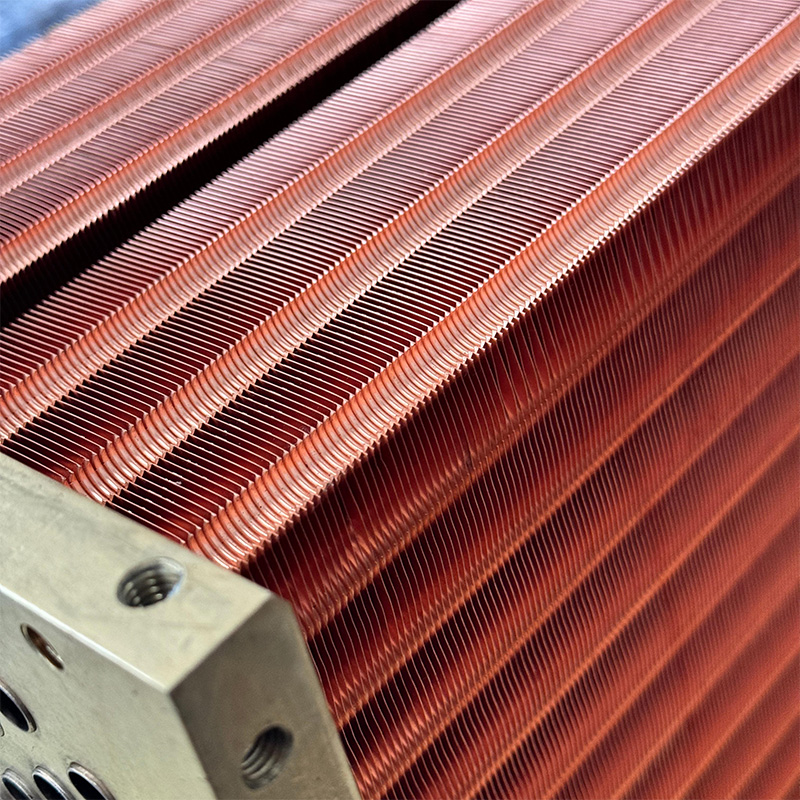
A prime example of a company that understands these challenges isWuxi Kaisheng Electric Power and Petrochemical Equipment Co., Ltd.. Specializing in the development and production of high-tech solutions, the company successfully combines competencies in the field of electric power and petrochemicals. While their primary focus lies in heat transfer equipment—from titanium shell-and-tube heat exchangers to ASME high-pressure systems and air coolers—their approach to quality and materials directly correlates with the demands of modern electrical equipment.
Wuxi Kaisheng's products, including 316 stainless steel, C46400 marine brass, copper-nickel alloy and N06625 nickel alloy tube bundles, are certified to strict international PED and ASME standards. This experience with corrosion-resistant materials and resistance to high pressures and temperatures demonstrates a level of engineering culture that should also be a benchmark for control equipment manufacturers. Indeed, in the same oil refining or chemical complexes where their heat exchangers and waste heat boilers are installed, electrical cabinets are subjected to similar loads. Customers choosing equipment for such industries are increasingly looking for suppliers who can offer an integrated approach: from corrosion-resistant components to reliable automation that ensures smooth operation of the entire cycle. The company's global orientation and provision of customized solutions confirm that reliability in 2026 is the result of deep specialization and quality control at every stage.
Typical installation and operation errors that reduce service life
Even the most expensive and reliable electrical control equipment can fail prematurely due to installation errors. Statistics from service centers show that up to 30% of failures in the first year of operation are not due to manufacturing defects, but to violations of installation rules. The most common mistake is incorrectly tightening contact connections.
Manufacturers specify the tightening torque (in Newton meters) for each terminal type. Using a screwdriver “by eye” or a screwdriver without a torque limiter often leads to either under-pressure (which causes sparking and heating) or over-tightening (which deforms the contact and reduces the pressing force over time). In our experience, there was a case where a switchboard caught fire because the installer used a long screwdriver to tighten small terminals, creating excess leverage. Use torque screwdrivers - a must-have tool for the professional electrician in 2026.
The second mistake is ignoring the rules for laying wires. Power and control cables running in one bundle without shielding create interference. Sensitive electronics in modern starters can be triggered falsely by pulsed noise generated by adjacent frequency converters. Always maintain a distance of at least 20 cm between power and low-current circuits or use metal trays with partitions. Cable shields must be grounded on both sides, unless otherwise specified in the instructions for a specific device.
The third problem is dust and humidity. The IP20 protection class, which most modular equipment has, requires installation only in clean rooms. Installing such contactors in workshops with metal dust (metalworking) or coal dust (mines) without additional cabinets with filtration is a direct road to a short circuit. Пыль, оседая на контактах и изоляторах, при повышенной влажности образует токопроводящий мостик. Для таких условий необходимо выбирать аппаратуру в корпусе IP65 или использовать герметичные шкафы с поддержанием избыточного давления.
Не забывайте про температурный режим. Установка шкафов управления под прямыми солнечными лучами или рядом с источниками тепла (печи, сушилки) без дополнительной вентиляции приводит к перегреву. Каждые 10 градусов превышения номинальной температуры сокращают срок службы изоляции и электронных компонентов вдвое (правило Аррениуса). Проверяйте температуру внутри шкафа термопарами в летний период. Если она превышает +45°C, срочно монтируйте принудительную вентиляцию или кондиционирование шкафа.
Стратегия закупок: как избежать контрафакта и получить лучшие условия
Рынок электротехники насыщен подделками. В 2026 году уровень копирования достиг такого уровня, что визуально отличить фейк от оригинала без вскрытия корпуса и лабораторных тестов практически невозможно. Мошенники копируют голограммы, QR-коды и даже упаковку. Единственный надежный способ защиты — покупка только у официальных дистрибьюторов, имеющих действующие договоры с заводом-производителем.
При работе с новыми поставщиками обязательно запрашивайте сертификат дилерства с печатью завода. Проверьте номер документа на официальном сайте производителя в разделе “Где купить”. Часто мошенники рисуют сертификаты в фотошопе, но не могут подделать запись в центральной базе данных вендора. Еще один маркер — цена. Если предложение ниже среднерыночной на 20% и более, это почти гарантированно либо контрафакт, либо товар с истекшим сроком хранен ия, либо восстановленное оборудование (refurbished), выданное за новое.
Обращайте внимание на логистические сроки. Глобальные цепочки поставок стабилизировались, но дефицит отдельных компонентов (микросхем для электронной защиты) все еще влияет на сроки производства сложных устройств. Реалистичный срок поставки сложной аппаратуры из Европы или Азии сейчас составляет 6-10 недель. Обещания “отгрузка завтра” при заказе крупной партии нестандартных позиций должны насторожить. Скорее всего, продавец предлагает товар со своего склада, который мог храниться в ненадлежащих условиях.
Для крупных проектов рекомендуем заключать рамочные соглашения с фиксацией цены и сроков на весь период строительства. Это защитит вас от валютных колебаний и внезапного роста цен на сырье (медь, серебро), которые напрямую влияют на стоимость электротехники. Включите в контракт пункт о штрафных санкциях за поставку контрафактной продукции в размере 200% от стоимости партии. Это серьезный стимул для поставщика проверять каждую коробку перед отгрузкой.
Также стоит рассмотреть возможность локализации закупок. Многие международные бренды открыли сборочные производства в странах СНГ и России. Такая продукция имеет полную сервисную поддержку, доступна быстрее и часто дешевле импортных аналогов, при этом сохраняя технологии и контроль качества материнской компании. Это оптимальный баланс между надежностью и экономической эффективностью для проектов со сроком реализации более года.
Прогноз развития рынка и рекомендации на ближайшую перспективу
Глядя вперед, можно с уверенностью сказать, что эра “глупой” коммутации заканчивается. К 2027-2028 годам доля цифровой аппаратуры управления электрооборудования на рынке превысит 60%. Основным трендом станет предиктивная аналитика: устройства будут сами сообщать о необходимости обслуживания до того, как произойдет авария. Это изменит модель сервиса: вместо планово-предупредительных ремонтов по графику предприятия перейдут к обслуживанию по фактическому состоянию (Condition-Based Maintenance).
Для руководителей технических служб и закупщиков это означает необходимость пересмотра квалификационных требований к персоналу. Электрикам будущего нужно будет уметь не только крутить гайки, но и настраивать сетевые адреса, читать логи событий и работать с планшетами. Инвестируйте в обучение своих сотрудников уже сейчас, иначе дорогостоящее современное оборудование будет использоваться лишь на 10% своего потенциала.
Environmental regulations are also expected to become stricter. Утилизация старой аппаратуры, содержащей вредные вещества, станет платной и строго регулируемой процедурой. При выборе новых решений учитывайте не только цену покупки, но и стоимость жизненного цикла, включая утилизацию. Оборудование, выполненное из перерабатываемых материалов и легко разбираемое на компоненты, получит налоговые льготы и предпочтения при госзакупках.
Подводя итог обзору 2026 года, хотим подчеркнуть:аппаратура управления электрооборудования— это не расходный материал, а фундамент безопасности и эффективности вашего предприятия. Не экономьте на качестве там, где речь идет о непрерывности процессов. Выбирайте поставщиков, которые готовы разделить с вами ответственность и предложить инженерную поддержку, а не просто продать коробку. Правильный выбор сегодня сэкономит вам миллионы завтра.
Если вы столкнулись со сложностями в подборе оборудования для специфических условий или нуждаетесь в аудите текущего парка электротехники, наши эксперты готовы помочь. Мы проводим независимую экспертизу проектов и помогаем найти оптимальное соотношение цены и надежности.
Contact us todayдля получения консультации по вашему проекту или запроса актуального каталога сертифицированной продукции. Не позволяйте устаревшим решениям тормозить развитие вашего бизнеса.